Summary
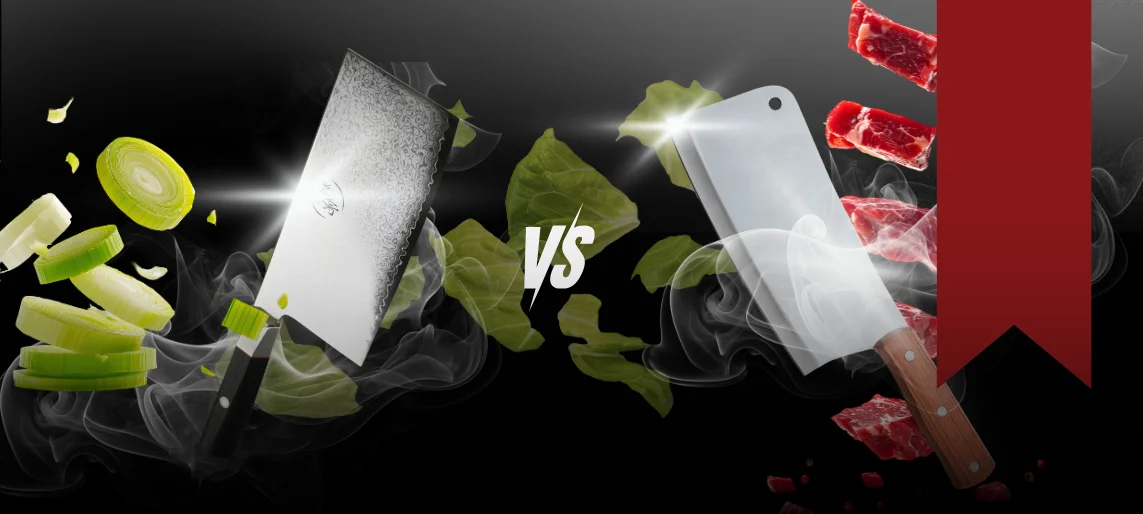
In many commercial kitchens, especially those preparing Asian cuisine, it’s easy to confuse the Chinese chef knife with a cleaver. Both feature broad rectangular blades, and at a glance they appear interchangeable. However, their construction, weight, and intended use are entirely different. The Chinese chef knife is a light, versatile tool designed for precision slicing and fast prep, while the cleaver is a heavy workhorse meant for breaking down large cuts of meat and cutting through bone. Understanding which tool to use can significantly improve safety, efficiency, and the quality of your prep work.
Chinese Chef Knife: A Versatile, All-Purpose Tool
Despite looking similar to a cleaver, the Chinese chef knife is engineered for finesse. Its blade is thin, sharp, and lightweight, which makes it ideal for tasks that require precision, speed, and control. In busy kitchens, it shines as an all-purpose knife capable of handling vegetables, herbs, aromatics, boneless proteins, and even fine garnishes.
Because the blade is flat and wide, cooks can use a smooth push-cutting motion that keeps ingredients uniform and reduces wrist fatigue. That same wide blade also doubles as a scoop, making it easy to transfer chopped ingredients from the cutting board straight into a wok or pan.
Its agility and versatility have made the Chinese chef knife a staple in professional kitchens around the world. It performs many of the same tasks as a Western chef knife but offers the added convenience of a larger blade surface and more efficient workflow.
Cleaver: Built for Power and Durability
While the Chinese chef knife is designed for precision, the cleaver is built for force. Its thick spine, substantial weight, and reinforced construction make it the preferred tool when kitchens need to tackle dense or bone-in ingredients.
A true meat cleaver is made to withstand repeated impact. It can split ribs, break down poultry, section large cuts of meat, and power through cartilage or frozen foods—tasks that would damage or chip a thinner blade. Because it relies on weight rather than sharpness, the cleaver reduces strain on the user and maximizes cutting power with minimal effort.
However, its size and weight make it less suitable for detailed prep work. Using a cleaver for slicing herbs, mincing garlic, or prepping vegetables is possible but inefficient. In most kitchens, it is reserved specifically for heavy-duty butchery tasks where strength and durability matter most.
Choosing the Right Tool for Your Commercial Kitchen
Selecting the correct knife comes down to the type of prep work your operation handles most frequently. Kitchens that focus on vegetables, aromatics, and boneless proteins benefit more from the speed and versatility of the Chinese chef knife. Its thin blade, sharp edge, and wide surface area make it an efficient everyday tool.
Operations that regularly break down whole chickens, work with bone-in cuts, or handle frozen meats need the reliability of a cleaver. Using a thin, lightweight knife for these tasks not only slows prep but also creates safety risks and shortens the lifespan of the blade.
Training also plays a critical role. Kitchen staff should understand the differences between these tools so they can choose the right knife for the job. Proper selection not only improves workflow but also prevents costly equipment damage and reduces the risk of injury.
Routine maintenance is equally important. Chinese chef knives require regular honing and sharpening to maintain a razor-thin edge, while cleavers need sturdier upkeep to maintain their chopping power without becoming dull or damaged.
Implementation Tips for Aldevra Customers
For foodservice operations looking to streamline their workflow, stocking both tools can create a more efficient prep environment. Standardizing knife inventory, labeling blade types, and incorporating knife-selection training into onboarding can help ensure proper use across shifts.
Monitoring usage patterns can also reveal whether a kitchen needs more versatile Chinese chef knives or additional cleavers for heavy-duty butchery tasks. Proper maintenance schedules—honing thin blades frequently and inspecting cleavers for wear—can extend both safety and equipment lifespan.
FAQ
Q: Can the Chinese chef knife replace a cleaver?
A: No. Although it is versatile, it is not built to handle bones or dense cuts of meat. Using it for heavy-duty tasks risks chipping the blade or injuring the user.
Q: Can a cleaver be used for everyday slicing and chopping?
A: It can, but it is not practical. Its weight and thickness make fine prep slow and less precise compared to a Chinese chef knife.
Q: How should these knives be maintained?
A: A Chinese chef knife requires frequent honing and sharpening due to its thin blade. Cleavers need less frequent sharpening but should still be maintained to prevent dullness and wear.