What Makes Correctional Kitchens Unique High-Volume Production
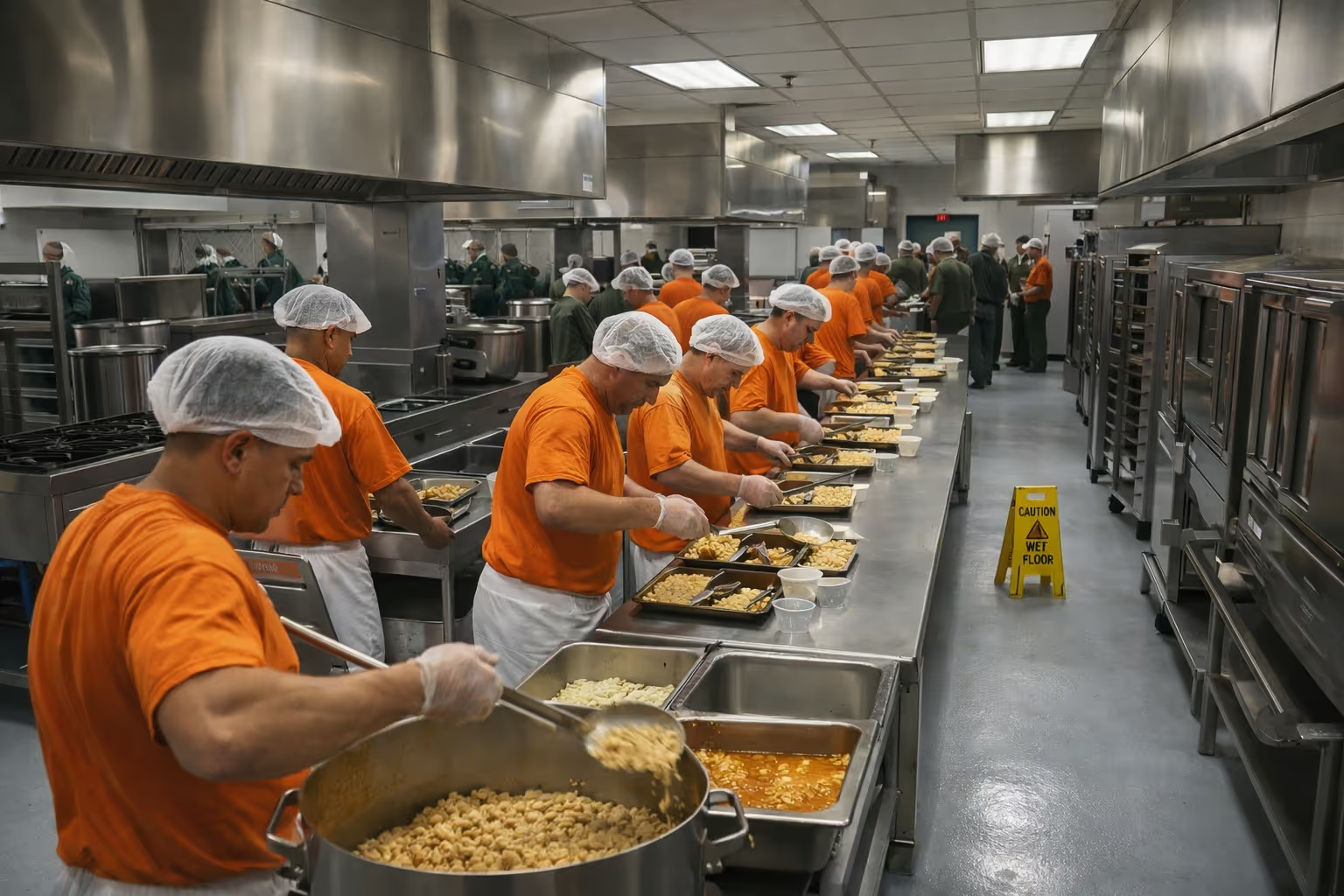
Facilities routinely prepare 2,000–10,000+ meals per day, often within tight serving windows dictated by custody schedules.

Foodservice equipment must meet or exceed standards from:
- ACFSA (Association of Correctional Food Service Affiliates)
- NSF (National Sanitation Foundation)
- HACCP (Hazard Analysis and Critical Control Point)
- UL 300 (Fire Suppression Standards)
- BAA (Buy American Act)
- TAA (Trade Agreements Act)
A secure correctional kitchen must meet all of these demands—simultaneously.
Complete Correctional Foodservice Systems
Correctional Equipment Features That Matter
- Torx or spanner fasteners
- Welded bases
- No removable parts
- Lockable panels
- Recessed handles
- Rounded corners
- Recessed grab points
- Guarded controls
- Enclosed cavities
- No void spaces
- Secure hatches
- 14–12 gauge stainless
- Reinforced hinges
- Crash-resistant carts
Partner Brands & Correctional Packages


Secure Installation & Project Delivery
- Background checks
- Escort protocols
- Tool inventory logs
- Restricted movement compliance
- Approved PPE + clothing color rules
- No loose packaging left behind
- All tools accounted for
- Anchoring/bolting to floor
- Controlled demonstration / training

Correctional Readiness & Compliance Resources
Frequently Asked Questions
Correctional kitchens face operational challenges that standard restaurant equipment cannot meet. Unlike commercial kitchens, correctional facilities must maintain security, durability, and tamper resistance while producing hundreds to thousands of meals daily.
Reasons specialized correctional kitchen equipment is required:
- Security: Prevents tampering, weaponization, and contraband hiding.
- Durability: Handles continuous high-volume use with minimal downtime.
- Compliance: Meets standards from ACFSA (Association of Correctional Food Service Affiliates), NSF, UL, BAA (Buy American Act), and HACCP.
- Labor Model: Equipment must be safe and simple enough for rotating inmate workforces.
- Operational Stability: Correctional kitchens operate 365 days a year with no interruptions allowed.
Standard kitchen equipment is not built for these conditions and often fails prematurely, creating safety risks and increased long-term costs.
Tamper-resistant equipment is designed to prevent inmates from removing parts, concealing contraband, or modifying the equipment for misuse.
Key tamper-proof features include:
- Fully welded construction (no hollow areas)
- Recessed, non-removable fasteners
- Enclosed bases and panels
- Rounded anti-ligature edges
- Vandal-resistant control panels
- Reinforced hinges and door latches
- No exposed wiring, knobs, or detachable components
- Floor-mounted or fixed casters to prevent movement
Manufacturers like Middleby, Blodgett, Caddy Corp, JonesZylon, IMC-Teddy, and others offer specialized correctional packages incorporating these protections.
Yes — with the right equipment, training, and supervision.
Correctional kitchens typically allow inmates to perform tasks such as:
- Basic prep (washing produce, portioning prepped ingredients)
- Trayline assembly
- Pot and pan washing
- Operating simple, tamper-resistant equipment (under supervision)
However, inmates usually cannot operate:
- Slicers
- Grinders
- Steam kettles
- Deep fryers
- Tilt skillets
- Any unguarded mechanical equipment
Facilities typically require:
- Orientation & safety training
- Strict supervision
- Restricted access to chemicals and tools
- Tool and equipment logs for accountability
The equipment itself must be designed to reduce operator error and eliminate access to hazardous components.
Restaurant dish machines are not engineered for correctional environments.
Problems with using restaurant-grade dishwashers in prisons:
- Panels and access doors are removable
- Hinges and latches can be tampered with
- Internal compartments can hide contraband
- Electronic controls are exposed and break easily
- They cannot handle the volume of 1,000–10,000 trays/day
- Repairs require unsecured parts inmates could access
- Flight machines and conveyors need reinforced guards and covers
Correctional dish machines must include:
- Welded or locked service panels
- Anti-tamper fasteners
- Enclosed bases
- Vandal-resistant control panels
- Secure conveyor shielding
- Heavy-duty construction for high-volume cycles
Brands like Champion, Hobart, and CMA offer dish machines with correctional modifications.
Correctional facilities require reinforced, heavy-duty refrigeration units with:
- Tamper-resistant hinges
- Recessed handles
- Locked control panels
- Welded interiors or sealed gaskets
- No exposed screws or removable interior parts
- Digital temperature monitoring for HACCP compliance
Top-performing models often include correctional packages from:
- Traulsen
- Delfield
- Continental
- Victory
- True (with reinforced hinges)
Walk-in coolers should have:
- Kick plates welded or bolted down
- Secure latches
- Anti-ligature door hardware
- Sloped ceilings where possible
A correctional package is a set of factory modifications added to commercial equipment to make it secure for jails, prisons, and detention centers.
Common correctional package features include:
- Welded or reinforced door hinges
- Recessed or shielded controls
- No removable knobs or switches
- Locked service panels
- Vandal-resistant drive systems
- Enclosed bases with no voids
- Anti-ligature corners and edges
- Tamper-proof hardware
- Floor-mounting brackets or fixed casters
These packages prevent inmates from:
- Removing parts
- Accessing dangerous components
- Hiding contraband
- Using parts as weapons
Manufacturers Offering Correctional Packages:
Middleby, Blodgett, Caddy Corp, IMC/Teddy, JonesZylon, Plastocon, and select refrigeration brands.
Installation in secure environments requires special clearances and operational protocols that standard installers cannot perform.
Requirements typically include:
Personnel Requirements
- Background checks
- Security clearance
- Restricted clothing colors
- Escort at all times
- No personal tools beyond those approved
Tool Control
- Tool logs
- Tool check-in/check-out
- Magnet board or shadow board inventory
- Immediate reporting of discrepancies
Operational Requirements
- Pre-approved delivery window
- Secure staging area
- No inmate interaction
- Compliance with custody rules
- “All clear” inspection after install
Aldevra’s crews are trained and cleared for correctional installations, which reduces risk and ensures compliance.
Contraband control is one of the most critical elements of correctional kitchen design.
Top Strategies to Reduce Contraband Risks
1. Use correctional-grade equipment
- No voids, hollow spaces, or removable parts
- Enclosed bases and welded frames
2. Implement strict tool control
- Inventory logs
- Controlled access
- Shadow boards
3. Secure storage areas
- Lockable access panels
- Staff-only chemical rooms
- Restricted access to walk-ins
4. Engineer the workflow
- No blind spots
- Controlled inmate traffic
- Defined supervision areas
5. Use secure meal delivery systems
- Locking carts
- Tamper-proof trays
- Documented return flows
6. Train staff and inmate workers
- Report unusual behavior immediately
- Monitor for equipment tampering
- Enforce cleaning and sanitation standards
By combining secure equipment, trained personnel, and strict operational controls, facilities significantly reduce contraband risks.
Tray-based systems are the standard method of distributing meals in secure facilities.
How It Works
- Trays assembled on a central trayline
- Locked or insulated carts loaded
- Carts sealed and logged
- Escorted delivery to housing units
- Staff supervise distribution
- Trays returned and sanitized
Secure Tray Features
- Non-metallic, non-weaponizable
- Molded compartments
- Durable, insulated construction
- Tamper-resistant lids or clamshell mechanisms
Carts
Must include:
- Locking doors
- Welded hinges
- Rounded anti-ligature handles
- No removable shelving
- Easy-to-clean interiors
This system supports both food safety and inmate/staff safety.
Sample System Layouts
Key Features:
- Staff control hot wells; inmate workers may assist on cold side (if approved).
- Diet trays isolated and verified before cart loading.
- Carts secured and logged before exiting kitchen.
Security Notes:
- Every returning cart is inspected for contraband.
- Dish machine has tamper-resistant panels and enclosed base.
- Clean and soiled flows never cross.
Routing Principles:
- No blind corners or dead zones.
- Carts remain supervised at all times.
- High-security units may require separate routes.
Design Intent:
- Completely restricted mechanical access.
- All refrigeration hinges reinforced.
- Chemical room isolated from inmate workflow.
Corrections Resources

Need a Secure Correctional Kitchen Solution?
Request a walkthrough, quote, or equipment recommendation today.