VA FSS • GSA MAS • SDVOSB • Federal Install Experience

Commercial Ice Machines & Ice/Water Dispensers: The Complete Buying Guide

How to select the right ice production system for hospitals, schools, federal facilities, restaurants, and institutional kitchens — covering capacity, drainage, filtration, codes, installation, and life-cycle cost.
Download the Ice Machine Planning Checklist
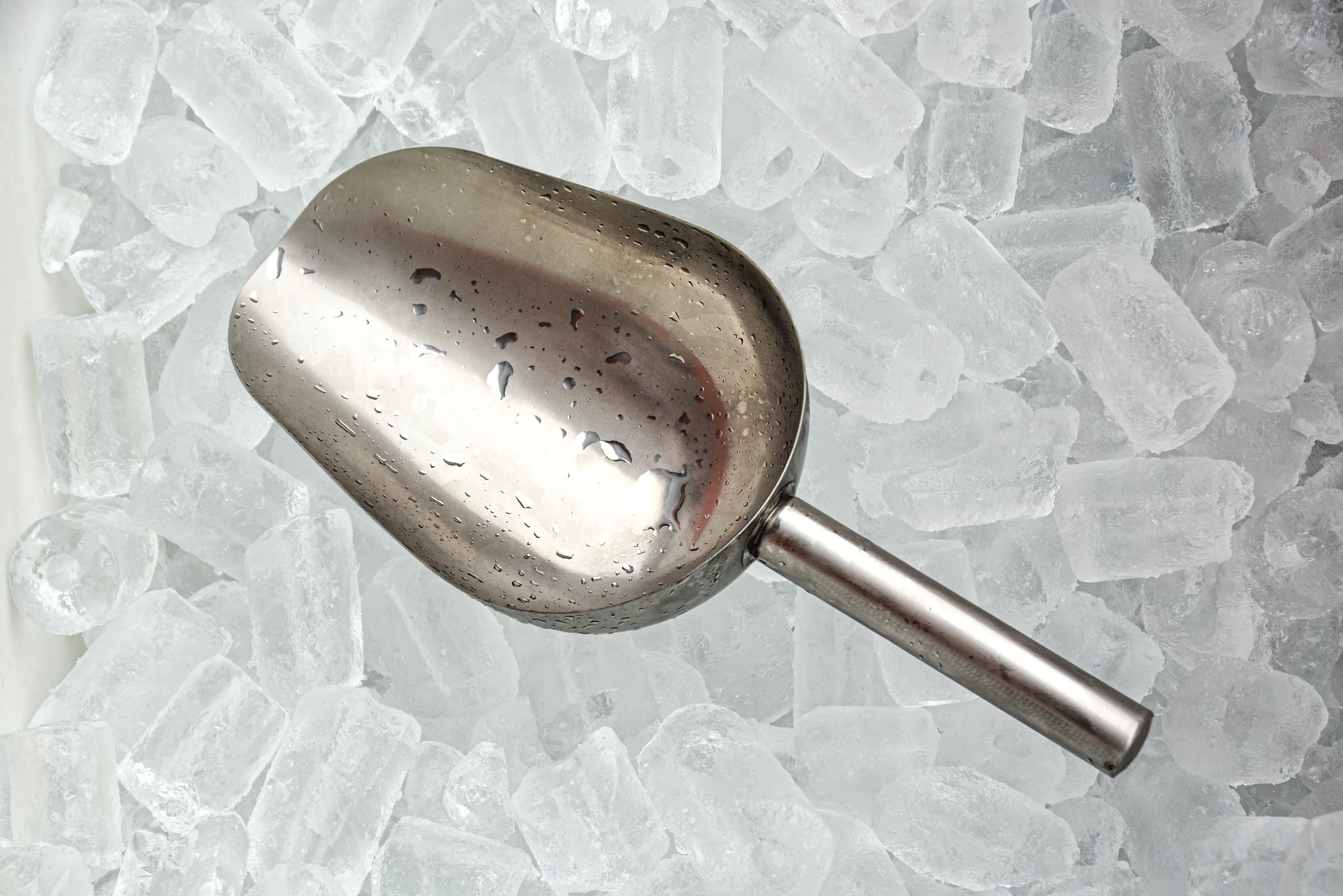
Metal scoop resting on a bed of cylindrical ice cubes.

Who This Guide Is For

Healthcare & VA Medical Centers
K-12 & Higher Education
Federal & Government Facilities
Restaurants & Foodservice
Industrial & Manufacturing

Ice Machine vs. Ice & Water Dispenser:
What’s the Difference?

The difference comes down to who serves the ice and where it’s used.

Ice-only machines are best for back-of-house and high-volume environments, where staff scoop ice or supply multiple beverage and service points.

Ice & water dispensers combine ice and water in one unit and are ideal for self-service areas, tighter spaces, and settings where sanitation and ease of use matter most.

In general, dispensers reduce handling and support infection-control priorities, while ice-only machines offer greater capacity and flexibility. The right choice depends on your space, traffic, and safety requirements.

Ice Types &
What They’re Used For

Full Cube

Best for:

  • Soft drinks 
  • Iced tea 
  • Cocktails 
  • Water service in cafeterias 
Half Cube

Best for:

  • Fast beverage cooling 
  • Self-serve drink stations 
  • High-turnover beverage programs 
Nugget / Chewblet

Best for:

  • Patient hydration 
  • Bottle filling 
  • Soft drinks 
  • Therapeutic chewing 
Flake

Best for:

  • Food displays 
  • Seafood 
  • Salad bars 
  • Medical transport cooling 
Specialty Ice

Best for:

  • Presentation 
  • Premium beverages 
  • Hospitality branding

How to Properly Size an Ice Machine

(The #1 Reason Ice Systems Fail)

Most ice machine problems come down to one issue: improper sizing. When a system is too small or poorly matched, facilities face ice shortages, equipment failures, and inspection issues, especially during peak hours.Proper sizing isn’t just about daily output. It must account for peak demand, storage capacity, shift patterns, seasonal spikes, and emergency needs.

What Actually Matters When Sizing

  • Peak demand, not daily averages:
Ice problems happen during lunch rushes, shift changes, and events — not evenly across 24 hours.
  • Storage bin capacity: Production without enough storage leads to constant recovery, overflow, and early failure.
  • Uneven daily usage: Most facilities experience multiple demand spikes across different shifts.
  • Seasonal load changes: Ice demand rises in summer while machine output often drops.
  • Redundancy for critical operations: Healthcare and mission-critical sites need backup plans, not single-point failures.

Why Getting It Right Matters

Undersized systems cause shortages, emergency ice runs, equipment burnout, and failed inspections. Oversized systems waste energy and increase operating costs. Correct sizing protects service flow, safety, equipment life, and total cost of ownership.

Don’t guess. Size it once.

Water Quality, Filtration & Scale Prevention

Most ice machine breakdowns, failed inspections, and denied warranty claims aren’t caused by the equipment — they’re caused by untreated or poorly treated water. Filtration isn’t an add-on. It’s a core part of protecting ice quality, safety, and long-term performance.

What water quality affects

  • Ice clarity & taste – Cloudy ice, odors, and residue are early warning signs
  • Hard water impact – Minerals form scale inside the machine as ice freezes
  • Scale damage – Reduced output, higher energy use, and shortened equipment life
  • Biofilm risk – Increased mold and sanitation issues without proper treatment
  • RO vs. carbon filtration – Carbon improves taste; RO removes scale-causing minerals
  • Warranty protection – Most manufacturers exclude damage caused by scale or poor water quality

Plumbing, Drainage & Electrical Requirements

More ice machine installs fail due to site readiness, not equipment issues. Flooded floors, delayed installs, failed inspections, and last-minute change orders almost always trace back to unverified plumbing, drainage, or electrical conditions.

What must be confirmed before install

  • Drainage method – Gravity drains are preferred; pumped drains add failure risk
  • Floor drain placement – Must be lower than the outlet, properly sloped, and nearby
  • Air gaps & backflow protection – Required for code compliance and infection control
  • Venting & heat rejection – Poor airflow leads to overheating and shutdowns
  • Electrical loads – Voltage, phase, amperage, and dedicated circuits vary by model
  • Water pressure – Too low starves production; too high damages valves

When utilities are assumed instead of verified, machines sit idle, installs get rescheduled, and emergency plumbing or electrical work follows — all of which is avoidable with a pre-install check.

Codes, Regulations & Inspection Compliance

Built to pass inspections — not just meet specs.

In institutional environments, compliance isn’t optional. Ice equipment must satisfy overlapping federal, state, and local codes while also aligning with healthcare and accessibility standards. Getting this right upfront reduces inspection delays, liability risk, and rework after install.

Standards that matter

  • NSF – Sanitation, materials, and cleanability requirements
  • FDA Food Code – Food safety and contamination prevention
  • UPC / IPC – Plumbing and drainage compliance
  • State & local health departments – Jurisdiction-specific inspection criteria
  • ADA reach requirements – Accessibility for public-facing dispensers
  • Healthcare infection prevention standards – Reduced touchpoints, contamination control, and compliance in clinical settings

This is why institutional buyers prioritize equipment and layouts that are already aligned with inspection expectations — not retrofitted after a failed review.

Healthcare-Specific Infection Control & Safety

Where Ice Systems Become a Clinical Risk — and How Aldevra Designs Them Out

In healthcare settings, ice machines directly affect patient safety, infection control, and inspection outcomes. Aldevra treats ice and water systems as clinical infrastructure, not foodservice equipment.

What Aldevra designs for

  • Touch-free dispensing to reduce cross-contamination
  • Full cleaning access for sanitation and inspection visibility
  • Biofilm risk control through filtration, drainage, and internal design
  • Protected water sources with air gaps and backflow prevention
  • Risk-based placement by patient unit, not convenience

Built for inspection readiness

Aldevra systems are designed to pass Joint Commission surveys without corrective action.

Installation, Startup & Commissioning Reality

Where Most Vendors Fail — and Ice Projects Break Down

Most ice machine problems don’t show up years later — they happen on delivery day or startup day. When installation is treated like a shipment instead of a coordinated process, projects stall, inspections fail, and equipment sits idle.

Successful installs depend on verified site readiness, planned delivery and access, proper startup validation, ice testing, and staff training. Skipping any of these leads to freight damage, restart fees, flooded floors, warranty disputes, and weeks of downtime.

Aldevra treats installation and commissioning as mission-critical milestones, coordinating logistics, startup, and handoff to ensure systems are operational, compliant, and ready for real-world use — not just powered on.

Maintenance, Service Life & Total Cost of Ownership

What Determines Whether an Ice Machine Is a Short-Term Problem or a Long-Term Asset

The true cost of an ice machine isn’t the purchase price — it’s how long it lasts, how often it fails, and how much it costs to keep running. Maintenance discipline, not brand alone, determines service life, inspection outcomes, warranty protection, and total cost of ownership.

Facilities that follow routine cleaning and preventive maintenance commonly achieve 10–15+ years of service life. Facilities that skip filtration, sanitation, and PM often face major failures within a few years, including evaporator wear, compressor failure, and bin sanitation issues — all of which drive emergency service costs and downtime.

A structured approach to daily cleaning, scheduled PM, and filtration protection transforms ice machines from recurring maintenance headaches into predictable, long-term infrastructure assets.

Common Ice Machine Failures
(and How Facilities Get Cited)

Slime & Mold
Fastest path to a failed inspection

Biofilm, mold, or odor inside bins and chutes caused by missed cleaning, poor drainage, or inadequate filtration — often results in immediate shutdown.
Drain Backups
Hidden plumbing violations
Standing water, slow drains, or sewer odors from improper slope, pump failures, or missing air gaps — commonly cited as non-compliant waste piping.
Overflow Floods
When meltwater overwhelms the system
Flooding during sanitation or peak melt caused by undersized or failed drains — triggers slip hazards, electrical concerns, and area closures.
Scale Lockup
The slow failure that voids warranties

Hard water scale leads to cloudy ice, reduced output, and component damage — frequently escalates into denied warranty claims.
Bacterial Growth
The invisible clinical risk

Contamination tied to biofilm, poor sanitation, or improper water protection — can trigger infection control investigations and immediate removal from service.
Electrical Faults
Overlooked but high-risk violations
Incorrect voltage, flooded electrical components, or missing disconnects — cited as fire and safety hazards requiring shutdown.
The common thread: these failures aren’t random. They come from assumed utilities, skipped filtration, inconsistent cleaning, rushed installs, and missing documentation.

Why Work With a Commercial Equipment Dealer (Not Just a Vendor)

Aldevra strategic positioning

  1. Federal compliance navigation 
  2. Filtration integration 
  3. Install coordination 
  4. Service alignment 
  5. Emergency support 
  6. Warranty protection 
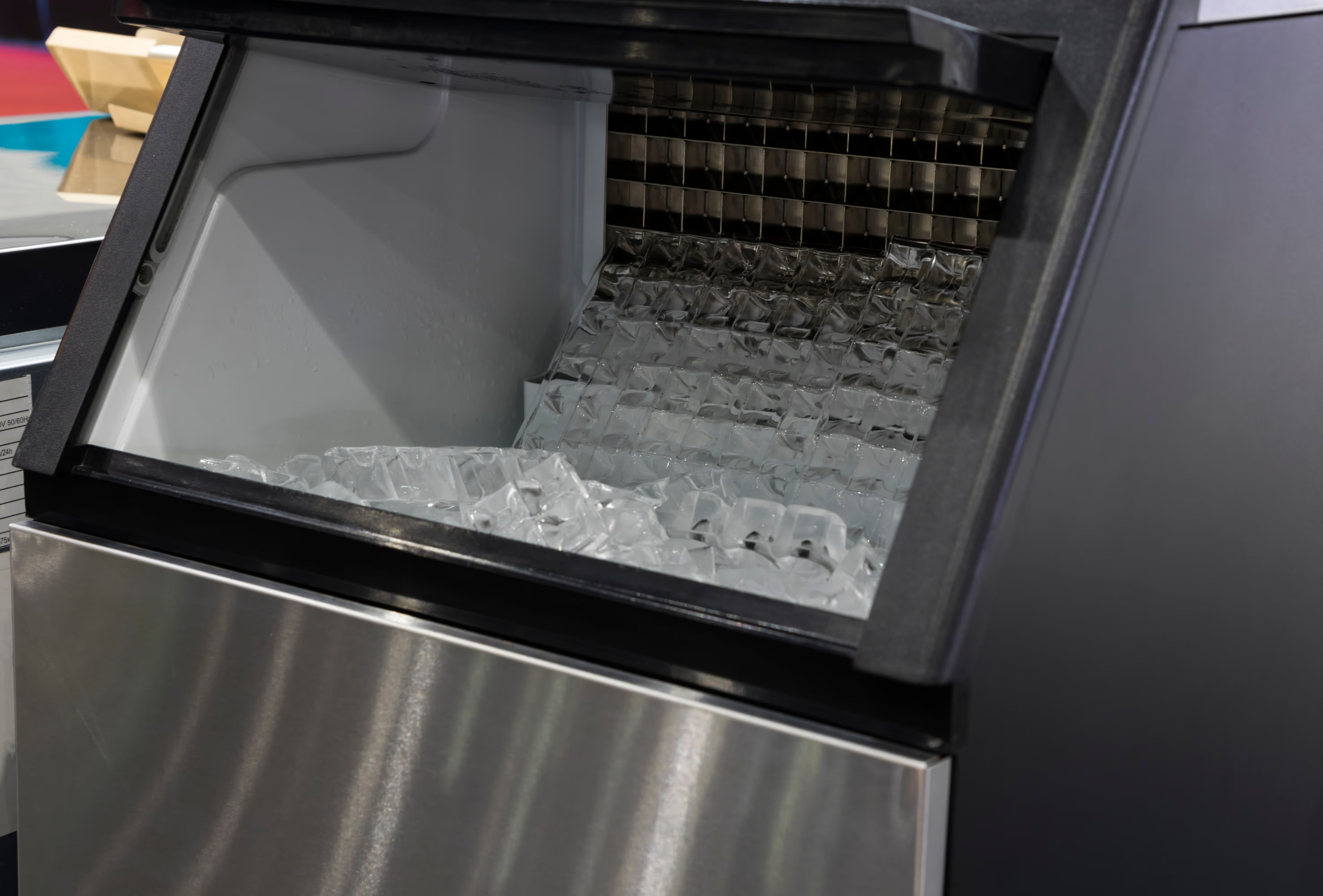
Commercial ice maker machine with clear cube ice visible inside.
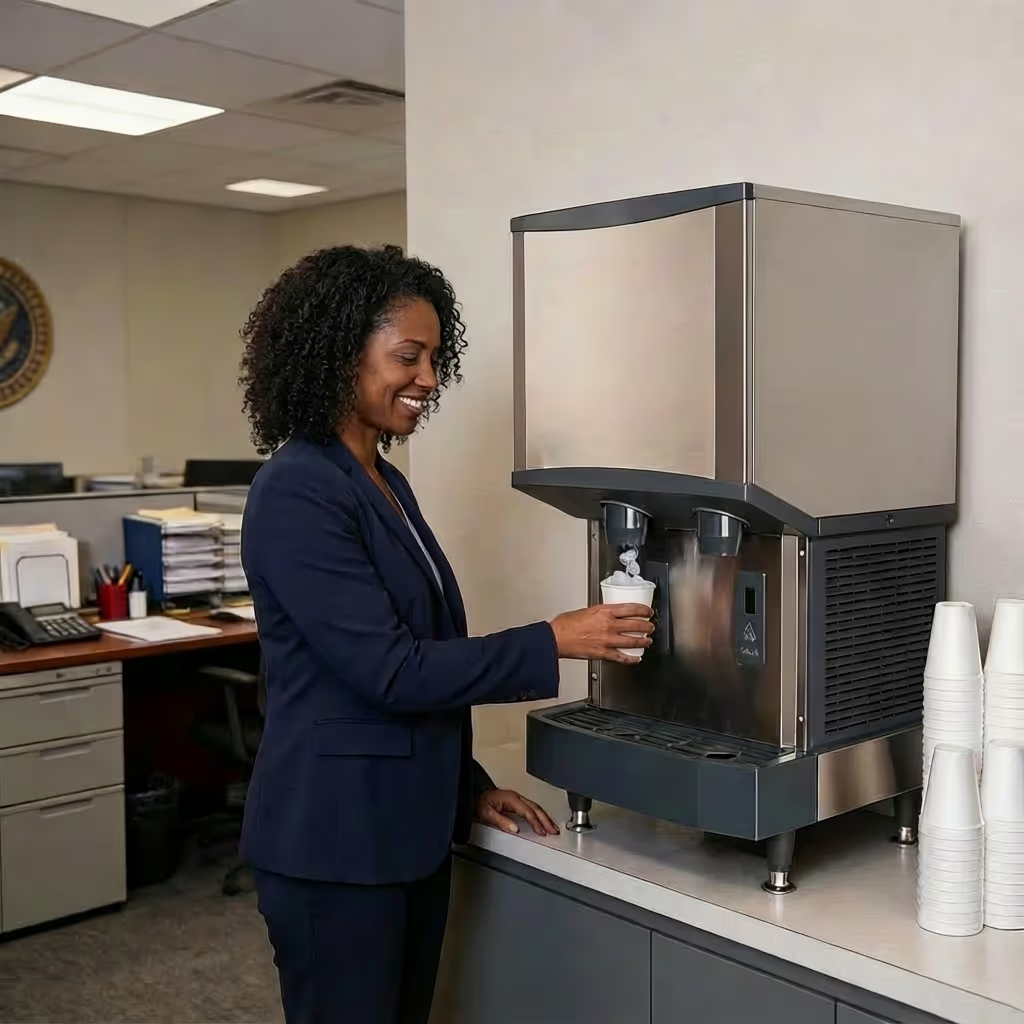
Woman in business attire dispensing ice into a cup from an office ice machine.

Government & Institutional Contract Purchasing Options

Your procurement edge

  1. GSA MAS
  2. Cooperative purchasing for state and local government, tribes and tribal organizations and non-governmental organizations

The Ice Machine resource center

Interactive Tools Hub

Ice Capacity Calculator
Launch the Calucator
Filtration Match Tool
Launch the Tool
Utility Readiness Checker
Launch the Checklist
Inspection Readiness Checklist
View the Checklist
Ice Machine Repair vs. Replace Calculator
Launch the Calculator

Ice Machine Buying FAQs

How many pounds of ice does a hospital need per day?
blue plus iconx icon
Do ice machines require a floor drain?
blue plus iconx icon
Can ice machines be installed without a drain?
blue plus iconx icon
What voids ice machine warranties?
blue plus iconx icon
How often must healthcare ice machines be sanitized?
blue plus iconx icon
What type of ice is best for hospitals?
blue plus iconx icon
Does hard water affect ice machine performance?
blue plus iconx icon
Do ice and water dispensers require the same maintenance as ice-only machines?
blue plus iconx icon
Are ice machines considered food-contact equipment?
blue plus iconx icon
How long do commercial ice machines last?
blue plus iconx icon
Should ice machines be included in preventive maintenance programs?
blue plus iconx icon
Metal scoop resting on a bed of cylindrical ice cubes.

Ready to talk to an Equipment Specialist?

Request a walkthrough, quote, or equipment recommendation today.