Summary
Looking for the best commercial slicer for your restaurant, deli, or kitchen? From Univex’s reliable performance to Bizerba’s precision engineering and Globe’s versatile designs, choosing the right slicer—manual or automatic, meat or cheese—can save time, improve food quality, and keep your team safe. In this guide, we break down slicer types, blade sizes, safety features, and maintenance tips so you can confidently choose the slicer that fits your menu, volume, and budget.
When it comes to slicing in a commercial kitchen, there’s no one-size-fits-all solution. The right slicer depends on what you’re slicing, how often you’re slicing, and the volume you need to handle. The right choice can save time, improve safety, and extend the life of your equipment.
1. Manual vs. Automatic Slicers
• Manual Slicers – Best for lower-volume operations where slicing is occasional. The operator manually moves the carriage back and forth, giving complete control over each slice. Great for small delis, cafes, or restaurants with light slicing needs. Models like the Univex 6612M or Globe G12 give reliable performance in a smaller footprint.
• Automatic Slicers – Perfect for high-volume kitchens, grocery stores, and institutions. The motor moves the carriage, freeing staff to handle other prep tasks. Many models allow switching between manual and automatic for versatility. The Bizerba GSP line is a standout for speed and precision. Hobart offers automatic slicers as well, though many kitchens are finding modern alternatives like Univex more cost-effective.
Tip: If you’re doing hundreds of slices a day, automatic is worth the investment.
2. Meat vs. Cheese vs. All-Purpose Slicers
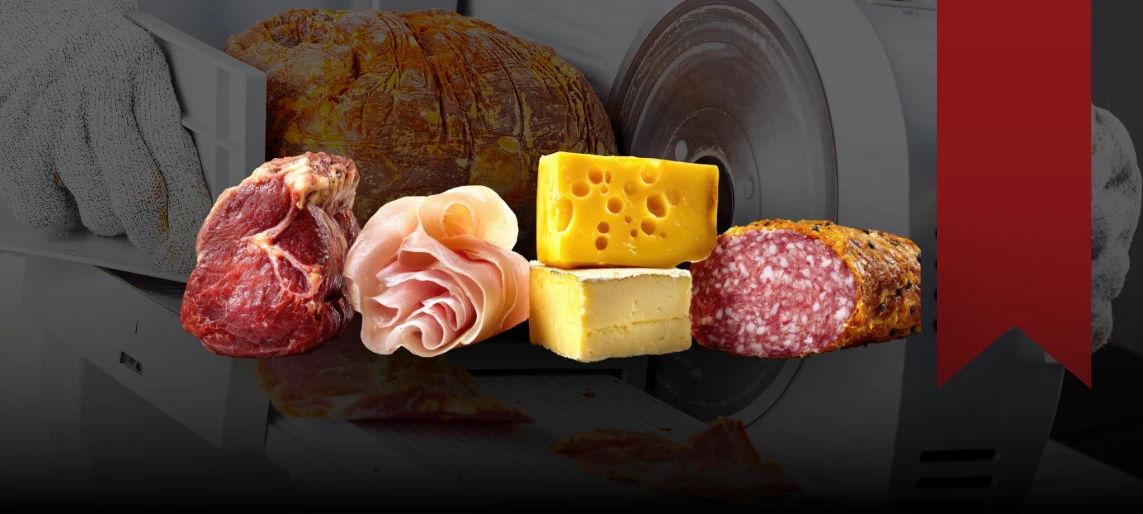
• Meat Slicers – Designed for cooked or cured meats, these have moderate torque and are often lighter and more budget-friendly.
• Cheese Slicers – Built with more power and torque to handle dense, sticky cheese without slowing down or damaging the blade. Bizerba and Univex both excel in cheese slicing, and many of their models double as all-purpose slicers.
• All-Purpose Slicers – A balance of power and blade design for both meat and cheese. The Globe GC series is a strong mid-range option, and Univex offers several all-purpose slicers that handle high-demand environments without overcomplicating maintenance.
Tip: If cheese slicing is frequent—think thick sandwich slices, cheese platters, or pizzas—choose a slicer rated for cheese even if you also slice meat.
3. Blade Size
• 9–10 inches – For low-volume, small operations with limited counter space.
• 12–13 inches – Standard in most commercial kitchens; works for a wide variety of products.
• 14 inches or more – For heavy-duty, high-volume slicing and large products such as hams or roasts.
Tip: Larger blades give you more versatility but require more counter space and a higher upfront cost.
4. Safety Features to Look For
• No-volt release (prevents automatic restart after power loss)
• Permanent knife guards
• Interlock systems to prevent operation when the guard is open
• Easy-to-remove parts for cleaning without risk of injury
5. Maintenance & Cleaning Considerations
Regular cleaning is critical—not only for food safety but also to keep your slicer running smoothly. Look for:
• Tool-free disassembly
• Sealed seams to prevent food debris build-up
• Dishwasher-safe components where possible
Pro Tip: Preventive maintenance is key—have your slicer inspected regularly to check motor performance, sharpen blades, and replace worn parts before they cause downtime. Univex models in particular are known for long-term reliability with regular care.
Quick Decision Checklist: Which Slicer Fits Your Kitchen?
☐ Volume: Low (<50 slices/day) → Manual | High (>100 slices/day) → Automatic
☐ Product Type: Meat only | Cheese only | Both
☐ Blade Size: 9–10” (small) | 12–13” (standard) | 14”+ (heavy-duty)
☐ Counter Space: Limited | Ample
☐ Safety Needs: Built-in guards, interlocks, no-volt release
☐ Cleaning: Tool-free disassembly, sealed seams, dishwasher-safe parts
☐ Budget: Entry-level | Mid-range | Premium
Popular Commercial Slicer Brands to Consider
• Univex – Our top recommendation for reliability, value, and ease of maintenance. Available in both manual and automatic, all-purpose or specialty models.
• Bizerba – German-engineered precision with advanced safety and cleaning features; excellent for cheese and high-volume applications.
• Globe – Versatile and competitively priced, great for medium-volume kitchens needing all-purpose performance.
• Hobart – A well-known industry name, often specified in older kitchens; helpful for comparison when evaluating new models, though many modern alternatives now offer better value.
Pro Tip: Choose the brand that fits your actual workflow, not just the one with the most name recognition.
Final Thoughts
The right slicer comes down to your menu, your daily volume, and your kitchen’s workflow. Whether you need a compact manual model or a heavy-duty automatic slicer for cheese and meats all day long, Aldevra can help you source the right equipment, install it correctly, and keep it running for years.
Need help deciding? Contact us today—we’ll walk you through the options from Univex, Bizerba, Globe, and others to make sure you get the slicer that’s the perfect fit.
FAQ: Choosing the Right Commercial Slicer
1. What’s the biggest difference between manual and automatic slicers?
Manual slicers require staff to move the carriage back and forth, making them ideal for small operations with occasional slicing. Automatic slicers move the carriage for you, which saves time and supports high-volume production. If you’re slicing hundreds of portions a day, automatic is usually the better investment.
2. Do I need a dedicated cheese slicer?
If cheese is a regular part of your menu — sandwiches, pizza, charcuterie, or prep — then yes. Cheese requires more torque and power than meat. Models from Bizerba and Univex handle cheese without slowing down or damaging the blade, and many double as all-purpose slicers.
3. Which blade size is best for most kitchens?
A 12–13" blade is the standard for commercial kitchens because it handles a wide range of products. Smaller 9–10" blades work well for light use and tight spaces. Larger 14" blades are best for heavy-duty slicing and large cuts like roasts and hams.
4. What safety features should I look for in a slicer?
Prioritize no-volt release (prevents the slicer from restarting after power loss), permanent knife guards, interlock systems, and easy-to-remove parts. These features protect staff and make daily cleaning faster.
5. How do I know if a slicer is powerful enough for my menu?
Look at torque, motor power, and whether the slicer is rated for meat, cheese, or both. Cheese slicing requires more power — if your model isn’t built for it, you’ll notice drag, inconsistent slices, or motor strain.
6. How often should a commercial slicer be cleaned?
Clean and sanitize your slicer after every use — especially when switching between meats, cheeses, or allergens. Choose models with tool-free disassembly, sealed seams, and dishwasher-safe components to make this easier.
7. What kind of maintenance does a slicer need?
Regular blade sharpening, checking the motor, and inspecting belts or gears. Preventive maintenance keeps your slicer running safely and extends its lifespan. Univex slicers are known for long-term reliability with routine care.
8. Which brands are most reliable for commercial use?
Univex, Bizerba, Globe, and Hobart are popular options. Univex is often preferred for reliability and value. Bizerba excels in precision and cheese slicing. Globe performs well in medium-volume kitchens. Hobart is familiar in older kitchens but may cost more compared to modern alternatives.
9. What’s the most important factor when choosing a slicer?
Start with your volume and what you’re slicing. A low-volume café has very different needs from a grocery deli or high-volume restaurant. Once you know your workload, choose the blade size, safety features, and brand that match your workflow.
10. Can Aldevra help me choose the right slicer?
Yes. We help operators compare models, understand features, and choose slicers based on menu demands, budget, and available space. We can also coordinate installation and help with long-term maintenance planning.