Summary
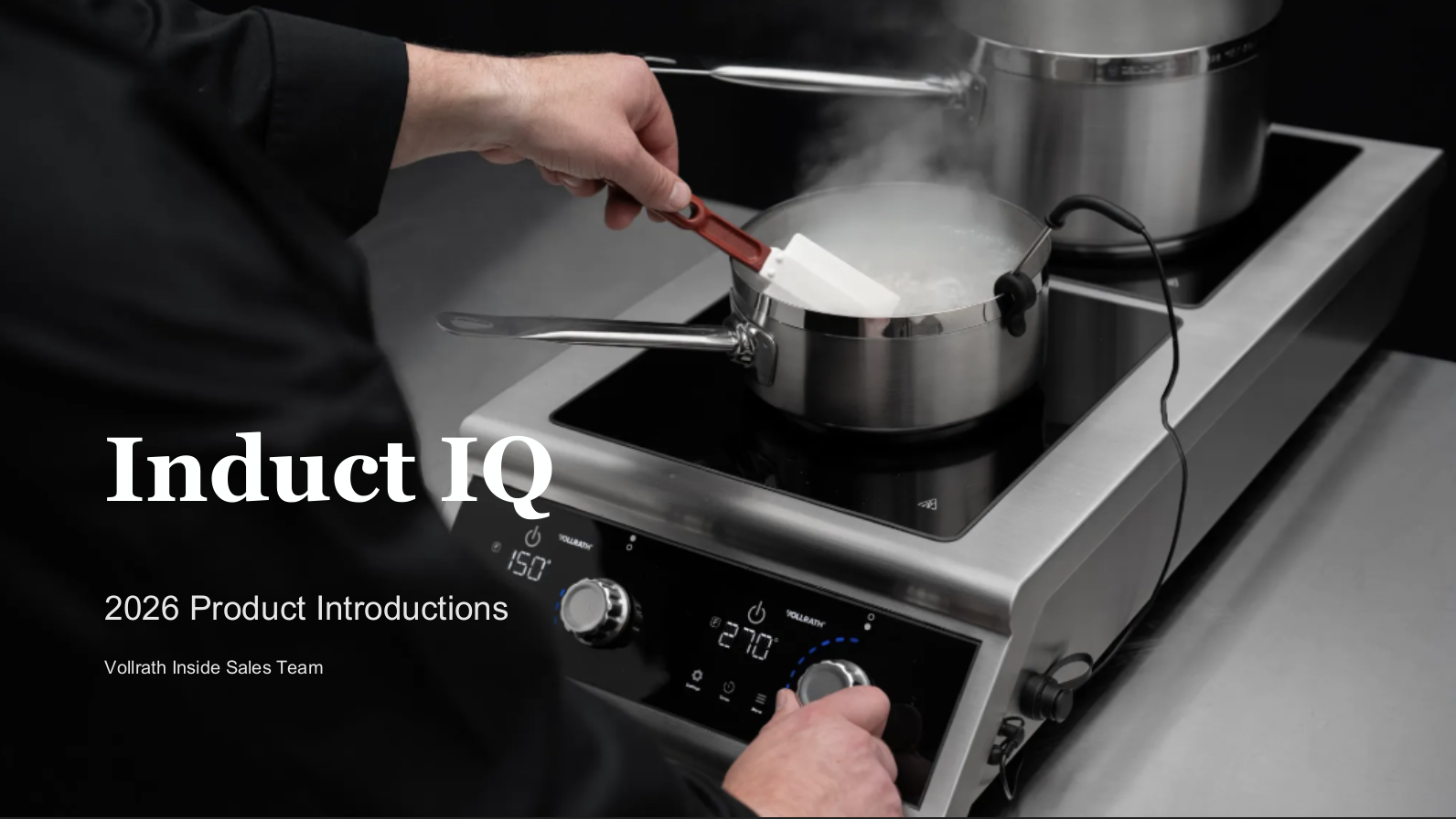
Experience the future of the heatless kitchen. Our partners at Vollrath have redefined precision cooking with their new InductIQ™ series—offering the power of gas with the safety and efficiency of induction. Explore how these smart, waterless, and energy-efficient solutions are modernizing facilities from healthcare to hospitality.
Commercial kitchens are under constant pressure to do more with less: less energy waste, less downtime, less labor strain, and less room for error. That is one reason induction cooking continues to gain traction across foodservice operations, from back-of-house production areas to serving lines and rethermalization stations.
Unlike traditional cooking equipment that heats a burner or surface first, induction technology generates heat directly in the pan. The induction unit creates a magnetic field that activates compatible cookware, allowing the pan itself to become the heat source. For foodservice operators, that creates a powerful combination of speed, control, safety, and efficiency.
Why Induction Matters in Commercial Kitchens
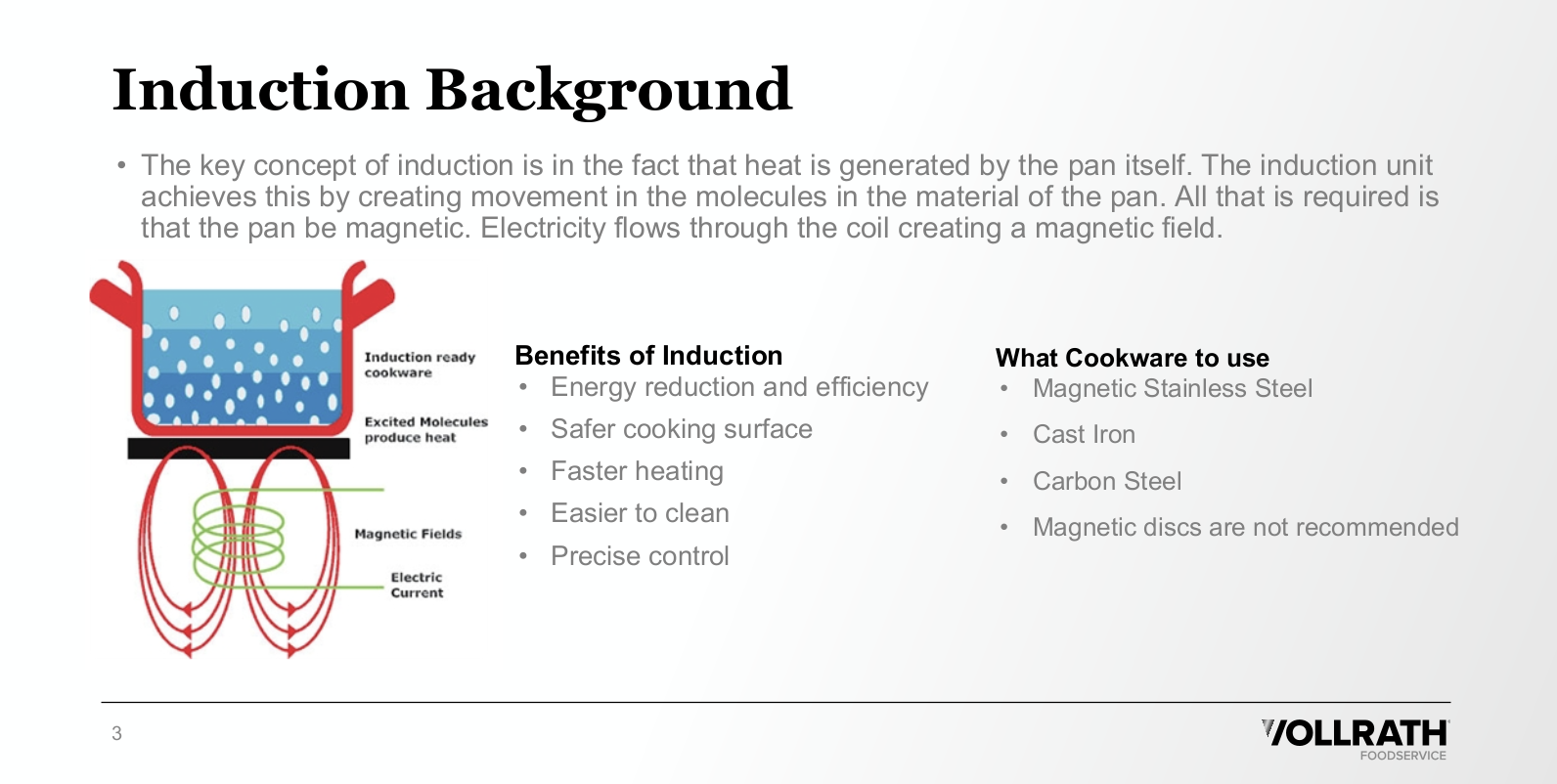
Commercial induction cooking offers several practical benefits for operators:
- Energy efficiency. Induction transfers heat directly to the cookware, helping reduce wasted energy compared with traditional cooking methods.
- Faster heating. Because the pan heats directly, induction can respond quickly and bring food to temperature faster.
- Precise control. Induction allows operators to make accurate adjustments, supporting consistency and repeatable cooking results.
- Improved safety. With no open flame and less residual surface heat, induction can help create a safer cooking environment.
- Easier cleaning. Smooth ceramic and glass cooking surfaces are easier to wipe down, helping reduce cleanup time.
- For facilities focused on operational efficiency, employee safety, and consistent food quality, these benefits can make induction a strong fit.
Vollrath’s New Induction Ranges with InductIQ™ Technology
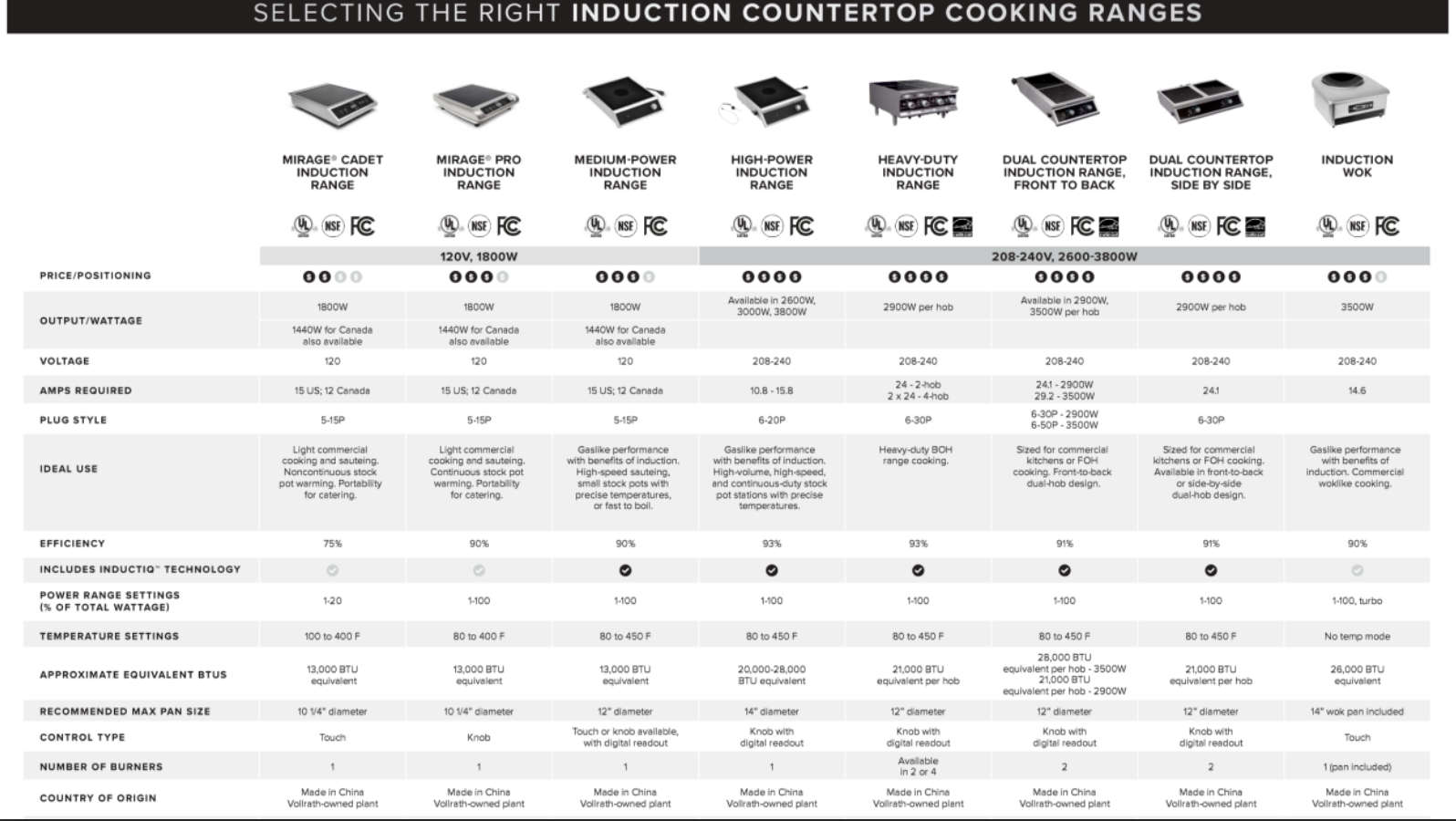
Vollrath’s new induction range offerings with InductIQ™ technology are designed to bring power and precision into commercial kitchen environments. These units are built to “cook like gas” while offering the advantages of induction, including expanded magnetic fields, instantaneous pan detection, and precise temperature control.
The new induction range product line includes:
Drop-In Induction Ranges
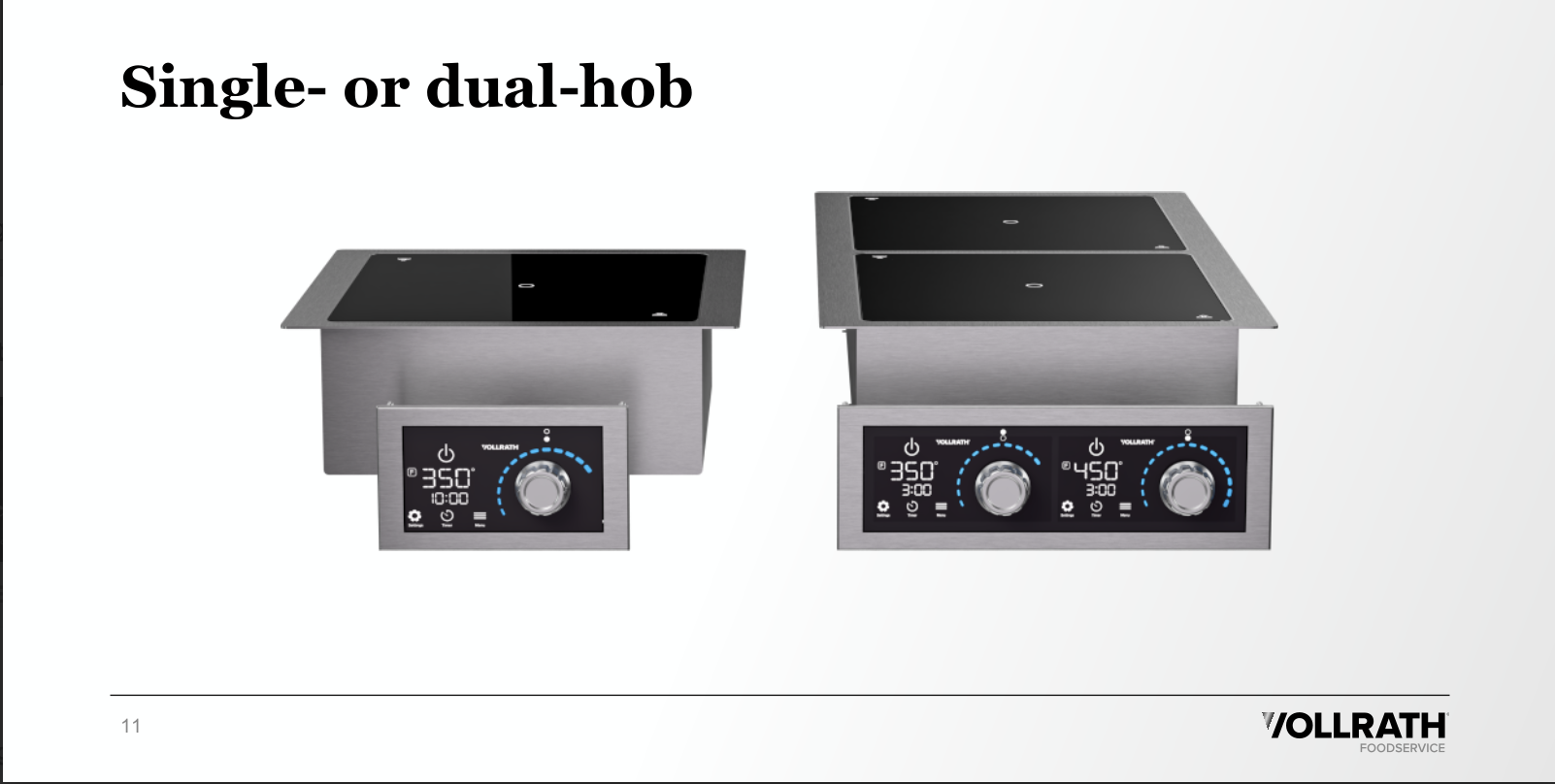
Vollrath’s single- and dual-hob drop-in induction ranges are designed for kitchens that need a clean, streamlined cooking surface. These units offer a compact drop-in design, durable stainless steel casing, ceramic tops, and powerful induction performance.
Key features include:
- 100 power settings for precise cooking control
- 2900 or 3500 watts of heat per hob
- Temperature control probe for automatic heat adjustments
- Customizable programs for repeatable results
- “Hot” warning display for safety
- Durable 18-8 stainless steel casing with ceramic top
These units are especially useful where space, appearance, and precision matter.
Heavy-Duty Induction Ranges
For back-of-house cooking, Vollrath’s heavy-duty induction ranges are built for high-performance use. Available in two- or four-hob configurations, these units are designed to provide powerful heat, responsive control, and durability for demanding kitchen environments.
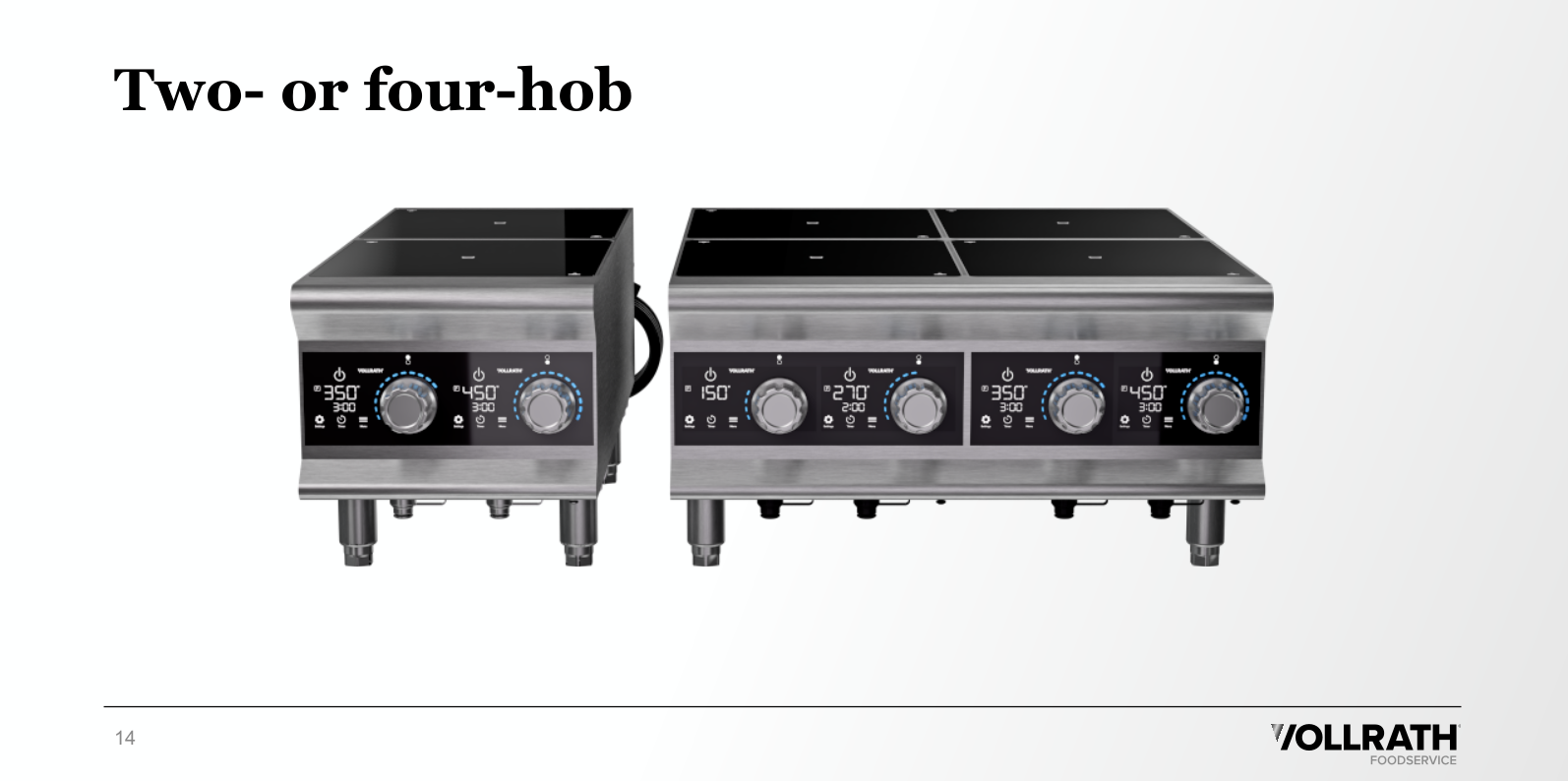
Key features include:
- 2900 watts per hob
- 100-setting power control
- Expanded magnetic field that allows pan lifting and tilting
- Temperature control probe
- Customizable programs
- Stainless steel framed hobs
- Durable, easy-to-clean glass top
- No open flame for increased cooking safety
These heavy-duty models are a strong option for kitchens that want the responsiveness of gas with the efficiency and safety benefits of induction.
Dual Countertop Induction Ranges
For kitchens that need flexibility, Vollrath’s dual countertop induction ranges offer front-to-back or side-by-side configurations. These units provide a versatile option for operations that need powerful induction cooking without a built-in installation.
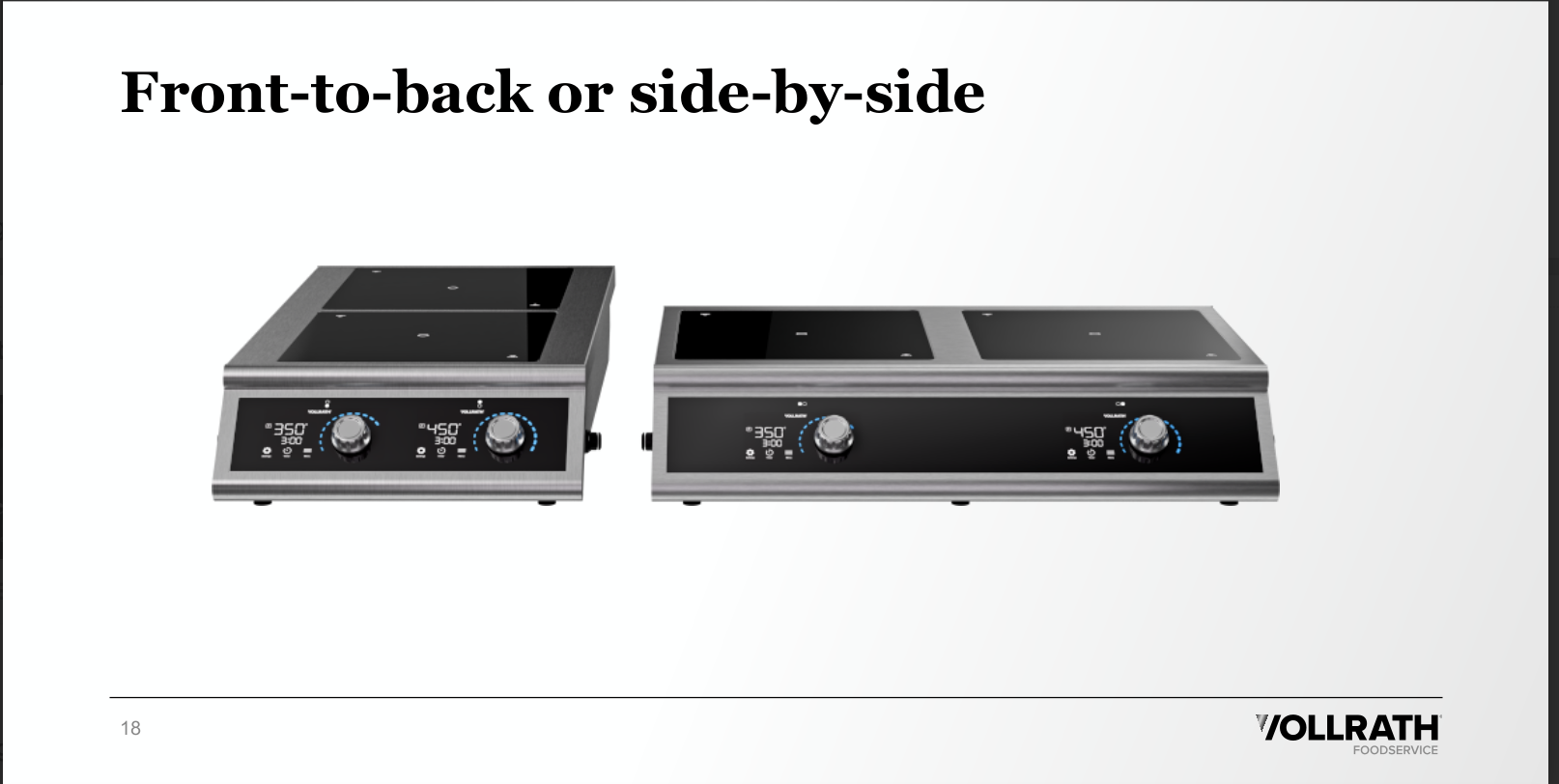
Key features include:
- Two available configurations
- 100-setting power control
- Expanded magnetic field for pan movement
- Temperature control probe
- Customizable programs
- Stainless steel framed hobs
- Durable glass top
- No open flame
Countertop induction can be a practical choice for test kitchens, production areas, serving support, and facilities that need adaptable cooking stations.
Induction Rethermalizers and Warmers
Induction is not limited to cooking. Vollrath’s induction rethermalizers and warmers are designed to heat prepared foods and hold them at safe serving temperatures. The new 4-quart induction rethermalizers and warmers give operators a smaller-format option for sauces, soups, cheese, gravy, chili, and other menu items.
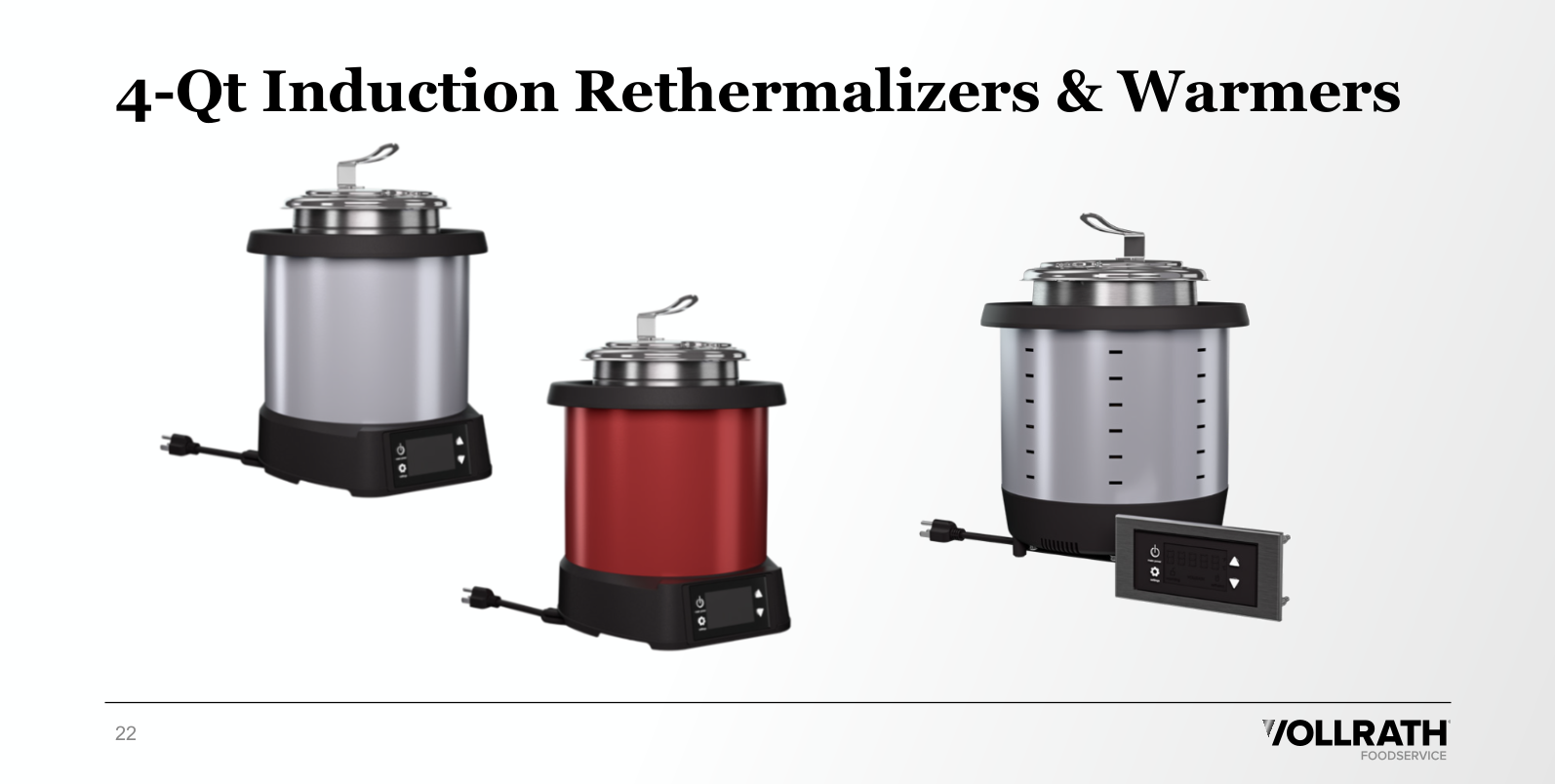
Features include:
- Countertop and drop-in options
- Preset programs for items such as chocolate, nacho cheese, gravy, chili, soup, cream soup, and mac and cheese
- Waterless operation
- 3D induction coils for even heating
- Temperature sensors in three locations
- Ability to heat food from below 40°F to 165°F in 90 minutes
- Stir light to help reduce burning
- High-visibility LED controls
- NSF 4 performance compliance for rethermalization and hot food holding
For operators focused on reducing food waste, maintaining quality, and expanding menu flexibility, induction warming and rethermalization can
be a smart addition.
Choosing the Right Cookware for Induction
Induction cooking requires magnetic cookware. Common compatible materials include:
- Magnetic stainless steel
- Cast iron
- Carbon steel
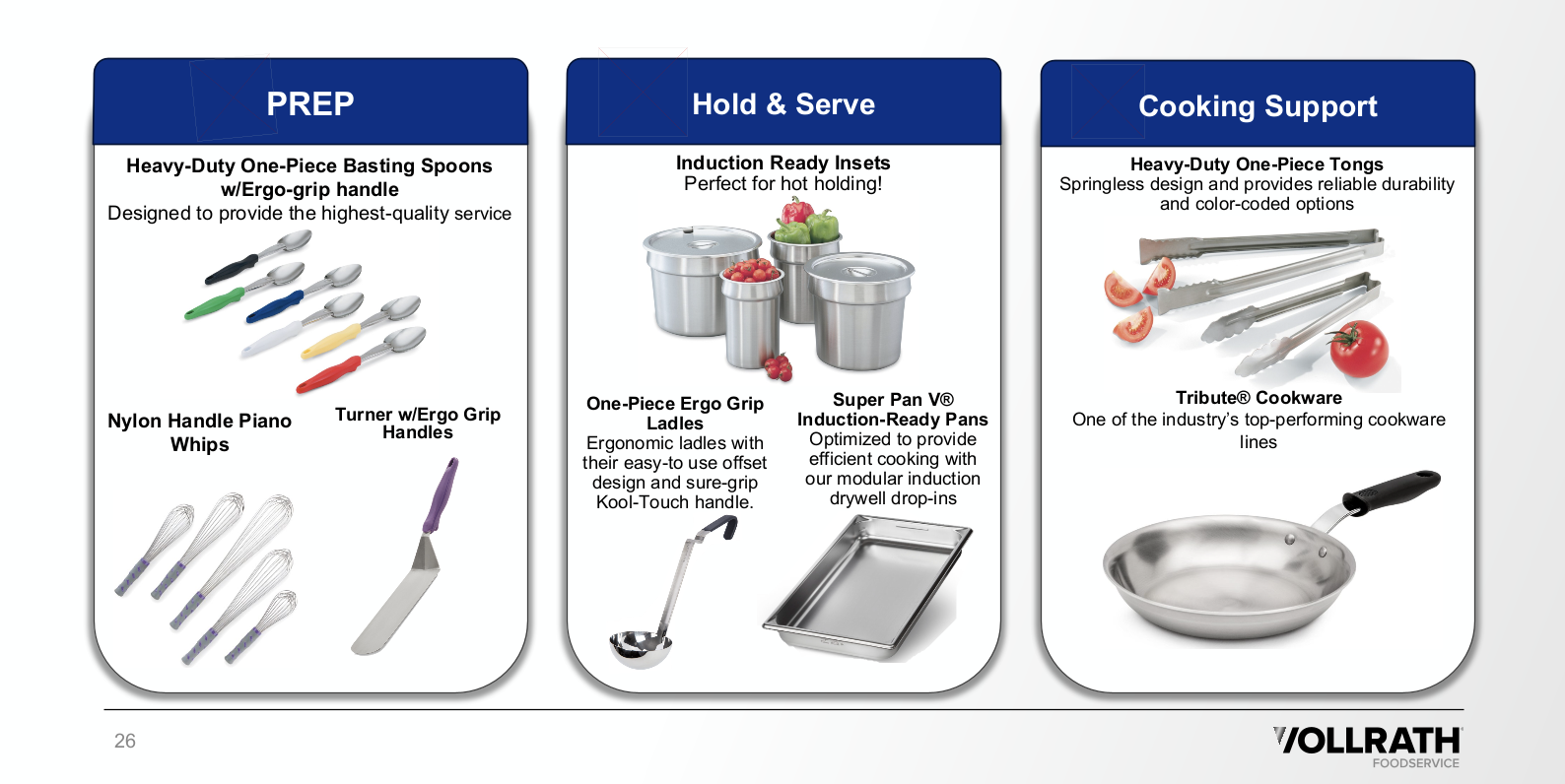
Cookware with magnetic discs is generally not recommended because it may not deliver the same performance as fully induction-compatible cookware. Selecting the right cookware is essential to getting the full benefit of induction technology.
A Strong Fit for Modern Foodservice Operations
Commercial kitchens are evolving. Operators need equipment that supports efficiency, safety, consistency, and ease of use. Induction cooking meets many of those needs by offering precise control, fast heating, easier cleaning, and reduced reliance on open-flame cooking.
For government, healthcare, education, correctional, hospitality, and commercial foodservice environments, induction equipment can support safer and more efficient kitchen operations while helping teams produce consistent results.
Aldevra works with customers to identify foodservice equipment solutions that align with their space, utility requirements, operational goals, and long-term performance needs. As induction technology continues to advance, it is becoming an increasingly practical option for facilities looking to modernize their kitchens.
Frequently Asked Questions
What is commercial induction cooking?
Commercial induction cooking uses magnetic energy to heat the cookware directly instead of heating a burner or cooking surface first. This allows for fast heating, precise control, and improved energy efficiency.
What cookware works with induction?
Induction requires magnetic cookware, such as magnetic stainless steel, cast iron, or carbon steel. If a magnet sticks to the bottom of the pan, it is likely induction compatible.
Is induction safer than gas?
Induction can improve cooking safety because it does not use an open flame and generally produces less excess heat around the cooking area.
Does induction help reduce energy use?
Yes. Because induction transfers heat directly into the cookware, it can reduce wasted energy compared with traditional cooking methods.
Can induction be used in high-volume commercial kitchens?
Yes. Heavy-duty commercial induction ranges are designed for demanding foodservice environments and can provide powerful, repeatable performance for back-of-house cooking.
What is rethermalization?
Rethermalization is the process of reheating prepared food to a safe serving temperature. Induction rethermalizers can heat and hold food while helping maintain quality and consistency.