Summary
When replacing commercial kitchen gas equipment, the gas connector hose should not automatically be reused. ANSI Z21.69/CSA 6.16 applies to connectors for moveable gas appliances and supports the best practice of using a new gas connector when an appliance is replaced or moved to a different location.
Replacing Commercial Kitchen Gas Equipment? Don’t Reuse the Gas Connector Hose
When replacing commercial kitchen equipment, most of the attention goes to the appliance itself: the fryer, range, oven, griddle, kettle, or other gas-powered unit. But one smaller component can create a major safety, compliance, and installation issue if it is overlooked: the gas connector hose.
For moveable commercial gas appliances, the gas connector is not just a reusable accessory. It is part of the installation system. The applicable product standard, ANSI Z21.69/CSA 6.16 – Connectors for Moveable Gas Appliances, applies to gas appliance connectors intended for equipment that may be mounted on casters or otherwise subject to movement. The ANSI Webstore describes the standard as applying to newly produced gas appliance connectors constructed of new, unused parts and materials for gas utilization equipment that may be mounted on casters or otherwise subject to movement.
The practical takeaway is simple: New appliance. New gas connector.
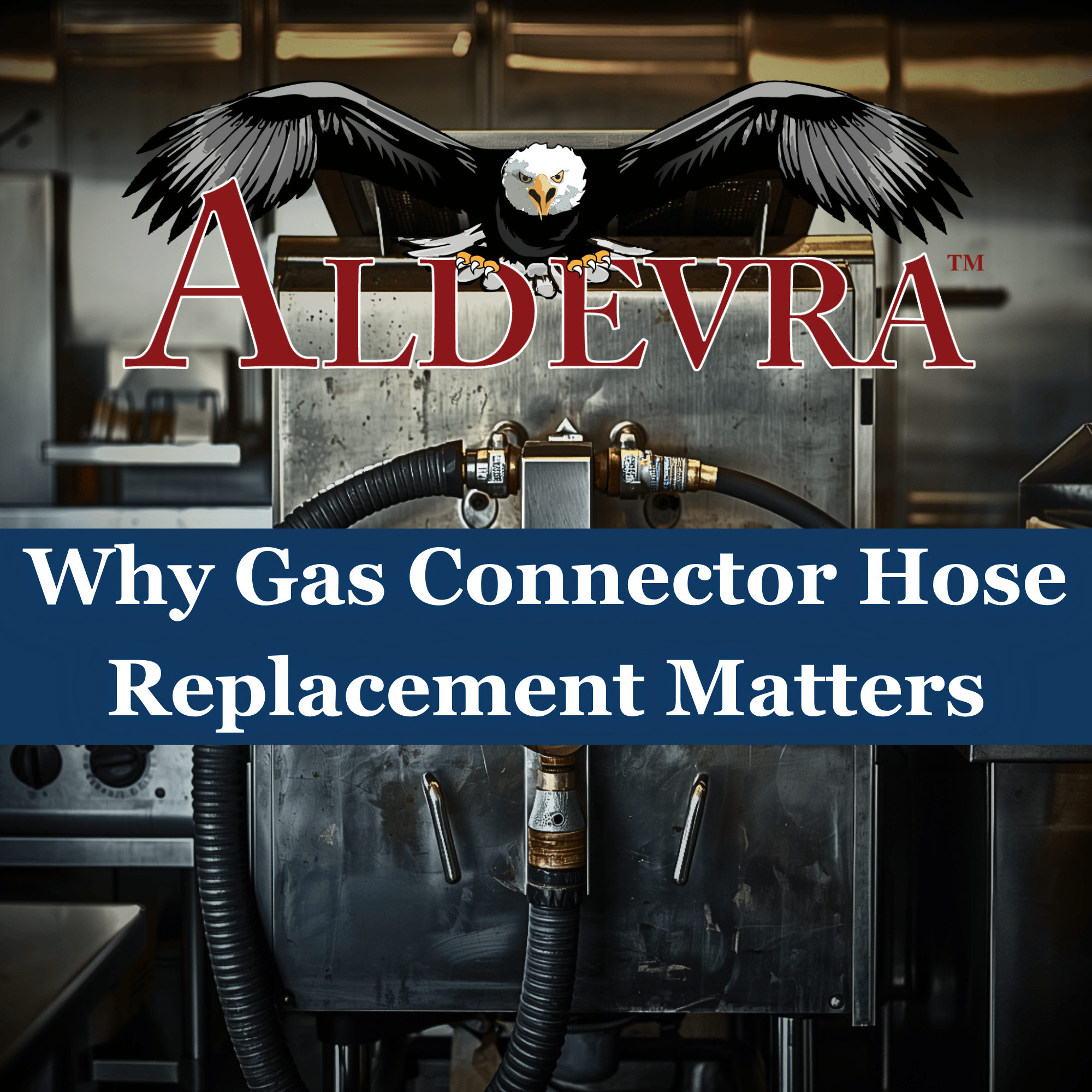
Why Gas Connector Hose Replacement Matters
Commercial kitchens are hard on equipment and components. Gas appliances are moved for cleaning, pulled out for service, pushed back into place, replaced, and sometimes relocated during renovations or layout changes.
Over time, a gas connector hose may be exposed to:
- Heat
- Grease
- Cleaning chemicals
- Repeated movement
- Stress from pulling or repositioning
- Wear at fittings or connection points
Even if the hose looks acceptable from the outside, it may not be appropriate to reuse it with a replacement appliance. The existing connector may have been selected for the old equipment, old BTU requirements, old location, or old installation conditions.
That is why gas connector replacement should be part of the planning conversation whenever commercial gas equipment is replaced.
What Standard Applies?
The relevant standard is ANSI Z21.69/CSA 6.16 – Connectors for Moveable Gas Appliances. This standard addresses connectors for gas utilization equipment that may be mounted on casters or otherwise subject to movement. It is a harmonized U.S. and Canadian standard for this category of gas appliance connector.
External Source:
ANSI Webstore: ANSI Z21.69/CSA 6.16 – Connectors for Moveable Gas Appliances
When Should the Gas Connector Be Replaced?
As a best practice, the gas connector should be replaced when:
- A gas appliance is replaced with a new appliance.
- A gas appliance is replaced with a used or refurbished appliance.
- The appliance is moved to a different location.
- The kitchen layout changes.
- The existing connector condition is unknown.
- The connector is not properly sized for the replacement equipment.
- The existing connector does not meet current installation requirements.
- The installer, authority having jurisdiction, manufacturer, or facility requires replacement.
In short, when a different appliance is being installed, the existing gas connector should not be assumed reusable.
What If the Same Appliance Is Moved for Cleaning?
Routine movement for cleaning and service is different from replacing the appliance.
Moveable gas appliances are often designed to be pulled out and moved within the same kitchen footprint for cleaning or maintenance. That does not mean the connector can be reused indefinitely or transferred to a different appliance.
The important distinction is:
Same appliance, same location: the existing connector may remain in service if it is in good condition and compliant.
Replacement appliance or different location: plan for a new connector.
Why “Existing Utilities” Does Not Mean “Reuse the Existing Hose”
A common misunderstanding in commercial kitchen equipment projects is the phrase “use existing utilities.”
Using an existing gas utility usually means the building’s gas supply connection is available. It does not automatically mean the flexible connector hose between the gas line and the appliance can be reused.
The gas connector is a separate installation component. When replacing the appliance, the connector should be reviewed and, in most cases, replaced.
This distinction matters for:
- Quotes
- Government solicitations
- Site readiness checks
- Installation scopes
- Change order discussions
- Inspections
- Warranty and startup coordination
What Should Be Included in the Installation Scope?
When replacing commercial gas equipment, the installation scope should address the gas connector clearly. Depending on the appliance and site conditions, the scope may need to include:
- New commercial gas connector hose
- Proper hose diameter and length
- Quick-disconnect fitting
- Gas shutoff valve
- Restraining cable
- Elbows or fittings, if required
- Verification of gas type and pressure
- Confirmation of BTU load requirements
- Installation by qualified personnel
- Compliance with local code and facility requirements
-
For institutional, healthcare, correctional, education, and government kitchens, documenting this upfront can help prevent delays during installation and acceptance.
Best Practice for Foodservice Operators and Facility Managers
Before replacing a gas appliance, ask these questions:
- Is the existing gas connector being replaced?
- Is the new connector properly sized for the appliance?
- Does the appliance require a restraining device?
- Does the installation comply with manufacturer instructions?
- Has the site confirmed gas type, pressure, and utility location?
- Will the work be performed by qualified personnel?
- Are local code requirements or facility policies more restrictive?
These questions are especially important when replacing equipment in older kitchens or renovation projects where existing utilities may not match the new appliance.
The Bottom Line
Gas connector hoses are small compared to the equipment they serve, but they are critical to a safe and compliant commercial kitchen installation.
When replacing commercial kitchen gas equipment, do not assume the existing gas connector hose can be reused. The safer and cleaner planning assumption is:
New appliance. New gas connector.
Replacing the connector at the time of installation helps reduce safety risk, supports compliance with applicable standards, and avoids unnecessary project delays.
FAQ Section
Can you reuse a commercial kitchen gas connector hose?
In most replacement situations, no. When a gas appliance is replaced or moved to a different location, the existing connector should not be assumed reusable. The applicable standard is ANSI Z21.69/CSA 6.16 for connectors for moveable gas appliances.
What standard applies to commercial moveable gas appliance connectors?
The applicable standard is ANSI Z21.69/CSA 6.16 – Connectors for Moveable Gas Appliances. It applies to connectors intended for gas equipment that may be mounted on casters or otherwise subject to movement.
Do I need a new gas hose when replacing a fryer?
Yes, that should be the planning assumption. A fryer replacement means a different appliance is being installed, so the gas connector should be replaced unless a qualified installer and applicable requirements clearly support otherwise.
Does this apply to used or refurbished equipment?
Yes. The issue is not whether the replacement appliance is new or used. The issue is that the appliance is being replaced. A replacement gas appliance should be installed with a proper connector suited for that appliance and installation.
Can the same connector be used when equipment is moved for cleaning?
Possibly, yes. Moving the same appliance within the same kitchen footprint for cleaning or service is different from replacing the appliance or moving it to a different location. The connector should still be inspected and maintained.
Is the gas connector included when I buy commercial kitchen equipment?
Not always. Some quotes include connector kits, and some do not. Buyers should confirm whether the quote includes a new gas connector hose, quick disconnect, restraining cable, shutoff valve, and any required fittings.
Who should install a commercial gas connector hose?
A qualified installer or licensed professional should install the connector in accordance with manufacturer instructions, applicable codes, and facility requirements.
Need help replacing commercial kitchen equipment? Aldevra helps customers source commercial kitchen equipment and coordinate installation requirements for foodservice, healthcare, government, education, and institutional kitchens.
Contact Aldevra to discuss your commercial kitchen equipment needs.