Summary
When choosing between a countertop ice machine and a freestanding ice machine, it’s important to understand the differences in size, capacity, installation requirements, and best-use scenarios. Countertop ice makers are compact, convenient, and ideal for smaller spaces or self-serve areas, while freestanding models offer higher production capacity, greater storage, and are best for high-volume operations. Learn the pros, cons, and key factors to help you decide which type is right for your business. Ice is a staple in nearly every foodservice and hospitality operation — from restaurants and hotels to healthcare facilities and breakrooms. But when it comes to choosing the right ice machine, operators often have to decide between two main types: countertop and freestanding. Both produce ice efficiently, but they serve different needs. Let’s break down what they are, how they differ, and the pros and cons of each.
What Is a Countertop Ice Machine?
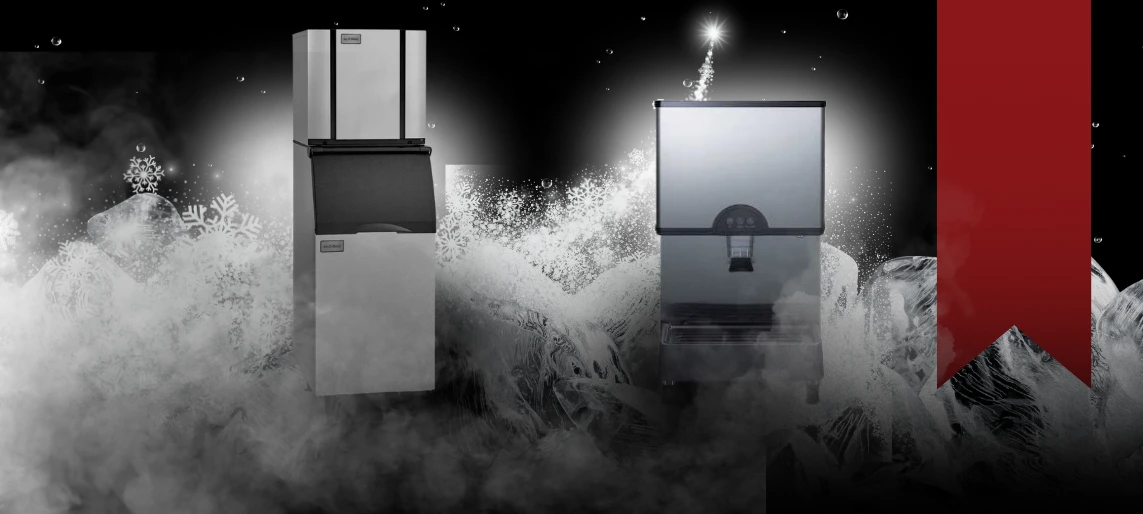
A countertop ice machine is designed to sit on top of a counter or work surface. It’s typically smaller in size and has a built-in bin for storing ice. These are popular in offices, healthcare facilities, and smaller foodservice operations — especially in self-serve beverage stations.
Key Features:
- Compact footprint
- Easy to install — often just requires a water line and power source
- Produces chewable “nugget” or “chewblet” ice in many models
- Ice is dispensed directly into cups to minimize contamination
What Is a Freestanding Ice Machine?
A freestanding ice machine is a floor-standing unit that combines an ice maker with a large-capacity storage bin. These are common in restaurants, bars, hotels, and high-volume cafeterias where ice demand is constant.
Key Features:
- Large production and storage capacity
- Often modular (machine head + bin) for easier servicing and flexibility
- Can produce different ice types: cube, flake, nugget
- Requires floor space and professional installation
Key Differences Between Countertop and Freestanding Ice Machines:
Pros & Cons of Countertop Ice Machines:
Pros:
- Small footprint — fits in tight spaces
- Easy to install and maintain
- Great for self-service (minimal contact with ice)
- Often produces chewable nugget ice preferred by customers
Cons:
- Lower production capacity
- Limited storage
- May not keep up with high-volume demand
Pros & Cons of Freestanding Ice Machines:
Pros:
- High production and storage capacity
- Variety of ice types available
- Better suited for continuous, heavy use
- Modular options for flexibility and easier repairs
Cons:
- Requires more space
- Higher upfront cost
- Needs professional installation and more maintenance
Which One Should You Choose?
Your decision should come down to volume needs, space, and budget:
- If you run a small café, office, or healthcare facility with moderate ice needs, a countertop ice machine may be the best choice.
- If you operate a restaurant, hotel, or high-volume cafeteria where ice demand is constant, a freestanding ice machine is the better investment.
At Aldevra, we help foodservice operators choose the right ice equipment for their specific needs — from compact countertop models to high-capacity freestanding units from trusted brands like Follett, Scotsman, Hoshizaki and Manitowoc.
📦 Ready to upgrade your ice production? Contact us to find the perfect fit for your operation.
You Might Be Wondering
1. What’s the main difference between countertop and freestanding ice machines?
Countertop models sit on a counter and make smaller amounts of ice. Freestanding machines are floor units built for high-volume use and larger storage.
2. Which type of ice machine is best for small spaces?
A countertop ice machine. It’s compact, easy to install, and perfect for offices, cafés, or self-serve drink stations.
3. When should I choose a freestanding ice machine?
If your kitchen or bar needs a lot of ice throughout the day, go freestanding. It’s built to handle constant demand and offers more storage.
4. Do countertop ice machines need professional installation?
No. Most only need a water line and power source. Freestanding models, on the other hand, usually require professional setup.
5. What kind of ice will I actually get from each machine?
Countertop units often produce nugget or chewable ice. Freestanding machines can make cube, flake, or nugget ice depending on the model.


.png)
.png)