Summary
Not every event venue needs a full restaurant-style kitchen. Learn the differences between catering, reheat/finish, full production, and hybrid kitchens—and what each may require.
Do You Need a Full Commercial Kitchen for an Event Venue? Catering Kitchen vs. Full Kitchen
If you’re opening, renovating, or updating an event venue, one of the first questions to answer is:
Do you actually need a full commercial kitchen?
For some venues, the answer is yes. For others, building a restaurant-style kitchen could mean purchasing equipment, adding utilities, and taking up valuable space for capabilities that rarely get used.
The right answer depends primarily on how food will be prepared and served at your venue.
A wedding venue that relies almost entirely on outside caterers has very different kitchen requirements from a VFW hall that hosts weekly fish fries or an American Legion post that prepares breakfasts, dinners, and community events onsite.
Before you start selecting equipment, determine which type of kitchen best fits your operation.
Four Common Event Venue Kitchen Models
Most event venue kitchens fall into one of four general categories.
1. Catering / Staging Kitchen
A catering or staging kitchen is primarily designed to support food that has been prepared somewhere else.
Outside caterers bring food into the venue and use the kitchen to stage, temporarily store, hold, plate, and serve it.
Depending on the operation and local requirements, useful equipment and features may include:
- Commercial refrigeration
- Stainless steel worktables
- Handwashing facilities
- Warewashing
- Three-compartment sink
- Heated holding cabinets
- Insulated food carriers
- Ice machine
- Shelving
- Mobile racks and carts
- Adequate electrical receptacles
- Convenient loading and unloading access
The key word is flexibility.
Different caterers may use the space differently, so open work surfaces, accessible refrigeration, mobile equipment, and good staging areas can be more valuable than filling the room with specialized cooking equipment.
2. Reheat / Finish Kitchen
Some venues need more than a catering staging area but still don’t need to prepare complete meals from scratch.
Food may arrive prepared or partially prepared and then be:
Stored → Reheated → Finished → Held → Plated → Served
This type of kitchen may need:
- Commercial refrigerators and freezers
- Convection or other appropriate ovens
- Heated holding cabinets
- Stainless steel prep tables
- Sinks
- Warewashing equipment
- Mobile racks
- Ice equipment
- Serving and banquet equipment
Depending on the appliances and cooking processes involved, ventilation, fire suppression, electrical, gas, plumbing, and drainage requirements may also need to be evaluated.
A reheat/finish model can provide substantial foodservice capability without automatically building a complete restaurant cooking line.
3. Full Production Commercial Kitchen
A full production kitchen is designed to prepare meals onsite.
This may be appropriate for facilities that regularly host:
- Community breakfasts
- Fish fries
- Banquets
- Fundraising dinners
- Member meals
- Weddings with onsite food production
- Holiday dinners
- Community meal programs
Depending on the menu, equipment might include:
- Commercial ranges
- Convection ovens
- Combi ovens
- Fryers
- Griddles
- Charbroilers
- Steam equipment
- Food preparation equipment
- Reach-in or walk-in refrigeration
- Commercial warewashing
- Heated holding equipment
- Ice machines
- Appropriate ventilation and fire suppression
A full production kitchen provides the most capability, but it can also require the greatest investment in equipment and building infrastructure.
That is why the decision should start with the menu and operating plan, not an equipment wish list.
4. Hybrid Kitchen
For many event venues, a hybrid kitchen may provide the greatest flexibility.
A hybrid facility can accommodate outside caterers while also supporting some onsite cooking.
For example, an American Legion or VFW post might prepare its own breakfasts and fundraising dinners while renting the hall for weddings that use outside caterers.
The kitchen therefore needs to work for both situations.
A hybrid approach can be highly versatile, but careful planning is important. Otherwise, a facility can end up with an expensive collection of equipment that takes up space without creating a functional workflow.
Start With One Question: What Happens to the Food?
An easy way to begin is to follow the food.
Ask what will typically happen from the time food enters the building until it reaches the guest.
Scenario A: Outside Caterer
Food arrives prepared → Refrigerated or held → Staged → Plated/buffeted → Served
Your priorities may be refrigeration, staging, hot holding, ice, warewashing, and loading access.
Scenario B: Food Arrives Partially Prepared
Food arrives → Stored → Reheated/finished → Held → Plated → Served
Now you may need additional cooking or reheating equipment and should evaluate the associated utilities and ventilation.
Scenario C: Meals Are Prepared Onsite
Ingredients arrive → Stored → Prepped → Cooked → Held → Plated/buffeted → Served
This generally creates much broader requirements for cooking, preparation, refrigeration, ventilation, sanitation, and warewashing.
This simple exercise can prevent a venue from designing a kitchen around equipment it does not actually need.
When Does a Full Commercial Kitchen Make Sense?
A full production kitchen may make sense when onsite food preparation is an important part of the venue’s operation.
For example, consider a facility that plans to prepare meals for 200 guests several times each month.
In that situation, sufficient cooking capacity could directly affect the organization’s ability to operate efficiently and serve events.
A full kitchen may also make sense if the organization wants to:
- Operate its own foodservice program
- Prepare recurring member meals
- Host regular fundraising meals
- Provide in-house catering
- Expand the types of events the facility can accommodate
However, more equipment does not automatically make a venue more marketable.
The equipment needs to support an actual operating plan.
When Might a Catering Kitchen Be Enough?
If nearly every event uses an outside caterer, a full cooking line may provide limited value.
In that situation, ask what caterers actually need from the facility.
They may care much more about:
- Where they can unload
- Where food can be refrigerated
- Whether there is adequate prep space
- Where hot food can be held
- Whether sufficient electrical power is available
- How close the kitchen is to the event room
- Where dishes are returned
- Whether there is adequate ice
- How cleanup and warewashing are handled
Before investing in a full production kitchen, talk to several caterers who might realistically serve events at the venue.
Ask them:
“What would make this kitchen easier for you to work in?”
Their answers may influence the renovation more than another piece of cooking equipment.
Don’t Confuse “Commercial Kitchen” With “Lots of Equipment”
A functional commercial kitchen isn’t defined by how many appliances fit in the room.
A venue could have a range, fryer, oven, refrigerator, freezer, ice machine, and dishwasher and still have a poorly functioning kitchen if there isn’t enough space to receive, store, prepare, hold, and move food.
Think about the complete workflow:
Receiving → Storage → Preparation → Cooking/Reheating → Holding → Service → Dirty Dish Return → Warewashing → Clean Storage
The best kitchen is the one that supports that process efficiently.
What About a Commercial Hood?
This is an important question because ventilation and fire suppression can significantly affect project scope.
Whether a particular kitchen or appliance requires a specific hood or ventilation system depends on factors including the equipment, cooking process, installation, and applicable codes and local requirements.
Don’t assume that:
“It’s a commercial kitchen, so we need a hood.”
But don’t assume the opposite either:
“We’re just an event venue, so we don’t need one.”
Instead, identify the proposed cooking equipment and processes first.
Then have the ventilation and fire-suppression requirements evaluated before ordering the equipment.
That sequence matters.
Think Carefully Before Adding Fryers
Fryers can be extremely useful for organizations that regularly prepare fish fries, chicken, french fries, or similar menu items.
But adding frying capability can also affect the kitchen beyond the cost of the fryer itself.
Depending on the project, associated considerations may include ventilation, fire suppression, gas or electrical service, grease management, clearances, cleaning, and maintenance.
If fried food is central to the organization’s operation, those investments may make sense.
If a fryer might only be used a few times each year, evaluate whether it is worth designing part of the kitchen around it.
Refrigeration Is Important in Every Kitchen Model
Whether food is cooked onsite or catered in, refrigeration is usually a major planning consideration.
A catering-oriented venue may actually need substantial refrigeration because several events’ worth of food and beverages can arrive within a relatively short period.
Consider:
- Reach-in refrigerators
- Reach-in freezers
- Undercounter refrigeration
- Walk-in coolers
- Walk-in freezers
- Bar refrigeration
Size refrigeration around peak event conditions, not an average Tuesday.
A 250-person Saturday wedding can create very different storage requirements from the facility’s normal weekday activity.
A Walk-In Cooler Isn’t Automatically Better
Walk-in refrigeration can provide substantial storage capacity, but it also requires space and installation.
Depending on the project, a walk-in may involve:
- Insulated panels
- Refrigeration system
- Electrical work
- Drainage
- Installation labor
- Controls
- Coordination with other trades
For some venues, multiple commercial reach-in refrigerators may provide sufficient capacity and additional flexibility.
For others, a walk-in may be the better long-term solution.
The decision should be based on actual storage requirements, available space, event volume, and project conditions.
Warewashing Can Determine How Well an Event Kitchen Works
Cooking often gets the attention during kitchen planning.
But imagine the end of a 200-person wedding.
Hundreds of plates, glasses, utensils, pans, and serving pieces may suddenly return to the kitchen.
If the venue uses reusable serviceware, consider the complete warewashing process:
Dirty dish return → Scraping/pre-rinse → Washing → Clean dish handling → Drying → Storage
Depending on the operation, equipment may include a commercial dishmachine, pre-rinse station, three-compartment sink, soiled dish table, clean dish table, and appropriate storage.
A kitchen that can prepare food for 250 people but cannot efficiently process the dishes afterward has a capacity problem.
Don’t Forget Hot Holding
Food doesn’t always go directly from the oven to the guest.
At an event, food may need to wait while:
- Guests arrive
- Photographs are taken
- A ceremony runs late
- Speeches occur
- Tables are released
- The buffet is prepared
Heated holding cabinets and other appropriate holding equipment can therefore be important for event venues.
This is especially true when the kitchen and event room are separated by hallways or significant distance.
The Bar May Need Its Own Plan
If the venue includes a bar, evaluate it separately from the kitchen.
Depending on the operation, consider:
- Ice production and storage
- Underbar refrigeration
- Glasswashing
- Handwashing
- Dump sinks
- Beverage dispensing
- Work surfaces
- Bottle and can storage
A bar designed for occasional member use may perform very differently when 200 wedding guests arrive at the same time.
Your Building May Make the Decision for You
Before deciding that you want a full production kitchen, understand what the building can support.
Older event facilities may have limitations involving:
- Electrical capacity
- Voltage and phase
- Gas service
- Water
- Drainage
- Ventilation
- Fire suppression
- Grease management
- HVAC
- Equipment clearances
- Delivery access
Adding a particular piece of cooking equipment can sometimes trigger work elsewhere in the building.
That doesn’t necessarily mean you shouldn’t do it.
It means the total project cost should be understood before the equipment is purchased.
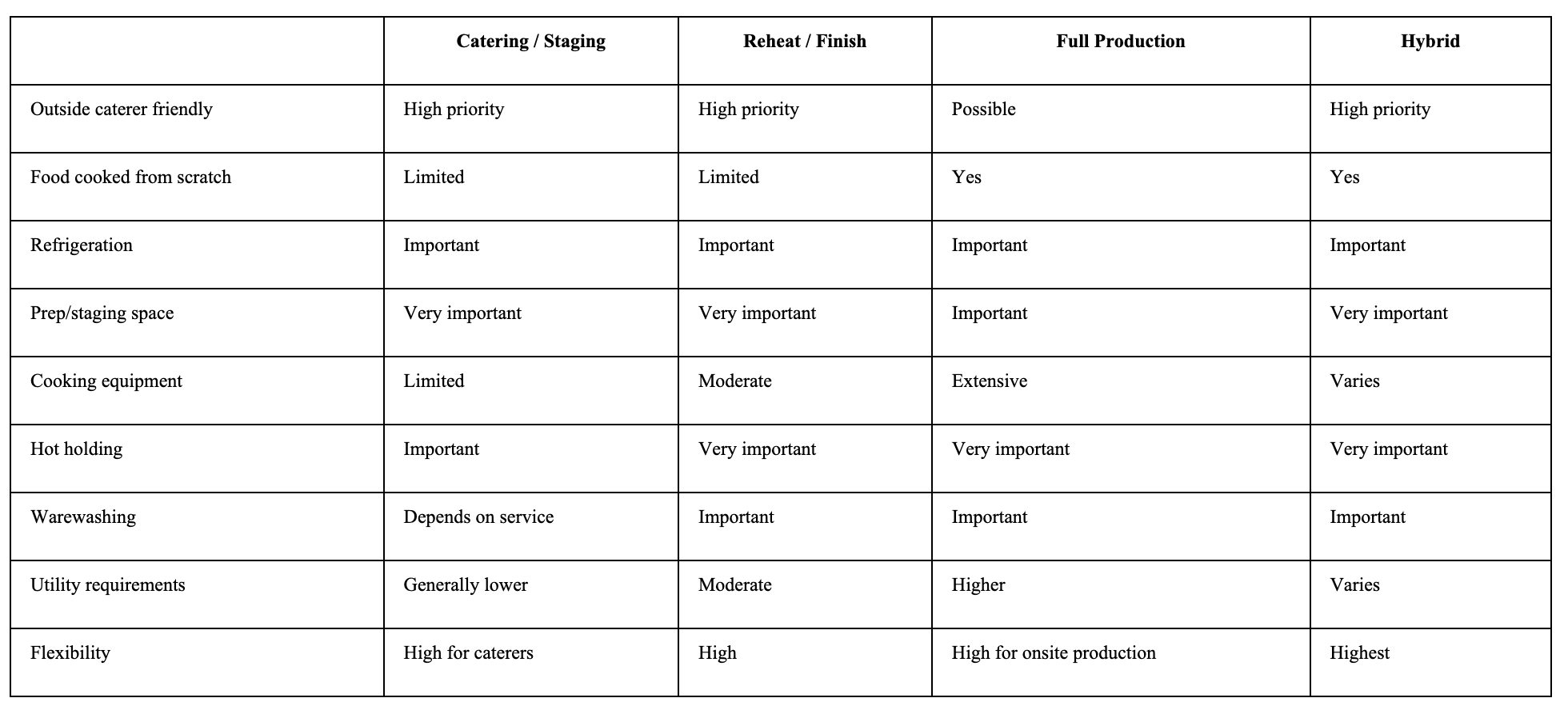
Compare the Four Kitchen Models
Which Kitchen Is Right for Your Venue?
Start with these questions:
- What is the maximum number of guests?
- How frequently will events occur?
- Who prepares the food?
- Where is the food prepared?
- What representative menus will be served?
- Will outside caterers use the kitchen?
- Will the organization prepare its own meals?
- Will you offer buffet, plated, or both types of service?
- Will there be a bar?
- What equipment and infrastructure already exist?
- How much refrigeration is needed during the largest event?
- How will dishes be washed and stored?
- What is the renovation budget?
Once those questions are answered, the equipment list becomes much easier to develop.
Build Your Preliminary Kitchen Plan
Still unsure whether you need a catering kitchen, reheat/finish kitchen, full production kitchen, or something in between?
Use Aldevra’s Event Venue Commercial Kitchen Planner.
The interactive planner considers your venue capacity, foodservice model, cooking needs, refrigeration, warewashing, existing infrastructure, and project plans to generate:
- A preliminary kitchen type
- Likely equipment and systems
- Equipment to consider
- Infrastructure items to verify
- Project planning considerations
- An initial project-complexity assessment
[Build My Preliminary Kitchen Plan →]
Frequently Asked Questions
Can an event venue have a commercial kitchen just for caterers?
Yes. A venue kitchen can be designed primarily around receiving, staging, holding, plating, and serving food prepared elsewhere. The specific equipment and regulatory requirements will depend on how the kitchen is used and local requirements.
Do outside caterers prefer venues with kitchens?
A well-planned kitchen can make an event venue easier for caterers to use. Refrigeration, work surfaces, hot holding, warewashing, electrical access, ice, and convenient loading can all be valuable.
The best approach is to ask caterers who regularly serve your market what capabilities matter most to them.
Is a catering kitchen cheaper than a full commercial kitchen?
It can be, particularly when less cooking equipment and associated infrastructure are required. However, project cost depends heavily on the existing building, equipment selections, utilities, construction, permits, and installation requirements.
Can we add cooking equipment later?
Potentially. If you plan to renovate in phases, design the overall kitchen first.
Consider future electrical, gas, ventilation, fire-suppression, plumbing, drainage, and space requirements so today’s renovation does not make tomorrow’s expansion unnecessarily difficult.
Should an American Legion or VFW hall have a full kitchen?
It depends on how the facility operates.
A post that regularly prepares breakfasts, fish fries, dinners, and fundraising meals may benefit from full production capability.
A facility primarily renting its hall for catered events may benefit more from a flexible catering or hybrid kitchen.
The organization should design around its actual and planned uses rather than automatically replacing whatever equipment has historically been in the kitchen.
Plan the Operation Before You Buy the Equipment
The question isn’t simply:
“What equipment should we buy?”
The better question is:
“What do we need this kitchen to do?”
Once you know how food will be prepared, how many people you need to serve, who will use the kitchen, and what the building can support, you can make much better equipment decisions.
Aldevra helps organizations evaluate commercial foodservice equipment, replacement and upgrade options, and the installation and infrastructure considerations associated with commercial kitchen projects.
Whether you’re planning a catering kitchen, updating an existing community kitchen, or developing a full production kitchen for an event venue, start with the operation.
Then build the kitchen around it.
Aldevra, LLC
5865 Venture Park Dr.
Kalamazoo, MI 49009
(269) 350-1337
sales@aldevra.com
Deliver more. Grow together. Give back.