Summary
When it comes to commercial kitchens, electrical decisions are operational decisions. One of the most misunderstood—and most frequently flagged—issues is whether equipment should be connected to GFCI outlets.Using GFCIs incorrectly can cause nuisance tripping, equipment shutdowns, food loss, failed inspections, and even voided warranties. Not using them where required can create serious safety and compliance risks.So what’s the right approach?This guide breaks down when GFCI outlets are required, when they’re a problem, and how to design a kitchen that is both safe and reliable.
What Is a GFCI Outlet?
A Ground Fault Circuit Interrupter (GFCI) monitors electrical current and shuts off power if it detects leakage to ground. Its purpose is to reduce the risk of electric shock, particularly in areas where water and electricity coexist.
In residential kitchens, GFCIs are nearly everywhere. In commercial kitchens, the rules are more nuanced.
Do Commercial Kitchens Require GFCI Outlets?
Yes—but only in certain locations.
Commercial kitchens typically require GFCI protection for general-use and convenience outlets, especially where water exposure is likely. However, not all equipment should be on GFCI protection, and that distinction is where many projects run into trouble.
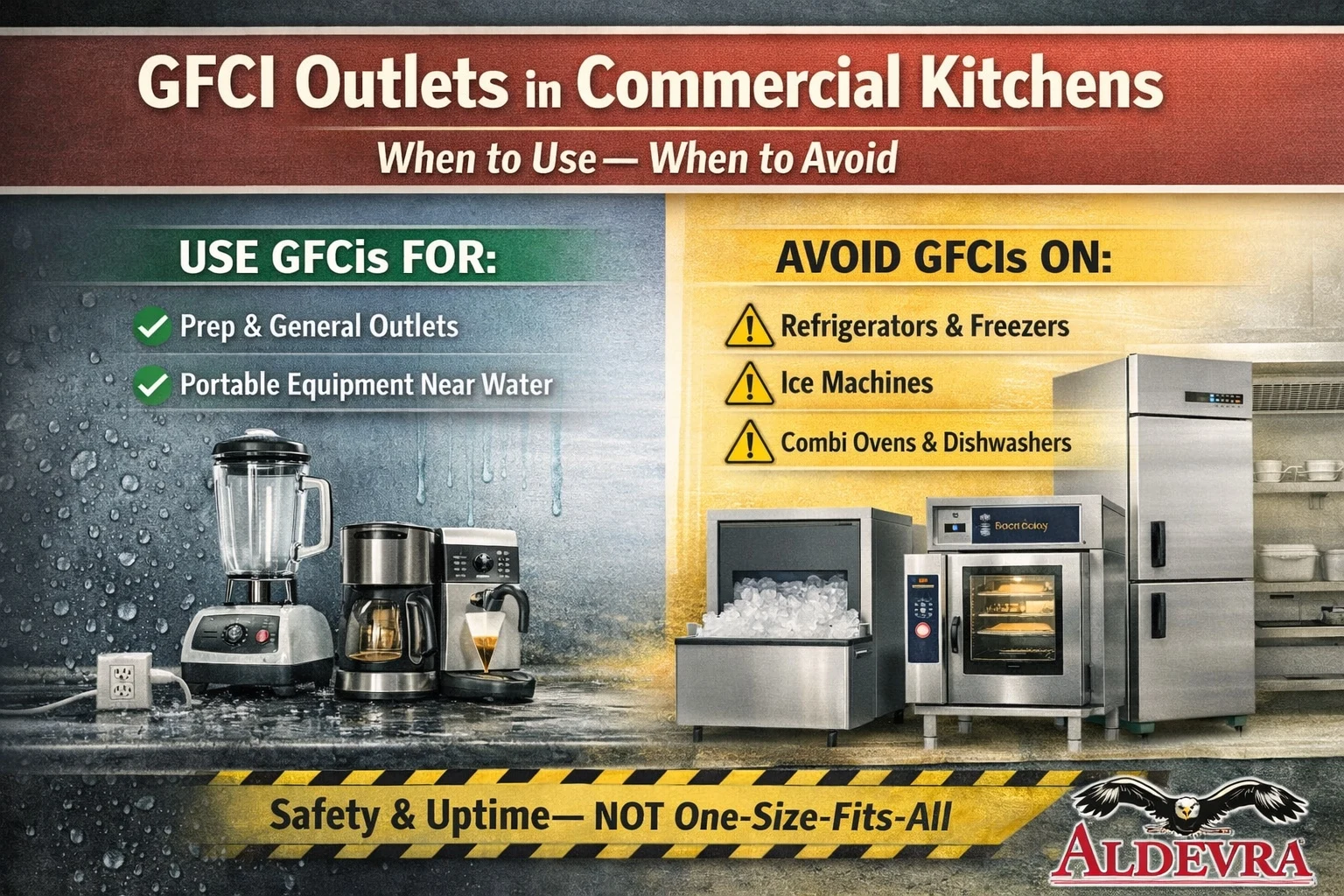
When GFCI Outlets Are Typically Required
GFCIs are most appropriate where portable equipment and wet conditions overlap.
Common examples include:
- Countertop prep equipment (mixers, slicers, blenders)
- Coffee and beverage stations
- Portable warming equipment
- Receptacles near hand sinks
- General-purpose outlets in prep or wash areas
These devices are often unplugged, moved, or operated near water—exactly what GFCIs are designed to protect against.
When GFCI Outlets Can Cause Serious Problems
Many core pieces of commercial kitchen equipment are not compatible with GFCI protection, even though they operate in kitchens.
Equipment commonly affected:
- Commercial refrigerators and freezers
- Walk-in coolers and freezers
- Ice machines
- High-temperature and conveyor dishwashers
- Combi ovens and steamers
Why this happens:
- High startup (inrush) current
- Heating elements with minor ground leakage
- Internal moisture and steam
- Sensitive electronic control boards
These normal operating conditions can cause nuisance tripping, which may not indicate a safety issue—but can shut down equipment unexpectedly.
Real-World Risk: Nuisance Tripping
A GFCI trip may seem minor—until it happens overnight.
A tripped GFCI on a freezer or refrigerator can result in:
- Thousands of dollars in food loss
- Emergency service calls
- Operational downtime
- Denied warranty claims
- Failed inspections
In many cases, the root cause is simply improper electrical design, not faulty equipment.
Does the NEC Require GFCI Protection for All Commercial Kitchen Equipment?
No. The National Electrical Code (NEC) does not require GFCI protection for all commercial kitchen equipment.
Requirements depend on:
- Equipment type
- Voltage and amperage
- Location (wet vs dry)
- Whether the equipment is hard-wired or plug-connected
- Manufacturer installation instructions
- Local code amendments
This is why blanket rules like “everything in a kitchen must be GFCI” often lead to problems.
Does Manufacturer Guidance Override Code?
In many cases, yes.
If a manufacturer’s installation manual states that GFCI protection should not be used, inspectors often defer to that guidance—provided the equipment is properly grounded and installed according to listing requirements.
Ignoring manufacturer instructions can:
- Void warranties
- Cause inspection disputes
- Shift liability to the owner
Always review equipment cut sheets before electrical rough-in.
Are Hard-Wired Appliances Exempt from GFCI Requirements?
Often, yes.
Many large commercial appliances are:
- Hard-wired
- Installed on dedicated circuits
- Properly grounded and bonded
These installations may not require GFCI protection, depending on jurisdiction and equipment listing.
What Is Considered a “Wet Location” in a Commercial Kitchen?
Wet locations generally include:
- Dish rooms
- Areas with floor drains
- Washdown zones
- Locations subject to regular water spray
Not every part of a commercial kitchen is considered a wet location, even though food is prepared throughout the space.
Do Health Departments Require GFCI Outlets?
Health departments focus on food safety, not electrical design. Electrical requirements are typically enforced by building and electrical inspectors, not health inspectors.
That said, poor electrical decisions can still lead to operational shutdowns that affect inspections and licensing.
Why Does My Commercial Equipment Keep Tripping the GFCI?
Common causes include:
- Startup current exceeding GFCI tolerance
- Heating elements leaking small amounts of current
- Moisture inside equipment housings
- Shared circuits
- Improper grounding
These conditions are common in commercial equipment and do not necessarily indicate a defect.
Can GFCI Outlets Damage Commercial Kitchen Equipment?
GFCIs don’t physically damage equipment—but repeated power interruptions can.
Frequent tripping can:
- Disrupt control boards
- Interrupt heating cycles
- Cause error codes and lockouts
- Shorten equipment lifespan
Improper GFCI use can also invalidate manufacturer warranties.
Best Practices for Designing a Code-Compliant, Reliable Kitchen
To avoid costly mistakes:
- Review manufacturer installation manuals early
- Separate convenience outlets from equipment circuits
- Use GFCIs where required—not universally
- Install dedicated circuits for mission-critical equipment
- Coordinate between dealer, electrician, and inspector before installation
Early coordination saves time, money, and headaches later.
Who Is Responsible for Electrical Compliance?
Responsibility is shared among:
- The design team
- The electrician
- The equipment dealer
- The facility owner
Clear documentation and coordination are the best defense against inspection failures and operational risk.
The Aldevra Perspective
GFCI outlets are essential safety devices—but commercial kitchens are not residential kitchens.
Using GFCIs where they don’t belong can be just as disruptive as failing to use them where required. The goal isn’t “maximum protection everywhere”—it’s the right protection in the right place.
If you’re planning a new kitchen, renovating an existing space, or troubleshooting nuisance tripping, Aldevra helps customers design kitchens that are safe, compliant, and operationally reliable from day one.

.png)
.png)