Summary
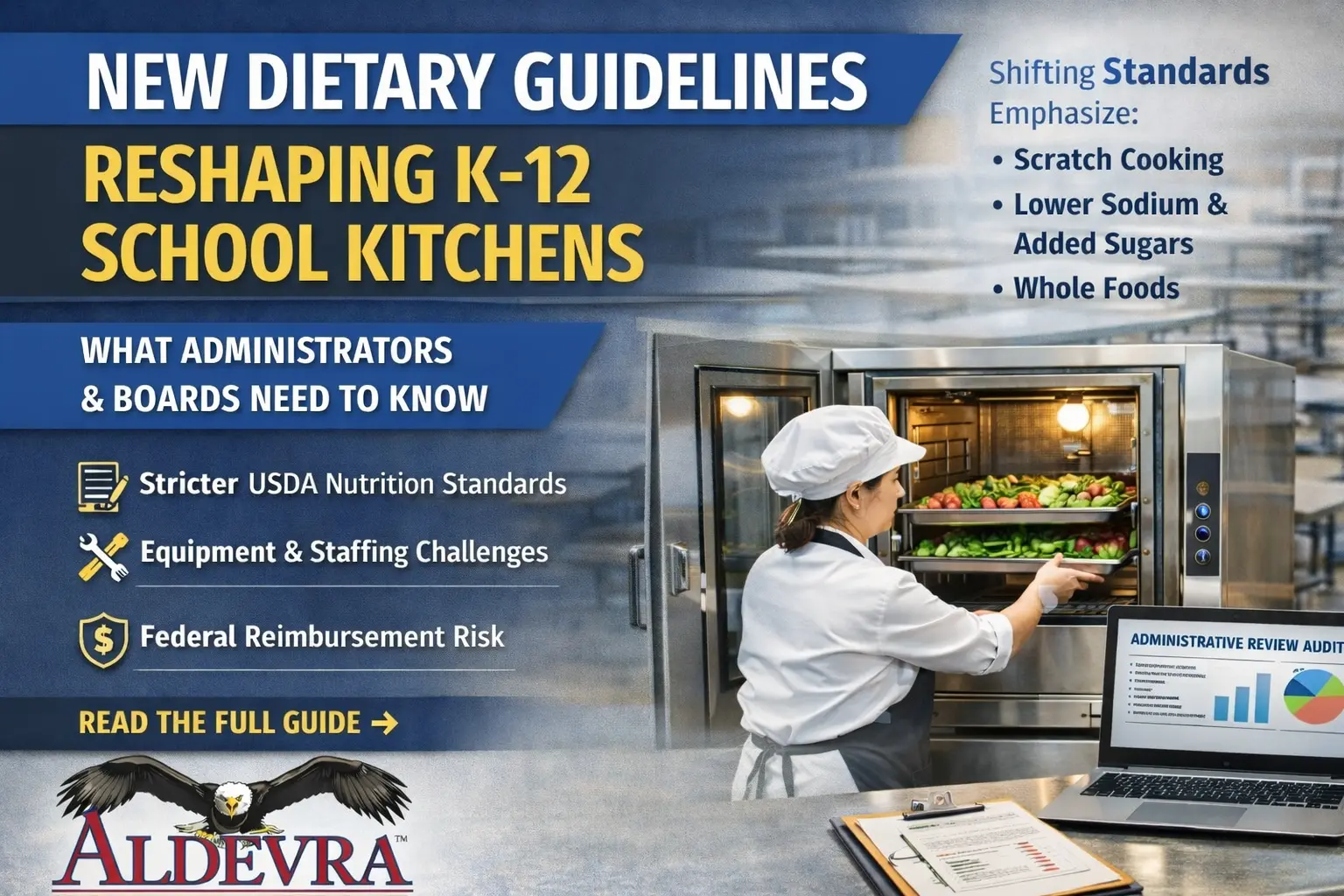
The new Dietary Guidelines are driving changes to USDA K–12 school nutrition standards, directly impacting federal meal reimbursement and audit readiness. Many school kitchens were built for heat-and-serve menus, not scratch cooking and fresh preparation. Upgrading equipment—such as combi ovens, food prep systems, refrigeration, and batch-production tools—helps districts meet evolving requirements while controlling labor, reducing waste, and maintaining compliance.
This resource is designed for K–12 nutrition directors, district administrators, facilities leaders, and school boards evaluating kitchen equipment investments. It does not replace menu certification, nutrition analysis, or state agency guidance, but supports the operational execution of compliant meals.
Why This Matters to School Funding (Not Just Menus)
The Dietary Guidelines for Americans are updated every five years and provide the scientific foundation for USDA school meal standards under the National School Lunch Program (NSLP) and School Breakfast Program (SBP).
While the Guidelines are advisory, the nutrition standards informed by them are mandatory for districts that want to:
- receive federal per-meal reimbursement,
- participate in USDA Foods (commodities), and
- remain compliant during administrative reviews and audits.
Bottom line: kitchen capability is now a funding protection issue, not just a menu issue.
What districts risk when kitchens can’t execute
When meal service can’t consistently meet standards, districts may face:
- corrective action plans,
- reimbursement delays or reductions,
- higher per-meal food costs due to limited product options,
- operational strain from workarounds, waste, and downtime.
What’s Changing Under the New Guidelines
USDA standards informed by updated guidance emphasize:
- reduced reliance on ultra-processed foods,
- lower sodium and added sugar thresholds,
- increased scratch preparation using whole foods,
- greater scrutiny of how meals are prepared—not just what’s on paper.
These changes are phased in over time, but reviews already evaluate whether districts have the operational capacity to execute compliant meals.
The Equipment Shift: From Heat-and-Serve to Scratch-Capable Kitchens
Many school kitchens were designed primarily for reheating pre-packaged foods. Today’s standards require production capability: kitchens that can cook, cool, store, and serve safely and efficiently.
That’s where Aldevra helps districts bridge the gap—with equipment planning that supports compliance, labor realities, and budget cycles.
Essential K–12 Kitchen Equipment for Today’s Nutrition Standards
1) Combi Ovens
Combi ovens are one of the most impactful upgrades for K–12 programs expanding scratch cooking.
How they help:
- Roast vegetables without excess fat
- Steam proteins while retaining texture and nutrients
- Bake whole-grain items consistently
- Reheat without drying food out
Why districts choose them:
- One unit replaces several pieces of equipment
- Faster cook times support tight meal periods
- Consistent results reduce waste and complaints
- Compact footprint works in aging kitchens
Typical planning cost range: $15,000–$75,000+
(Final pricing varies by capacity, controls, accessories, install scope. Contact Aldevra for quote.)
2) Steamers & Convection Ovens
As sodium and added sugar limits tighten, districts rely on cooking methods that preserve flavor naturally.
Benefits:
- Steamers protect texture and nutrients in vegetables
- Convection ovens support batch cooking with even results
- Reduced reliance on sauces/seasonings for flavor
3) Tilting Skillets & Kettles (Batch Production)
Ideal for central kitchens and high-volume schools making soups, sauces, grains, and proteins.
Advantages:
- Efficient batch cooking
- Improved ergonomics and staff safety
- Faster cleaning and turnaround
- More consistent output at scale
Typical planning cost range: $20,000–$40,000+ (plus install scope)
4) Food Prep Equipment
More fresh ingredients means more prep—unless kitchens have the right tools.
Supports:
- High-capacity processors and slicers
- Ergonomic prep tables and sinks
- Layout improvements that streamline flow and safety
Typical planning cost range: $5,000–$30,000 (depending on scope)
5) Refrigeration, Freezers & Cold Storage
Fresh menus require proper storage—and many schools underestimate this need.
Common upgrades:
- Reach-in refrigeration for daily prep
- Walk-in coolers sized for produce/dairy
- Freezers for batch cooking and waste reduction
- Blast chillers for districts scaling scratch production
Typical planning cost range: $10,000–$45,000+ (walk-in and system scope varies)
Sample Business Cases
- Elementary Schools Simple, reliable equipment that supports compliant menus with small staff and short service windows. View sample business case: Sample Business Case Set A: Elementary School Kitchens
- Middle & High Schools Higher throughput equipment to support menu variety, peak rush periods, and participation goals. View sample business case: Sample Business Case Set B: Middle & High School Kitchens
- Central Kitchen / Commissary Batch production, cook-chill systems, and distribution-ready storage for district-wide consistency. View sample business case: Sample Business Case Set C: Central Kitchen / Commissary Model
Contact Aldevra for help with your equipment quotes to add to your business case.
Planning Tools for Nutrition Directors
FAQs
Do the new dietary guidelines require schools to change kitchen equipment?
Not directly. But the USDA standards informed by them often require more scratch cooking, fresh prep, and storage capacity than many kitchens can support today.
How can schools upgrade kitchens without increasing labor?
Multi-function equipment reduces steps, shortens cook time, improves consistency, and simplifies cleanup—allowing healthier menus with existing staff.
Are upgrades required immediately?
Many requirements phase in over multiple school years, which is why planning and phased replacement strategies are essential.
How does Aldevra help?
Aldevra supports compliant specifications, phased plans aligned to budgets, installation coordination, and documentation that supports audits and procurement.
Why Aldevra
Aldevra helps K–12 districts align:
- nutrition standards and operational reality,
- procurement documentation and compliance,
- equipment planning and budget cycles.
We understand school constraints: short meal windows, staffing challenges, audit readiness, and public accountability.