Summary
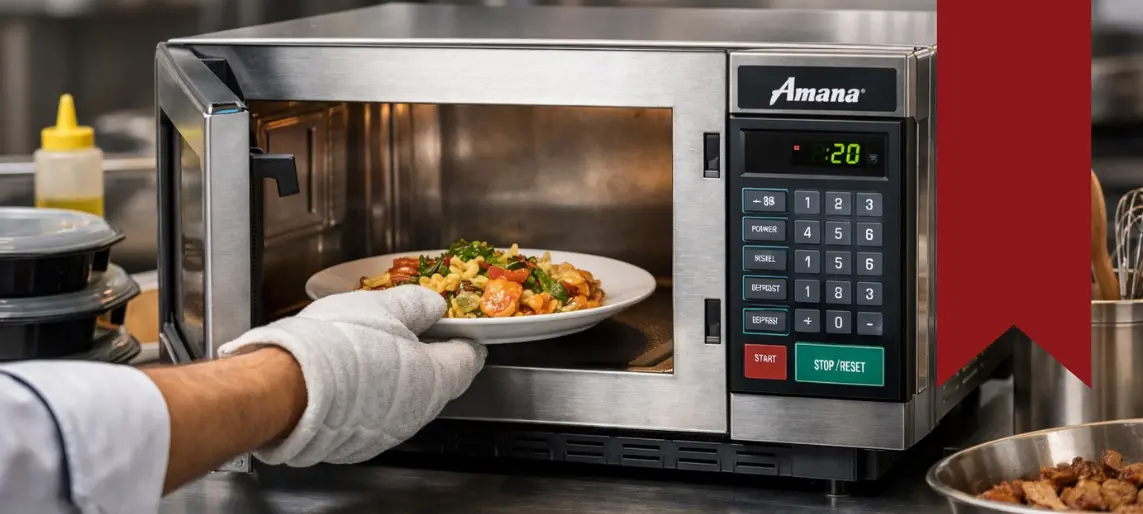
If you’ve ever stepped into a commercial kitchen and thought, “Why does this microwave look like it belongs on a spaceship?”—you’re not alone. Commercial microwaves are faster, more powerful, and more precise than residential units. They’re designed for consistency, speed, and durability—but that also means they behave very differently than the microwave you’re used to at home. This guide breaks down what’s different, what to watch out for, and how to use a commercial microwave safely and effectively without overcooking food or damaging equipment.
1. The Biggest Difference: Power Levels Matter (A Lot)
A typical residential microwave runs at 900–1,200 watts.
A commercial microwave often runs at 1,800–3,200+ watts.
That means:
• Food heats much faster
• Mistakes happen much quicker
• “One minute” at home might be 20–30 seconds commercially
Pro Tip:
If you’re converting from a home recipe, start at ⅓ to ½ the time, then adjust.
2. Commercial Microwaves Don’t “Think” for You
Residential microwaves rely on presets like:
• “Reheat”
• “Popcorn”
• “Defrost”
Commercial microwaves are built for manual control:
• You choose the time
• You choose the power level
• You choose the stages
This gives you precision—but removes the safety net.
Best practice:
Use lower power (50–70%) for reheating plated meals to avoid hot spots and dried edges.
3. Multi-Stage Cooking Is Your Secret Weapon
Most commercial microwaves allow programmed stages, such as:
• Stage 1: High power to start heating
• Stage 2: Lower power to finish evenly
• Stage 3: Hold or gentle reheat
This is especially helpful for:
• Leftovers
• Proteins
• Sauced items
• Pre-plated meals
If your kitchen reheats the same items repeatedly, programming saves time and improves consistency.
4. Containers Matter More Than You Think
Because of the higher power output:
• Thin plastics can warp or melt
• Non-commercial containers may crack
• Foil or metal edges spark faster
Use only:
• Commercial microwave-safe containers
• Approved ceramic or heavy-duty plastic
• Manufacturer-recommended cookware
When in doubt—don’t guess.
5. Stirring and Resting Are Not Optional
Commercial microwaves heat aggressively. That means:
• Outside heats faster than inside
• Liquids can superheat
• Steam pressure builds quickly
Always:
• Stir halfway through when possible
• Let food rest for 10–30 seconds
• Check internal temperature before serving
This isn’t just about quality—it’s about safety.
6. Cleanliness Directly Affects Performance
In commercial kitchens, microwaves see constant use. Buildup can:
• Cause uneven heating
• Reduce efficiency
• Create fire or sanitation risks
Daily habits that matter:
• Wipe interior after spills
• Keep door seals clean
• Never block vents
• Follow manufacturer cleaning guidance
A dirty microwave doesn’t just look bad—it performs worse.
7. Common Mistakes to Avoid
❌ Using residential timing out of habit
❌ Running everything on full power
❌ Ignoring rest time
❌ Using the wrong containers
❌ Skipping training for new staff
Commercial microwaves are workhorses—but only if used correctly.
Final Takeaway: Think Tool, Not Appliance
A residential microwave is designed for convenience.
A commercial microwave is designed for speed, volume, and consistency.
Once you adjust your mindset—and your timing—you’ll get:
• Faster service
• Better food quality
• Fewer mistakes
• Longer equipment life
If you’re equipping or upgrading a commercial kitchen, choosing the right microwave and training staff properly makes a measurable difference.
Need help selecting the right commercial microwave for your kitchen?
Aldevra supports commercial, healthcare, education, and government kitchens with spec-compliant equipment and expert guidance—from selection to installation.
👉 Reach out to our team to get it right the first time.

.png)
.png)