Summary
Glasswashers and bar dishwashers are engineered specifically for high-turnover glassware, bar tools, and light dish loads. Unlike standard dish machines, they use lower wash pressure, specialized cycles, and precise sanitizing control to protect glass clarity, prevent chipping, and keep service moving at peak speed.
WHAT IS A COMMERCIAL GLASSWASHER?
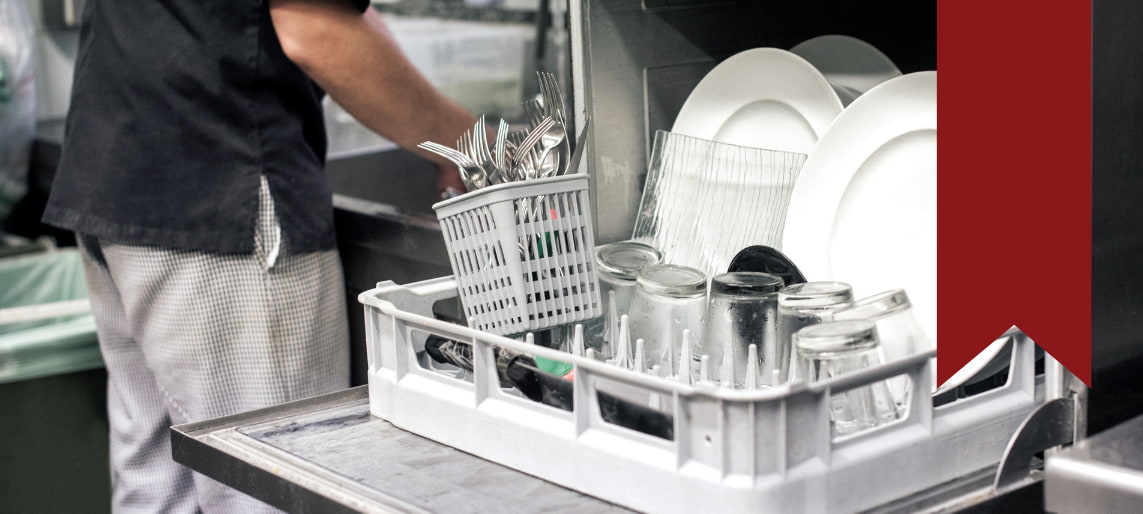
A commercial glasswasher is a specialized dishwasher designed exclusively for:
- Bar glasses
- Wine glasses
- Tumblers
- Cocktail shakers
- Bar tools
They differ from standard dishwashers by using:
- Lower wash pressure (to prevent breakage)
- Shorter, rapid cycles
- Precision chemical dosing or controlled heat
- Integrated water treatment for spot-free drying
They are typically installed:
- Under bar counters
- Behind the bar
- In dedicated bar service stations
BEST USE CASES FOR GLASSWASHERS & BAR DISHWASHERS
Ideal for:
- Cocktail bars
- Breweries
- Wineries
- Nightclubs
- Event venues
- Hotel bars
- Restaurants with heavy bar volume
They are not designed for:
- Plates
- Sheet pans
- Pots and pans
- Heavy grease loads
Those require undercounter or door-type dishwashers.
HEAT VS CHEMICAL FOR GLASSWASHERS
Glasswashers are most commonly chemical sanitizing, but both options exist:
Chemical Sanitizing (Most Common)
- Lower water temperature
- Lower energy demand
Requires:
- Test strips
- Consistent ppm monitoring
- Chemical provider support
Best for:
- Bars with limited utilities
- Tight undercounter installs
High-Temp (Heat) Glasswashers
- Final rinse at 180°F
- Requires booster heater
- Easier inspection verification
- Less chemical handling
- Higher utility cost
Use the Heat vs Chemical Decision Tool
TYPICAL CAPACITY & PERFORMANCE
Designed for continuous glass turnover during peak bar service.
SPACE & INSTALLATION REQUIREMENTS
Glasswasher installs must account for:
- Proper door clearance
- Clean side air-dry space
- Indirect drain / air gap
- Electrical disconnect
- Chemical storage (if low-temp)
- Proximity to hand sink (code required)
- Splash control behind the bar
Improper bar placement is a top cause of:
- Breakage
- Poor drying
- Inspection citations
COMMON INSPECTION FAILURES WITH GLASSWASHERS
- No sanitizer test strips on site
- PPM not within required range
- Glasses towel-dried instead of air-dried
- Drain tied directly to sewer (no air gap)
- No temperature or ppm logs
- Chemical containers not properly labeled
- Cross-use of glasswasher for greasy wares
View Bar Inspection Defense Guide
PROS & CONS OF COMMERCIAL GLASSWASHERS
Pros
- Faster than hand washing
- Reduces glass breakage
- Spot-free clarity with proper water treatment
- Compact footprint
- Improves bar throughput
- Stronger sanitation than manual washing
Cons
- Not versatile for heavy dish loads
- Chemical systems require daily testing
- Water quality strongly affects results
- Not a replacement for full kitchen dishwashers
WATER TREATMENT IS CRITICAL FOR GLASSWASHERS
Without proper water treatment, operators experience:
- Cloudy glasses
- Hard water scale
- Chemical residue
- Increased breakage
- Premature pump and heater failure
Recommended systems:
- Water softeners
- Carbon filtration
- Rinse-additive control
Water quality is the #1 factor in long-term glasswasher performance.
WHAT CAN & CANNOT GO IN A GLASSWASHER
Approved Items:
- Beer glasses
- Wine glasses
- Cocktail glasses
- Bar tools
- Plastic glassware
Do NOT Load:
- Plates
- Silverware baskets full of food debris
- Greasy kitchen utensils
- Coffee filters or paper
- Cleaning cloths
Cross-use is one of the top causes of sanitizer violations at bars.
MANUFACTURERS COMMONLY USED FOR GLASSWASHERS
Well-known manufacturers include:
- Champion
- Jackson
- CMA Dishmachines
- Hobart / Moyer Diebel
- Eurodib
- Meiko (select bar models)
Selection should be based on:
- Footprint
- Local service availability
- Chemical vs heat compatibility
- Water treatment tolerance
View Dishwasher Manufacturers by Type
STAFF TRAINING REQUIREMENTS (BAR OPERATIONS)
Bar staff must be trained on:
- Proper glass loading orientation
- Not stacking tightly
- Daily sanitizer testing
What to do if:
- Glasses come out cloudy
- PPM is out of range
- Machine alarms
- End-of-shift deliming
- Weekly deep cleaning
Download Glasswasher Training Checklist
WHEN A BAR NEEDS TO UPGRADE FROM A GLASSWASHER
You’ve outgrown a glasswasher if:
- Bar service backs up due to glass shortages
- You begin washing plates at the bar
- Breakage increases
- Inspection warnings add up
- Bar volume spikes beyond 50+ racks/hour
That’s when an undercounter commercial dishwasher is required in addition to—or instead of—the glasswasher.
CONFIRM YOUR BAR DISHWASHING SETUP
Not Sure If a Glasswasher Alone Will Keep Up With Your Bar Volume?
- Start the Dishwasher Selection Tool
- Take the Heat vs Chemical Quiz
- Request a Bar Dishwashing Assessment
Built by Aldevra, a Service-Disabled Veteran-Owned Small Business supporting federal agencies, healthcare systems, schools, bars, breweries, and commercial kitchens nationwide with compliant, high-performance dishroom systems.