Summary
Food trucks and mobile kitchens face stricter dishwashing and sanitizing rules than most people realize. Because space, water, and utilities are limited, most food truck washing happens at approved commissary kitchens—not on the truck itself. This guide explains exactly what’s allowed, what inspectors require, and how to stay open.
CAN YOU WASH DISHES ON A FOOD TRUCK?
Short Answer:
Usually no—for full warewashing.
Most health departments require:
- All full dishwashing to occur at an approved commissary
- Trucks to return daily or at required intervals for:
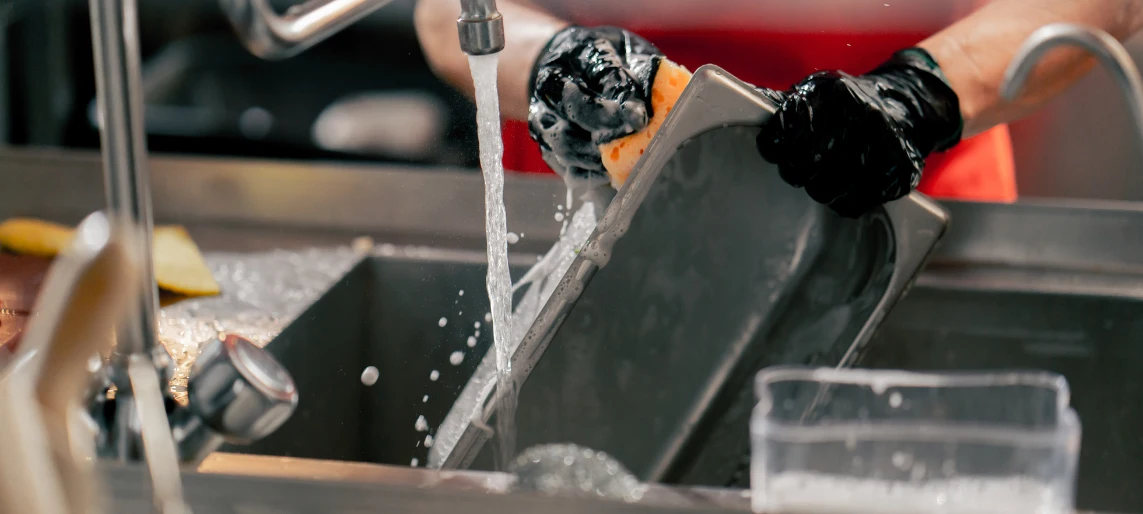
- 3-comp sink washing
- Proper sanitizing
- Grease disposal
- Waste handling
On-truck dishwashing is usually limited to:
- Light prep rinsing
- Handwashing only
- Emergency rinsing (not sanitizing)
Always verify requirements with your local health department, but commissary-based washing is the standard nationwide.
WHAT IS A COMMISSARY KITCHEN (FOR FOOD TRUCKS)?
A commissary kitchen is a licensed commercial kitchen where food trucks are legally required to:
- Wash, rinse, and sanitize all dishes
- Dump gray water
- Refill potable water
- Store food and supplies
- Dispose of grease and solid waste
The commissary—not the truck—is where:
- Commercial dishwashers
- 3-comp sinks
- Grease interceptors
- Waste systems
- Health inspections
are centered.
ALLOWED DISHWASHING METHODS FOR FOOD TRUCK OPERATIONS
Food truck operations typically use:
3-Comp Sink Only (Most Common)
- Wash → Rinse → Sanitize
- Required sanitizer ppm verification
- Air-drying only
- No towel drying
Undercounter Commercial Dishwasher (At Commissary Only)
- Used in higher-volume commissaries
- Often paired with 3-comp sink
- Chemical sanitizing most common
- Heat sanitizing used only when utilities allow
Residential dishwashers are never permitted for food truck operations.
HEAT VS CHEMICAL FOR FOOD TRUCK COMMISSARIES
Chemical Sanitizing (Most Common)
- Lower utility demand
- Compatible with small commissaries
Requires:
- Test strips
- Daily ppm logging
- Chemical storage & SDS
Heat Sanitizing (Less Common)
- Requires booster heater
- Higher electrical or gas demand
- Easier for inspectors to verify
- Higher install cost
Use the Heat vs Chemical Quiz
COMMON FOOD TRUCK DISHWASHING INSPECTION FAILURES
These are the most frequent violations cited:
- No approved commissary agreement on file
- Improper sanitizer concentration
- No test strips on site
- Towel drying dishes
- Inadequate air-dry space
- Residential dishwasher usage
- Dumping gray water illegally
- Improper grease disposal
- No temperature/ppm logs
View Full Food Truck Inspection Defense Guide
WHAT CAN & CANNOT GO INTO FOOD TRUCK WAREWASHING
Can Be Washed & Sanitized:
- Utensils
- Prep containers
- Pans
- Cutting boards
- Sheet pans
- Spoodles & ladles
Cannot Go Through Improper Washing:
- Wiping cloths (launder separately)
- Mop heads (separate utility sink)
- Trash bins (must be pressure-washed)
- Cardboard, wood, or porous items
SPACE & UTILITY REQUIREMENTS AT COMMISSARIES
Minimum required support includes:
- 3-comp sink with proper drain & air gap
- Hand sink in same area
- Hot water at code temperature
- Adequate sanitizer storage
- Gray water dump station
- Potable water fill station
- Grease interceptor
- Waste & recycling
Check My Commissary Dishwashing Readiness
PROS & CONS OF DISHWASHER USE IN FOOD TRUCK COMMISSARIES
Pros
- Faster turnaround than sink-only
- Better wash consistency
- Reduced labor
- Easier to scale multi-truck fleets
- Strong inspection reliability
Cons
- Higher install cost
- Requires utilities that many commissaries lack
- Still requires 3-comp sink as backup
- More service coordination
WHEN FOOD TRUCK OPERATORS OUTGROW SINK-ONLY WASHING
Upgrading to a dishwasher is recommended when:
- You operate multiple trucks
- Turn times exceed 60–90 minutes
- Staff struggles to keep up with ware volume
- Inspection risk increases
- Commissary hours are tight
That’s when a commercial undercounter or door-type machine at the commissary becomes necessary.
MANUFACTURERS COMMONLY USED IN COMMISSARY DISHWASHING
Undercounter & small door-type machines commonly used:
- Champion
- Jackson
- CMA Dishmachines
- Hobart / Moyer Diebel
- Eurodib
Selection should be based on:
- Utility limits
- Available service
- Chemical vs heat compatibility
- Water quality tolerance
View Dishwasher Manufacturers by Type
STAFF TRAINING REQUIREMENTS (FOOD TRUCK OPS)
Staff must be trained on:
- 3-comp sink process
- Proper sanitizer ppm
- Test strip reading
- Air-drying only
What to do if:
- Sanitizer is out of range
- Hot water fails
- Gray water tank is full
- End-of-shift cleaning of wash stations
Download Food Truck Dishwashing Training Guide
EMERGENCY MANUAL WAREWASH PROCEDURES
Every food truck must have:
- Manual wash backup plan
- Emergency sanitizer supply
- Alternative commissary access
- Temporary service suspension rules
This prevents illegal dish reuse during system failures.
IS YOUR FOOD TRUCK DISHWASHING LEGAL & COMPLIANT?
Not Sure If Your Commissary Dishwashing Setup Would Pass Inspection Today?
- Check My Food Truck Dishwashing Compliance
- Request a Commissary Dishroom Assessment
- View Emergency Warewashing Procedures
Built by Aldevra, a Service-Disabled Veteran-Owned Small Business supporting federal agencies, healthcare systems, schools, food trucks, and commercial kitchens nationwide with compliant, high-performance dishroom systems.