Summary
Undercounter dishwashers are the smallest category of commercial dish machines—but when properly matched to the operation, they deliver fast turnaround, reliable sanitizing, and major space savings for bars, cafés, and low-volume kitchens.
WHAT IS AN UNDERCOUNTER COMMERCIAL DISHWASHER?
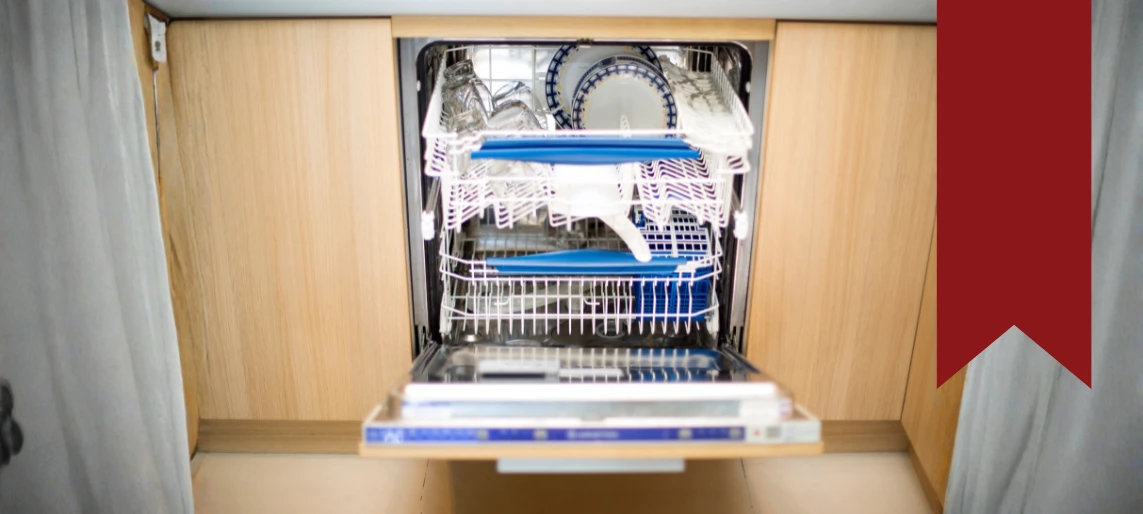
An undercounter commercial dishwasher is a compact, front-loading dish machine designed to fit under a standard countertop—similar in size to a residential unit, but built to handle commercial-duty cycles, higher temperatures, and frequent use.
Unlike residential dishwashers, commercial undercounter models:
- Complete wash + sanitize cycles in 90–180 seconds
- Are built with stainless steel tanks and doors
- Are NSF-rated for foodservice
- Meet local health department sanitizing requirements
BEST USE CASES FOR UNDERCOUNTER DISHWASHERS
Undercounter models work best in low-volume, light-soil environments, including:
- Coffee shops & cafés
- Bars & breweries
- Bakeries
- Food courts
- Concession stands
- Office break rooms
- Small prep kitchens
- Food trucks (via commissary kitchens)
They are NOT ideal for:
- Full-service restaurants with heavy grease
- Tray operations
- Schools or hospitals
- High-volume catering
HEAT VS CHEMICAL IN UNDERCOUNTER MACHINES
Undercounter dishwashers are available in both sanitizing methods:
High-Temp (Heat) Undercounter
- Sanitizes at 180°F final rinse
- Requires a booster heater
- Easier for inspections (temperature-based verification)
- Higher electrical / gas load
Low-Temp (Chemical) Undercounter
- Uses sanitizer at lower water temps
- Requires chemical pumps & test strips
- Lower utility demand
- Requires stricter staff discipline
Use the Heat vs Chemical Decision Tool
TYPICAL CAPACITY & PERFORMANCE
If you want to continue, the next clean sections that usually follow this (without changing copy) are:
- A capacity table (racks/hour, cycle time, footprint)
- Utility requirements (electrical, water, drain, booster)
- Inspection & code considerations
- Common undercounter buying mistakes
Ideal for operations serving under 100–150 meals per hour
SPACE & FOOTPRINT CONSIDERATIONS
Minimum planning requirements:
- Dedicated dirty side loading space
- Clearance for door swing
- Air-dry space on the clean side
Access to:
- Floor sink or indirect drain
- Electrical disconnect
- Optional booster heater
Proximity to:
- 3-comp sink
- Hand sink (code required)
See Smallest Compliant Dishroom Sizes
UTILITIES REQUIRED (BY SANITIZING TYPE)
High-Temp Undercounter
- Electrical or gas for booster heater
- Hot water supply
- Drain with air gap
- Optional water softener (strongly recommended)
Chemical Undercounter
- Cold or warm water supply
- Drain with air gap
- Chemical pumps
- Test strips
- Chemical storage with SDS binder
Check My Utility Readiness
COMMON INSPECTION FAILURES WITH UNDERCOUNTER MACHINES
Most failures are operator- and setup-related, not machine defects:
- Final rinse temperature below 180°F (heat systems)
- Sanitizer ppm not verified (chemical systems)
- No test strips on site
- No air-drying—stacking wet dishes
- Machine draining directly to sewer (no air gap)
- Dirty dishes loaded without pre-scraping
- Lack of daily temp/ppm logs
See Full Inspection Failure Guide
PROS & CONS OF UNDERCOUNTER DISHWASHERS
Pros
- Small footprint
- Lowest upfront cost in the commercial category
- Fast cycle times
- Simple to operate
- Ideal for glassware & light plates
- Easy retrofits into existing bars & cafés
Cons
- Limited throughput
- Not designed for heavy grease
- Staff misuse quickly causes breakdowns
- Limited ability to recover from peak surges
- High failure rate if water quality is poor
WHO SHOULD NOT CHOOSE AN UNDERCOUNTER MACHINE?
You should not choose undercounter if:
- You serve heavy, greasy menu items
- You wash large quantities of pots & pans
- You operate a school, hospital, or correctional facility
- You process tray systems
- You exceed 150+ meals per peak hour
In these cases, a door-type or conveyor dishwasher is required.
MANUFACTURERS COMMONLY USED FOR UNDERCOUNTER DISHWASHERS
Well-known manufacturers in this category include:
- Champion
- Hobart / Moyer Diebel
- Jackson
- CMA Dishmachines
- Fagor
- Eurodib
Manufacturer selection should be based on:
- Local service coverage
- Parts availability
- Heat vs chemical availability
- Water quality tolerance
View Manufacturers by Type
STAFF TRAINING REQUIREMENTS (UNDERCOUNTER)
Staff must be trained on:
- Pre-scraping (no food debris loading)
- Proper rack loading
- Air-drying only (no towel drying)
How to verify:
- Final rinse temp (heat)
- Sanitizer ppm (chemical)
What to do if:
- Temp/ppm fails
- Machine alarms
- Drains back up
Download Undercounter Training Checklist
WHEN TO UPGRADE FROM UNDERCOUNTER
You’ve officially outgrown undercounter if:
- Dishes stack up during peak
- Staff is re-washing multiple times
- Inspection citations increase
- Service calls become frequent
- Chemical usage skyrockets
- Labor hours climb just to keep up
Those are signals to move to a door-type hood machine.
READY TO CONFIRM YOUR SIZE?
Not Sure If an Undercounter Dishwasher Will Keep Up?
- Start the Dishwasher Selection Tool
- Take the Heat vs Chemical Quiz
- Request a Dishroom Assessment
Built by Aldevra, a Service-Disabled Veteran-Owned Small Business delivering compliant, high-performance dishroom systems for federal agencies, healthcare systems, schools, and commercial operators nationwide.