Summary
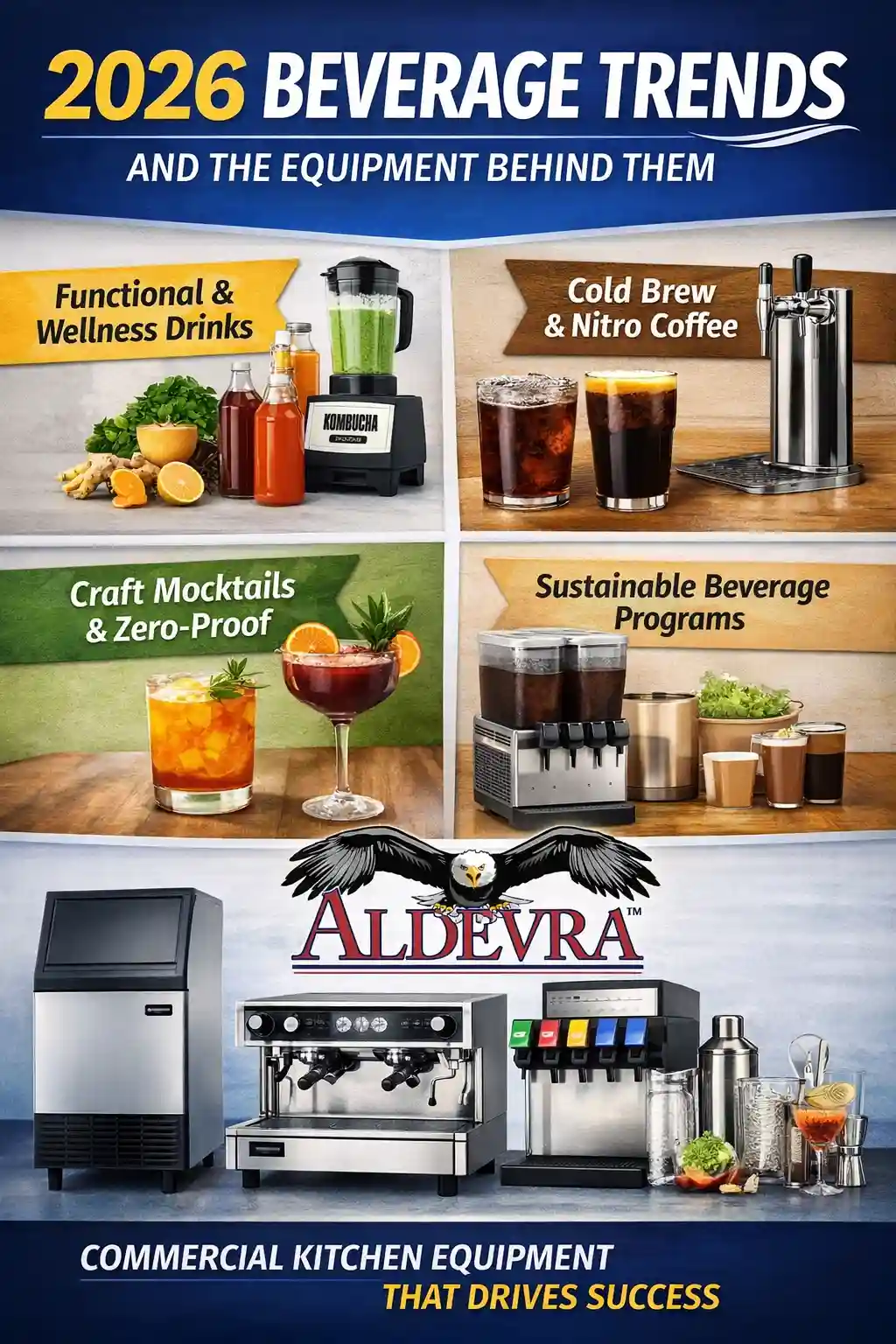
Beverage programs in 2026 are evolving to meet demand for wellness-focused drinks, specialty coffee, craft mocktails, and sustainable service models. From cold brew and nitro systems to commercial ice machines, barware, and glassware, the right commercial kitchen equipment is essential for producing, storing, and serving today’s most popular beverages efficiently. This guide breaks down the top beverage trends for 2026 and the professional foodservice equipment operators need to support them.
Beverage Trends Are No Longer an Add-On — They’re a Revenue Driver
In 2026, beverage programs are central to customer experience and profitability. Guests expect more than soda and drip coffee — they want functional drinks, premium presentation, and consistency.
Delivering on those expectations requires thoughtful equipment planning, from back-of-house production to front-of-house service, including commercial beverage equipment, barware, and glassware built for high-volume use.
1. Functional & Wellness Beverages
Functional beverages continue to grow as customers seek drinks that support energy, hydration, gut health, and focus. Popular offerings include infused waters, kombucha, mushroom-based drinks, collagen beverages, and nutrient-rich smoothies.
Equipment That Supports This Trend:
- Commercial blenders for smoothies and wellness shots
- Refrigerated beverage dispensers for infused waters and kombucha
- Precision water filtration systems to ensure consistent taste and quality
2. Cold Brew, Nitro Coffee & Specialty Coffee Programs
Cold brew remains a staple in 2026, with nitro coffee and flavored infusions expanding menus further. Many operators also package cold brew for grab-and-go service.
Equipment That Supports This Trend:
- Commercial cold brew systems with batch capacity
- Nitro coffee dispensers
- Espresso machines designed for high-volume consistency
- Refrigerated merchandisers for bottled beverages
3. Craft Mocktails & Zero-Proof Cocktails
Zero-proof beverages are no longer niche. Craft mocktails emphasize fresh ingredients, layered flavors, and premium presentation — all without alcohol.
Equipment That Supports This Trend:
- Commercial juicers for citrus and fresh produce
- Specialty ice machines (clear ice, crushed ice)
- Underbar refrigeration for juices, syrups, and garnishes
- Dedicated beverage prep stations
4. Sustainable & Low-Waste Beverage Programs
Sustainability is influencing how beverages are produced and served. Operators are reducing single-use packaging and improving energy efficiency without sacrificing speed.
Equipment That Supports This Trend:
- Bulk beverage dispensers
- High-efficiency ice machines
- Energy-efficient refrigeration
- Commercial dishwashers for reusable drinkware
5. Specialty Tea Programs (Hot & Cold)
Tea programs in 2026 rival coffee menus, offering cold-brew teas, herbal blends, and precision-steeped hot teas.
Equipment That Supports This Trend:
- Commercial tea brewers with programmable controls
- Thermal servers and insulated dispensers
- Refrigerated display units for bottled teas
6. House-Made Sodas & Carbonated Beverages
House-made sodas allow operators to control flavor, sugar content, and branding while offering customization customers enjoy.
Equipment That Supports This Trend:
- Carbonators and soda dispensing systems
- Touch-screen beverage dispensers
- Cold storage for bottled carbonated drinks
Barware: Supporting Speed, Consistency & Cost Control
Barware plays a critical role in beverage execution. In high-volume environments, commercial-grade bar tools help maintain portion control, reduce waste, and improve service speed.
Essential Commercial Barware:
- Shakers (Boston and cobbler styles)
- Jiggers and measured pour tools
- Muddlers for herbs and citrus
- Strainers and bar spoons
- Garnish trays and speed rails
- Batch beverage containers for pre-mixed drinks
Glassware Trends for 2026
Glassware choices in 2026 balance durability, sustainability, and presentation. Many operators are standardizing glassware to support multiple beverage types while minimizing breakage.
Common Commercial Glassware:
• Highball and Collins glasses
• Rocks glasses
• Stemless wine glasses
• Specialty coffee glasses
• Insulated tumblers for hot and cold drinks
• Reusable polycarbonate drinkware for healthcare and institutional use
Supporting equipment such as underbar glasswashers, glass racks, and ice machines ensures glassware remains clean, chilled, and service-ready.
Why Equipment Planning Matters for Beverage Programs
Modern beverage menus demand:
• Faster service
• Consistent quality
• Safe storage and sanitation
• Efficient use of space and utilities
Without the right commercial kitchen equipment — including beverage systems, barware, and glassware — even well-designed menus struggle to scale.
At Aldevra, we help operators evaluate beverage trends, select appropriate equipment, and plan layouts that support long-term performance and growth.
Frequently Asked Questions
What are the top beverage trends for 2026?
Functional wellness drinks, cold brew and nitro coffee, craft mocktails, sustainable beverage programs, specialty teas, and house-made sodas are leading beverage trends in 2026.
What commercial kitchen equipment is needed for beverage programs?
Common equipment includes cold brew systems, blenders, ice machines, tea brewers, beverage dispensers, refrigeration, water filtration systems, and commercial dishwashers.
What barware is essential for restaurants and cafés?
Essential barware includes shakers, jiggers, strainers, muddlers, garnish trays, and batch beverage containers designed for commercial use.
What type of glassware is best for commercial kitchens?
Commercial kitchens typically use highball glasses, rocks glasses, stemless wine glasses, specialty coffee glassware, insulated tumblers, and break-resistant drinkware.
Why is commercial glassware important?
Commercial glassware is designed to withstand frequent washing, stacking, and high-volume use while maintaining safety and presentation standards.
How do beverage programs increase revenue?
Beverage programs increase revenue through higher-margin drinks, customization, bottled offerings, and premium presentation — all supported by efficient equipment.