Summary
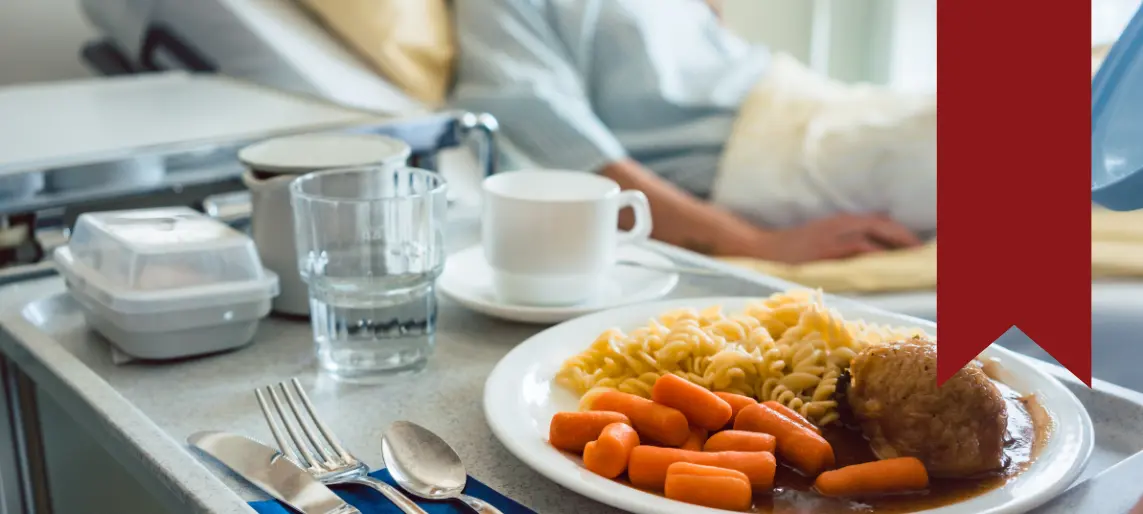
Prioritizing healthcare foodservice patient satisfaction improves healing, increases meal intake, boosts patient trust, and strengthens overall hospital experience. Hospitality isn’t a luxury—it’s an essential part of care. In hospitals and healthcare facilities, foodservice teams are often the frontline of comfort. They interact with patients multiple times a day, deliver something personal (food), and help shape how patients feel about their stay. When frontline staff approach each meal as part of the healing process—not just a task—patient satisfaction rises, intake improves, and the entire care environment feels more supportive. This guide provides actionable strategies, leadership insights, and real-world tools to elevate hospitality in every tray delivery.
1. Teach the “Why” Behind the Work
Patients don’t experience a meal as “diet tray delivery.” They experience a moment of care.
When staff understand this, their attitude and approach shift immediately.
Foodservice leaders should connect staff to the bigger picture:
- Meals stabilize patients during stressful moments
- Food may be the only enjoyable part of the day
- Nutrition directly supports healing
- Hospitality increases trust and comfort
- Positive interactions improve patient satisfaction scores
Share real patient stories that highlight:
- A staff member who made someone smile
- A moment of kindness that changed the tone of a day
- A foodservice employee who helped resolve a problem
- A patient who felt “seen” because someone used their name
Purpose fuels professionalism.
2. Develop a Standard of Warmth
Hospitality can be trained. Consistency builds trust.
High-impact behaviors to include in your standard:
- Smile before entering a room
- Knock and wait a moment
- Make eye contact
- Use the patient’s name
- Announce the meal (“Mrs. Thompson, here is your freshly prepared lunch.”)
- Place trays gently, not abruptly
- Close with warmth (“If you need anything, please let us know.”)
These micro-gestures dramatically improve the patient experience and contribute directly to healthcare foodservice patient satisfaction.
3. Empower Staff with Caring, Confident Communication
Most foodservice employees want to provide great service—they just need tools, scripts, and confidence.
Positive Language Substitutions
- “Here’s your freshly prepared lunch” → NOT “Here’s your diet tray.”
- “Let me find that answer for you” → NOT “I don’t know.”
- “I’m happy to help” → NOT “That’s not my job.”
- “I’ll share that with your care team” → NOT “You’ll have to ask someone else.”
Common Script Examples
When delivering a tray:
“Good morning, Mr. Lewis. This is your breakfast. Can I help you get settled before I head out?”
When a patient questions a restriction:
“I understand how frustrating that can feel. Your dietitian customized this meal to support your healing, but let me send them a message to review your options.”
When a patient refuses food:
“I’m sorry it doesn’t look appealing right now. If there’s something you think you could tolerate, I can let the kitchen know. I’ll also make sure your nurse is aware.”
Training staff on exactly what to say builds confidence and elevates hospitality instantly.
4. Encourage Active Listening
Meal delivery is often a brief interaction—but that moment can uncover important needs.
Teach staff to listen for:
- Patient discomfort (“I can’t chew this” or “My stomach hurts today”)
- Changes in appetite or mood
- Confusion about diet restrictions
- Signs of frustration or loneliness
- Requests that need relaying to nursing or dietary staff
A simple pause before leaving—“Is there anything else I can help with?”—creates trust and builds rapport.
These micro-moments improve both comfort and safety.
5. Build Cross-Department Collaboration
Hospitality thrives when departments operate as a united care team.
How to connect foodservice with clinical teams:
- Host joint training sessions with nursing and patient experience
- Align communication protocols for relaying concerns
- Invite dietitians to foodservice huddles and vice versa
- Use interdisciplinary rounds for long-stay or high-need patients
- Celebrate patient compliments together
This reinforces one message: we all contribute to healing.
6. Hospitality Competency Framework for Foodservice Teams
To make training measurable and sustainable, build a simple competency model.
Core Hospitality Competencies:
- Warmth & Empathy
— Express care through tone and presence - Clear, Positive Communication
— Deliver information confidently and kindly - Professional Behavior
— Respect patient dignity and personal space - Attention to Detail
— Ensure trays are correct, safe, and presentable - Proactive Service
— Look for ways to anticipate needs - Accountability & Follow-through
— Relay concerns promptly and accurately
This framework gives leaders something to coach, observe, and reinforce.
7. Staff Training Scenarios (for Huddles or Onboarding)
Scenario 1: Patient upset about restricted diet
Good response:
“I hear you—it can be tough when you’re craving something familiar. Your dietitian customizes everything for healing, but I’m happy to pass along your request so they can review it.”
Scenario 2: Confusion about the meal
Good response:
“This is your heart-healthy lunch. It’s prepared with herbs and spices instead of salt to support your recovery. Would you like me to check if there are other approved options available?”
Scenario 3: Patient seems lonely
Good response:
“I hope your day is going okay. If there’s anything you need before I leave, I’m happy to help.”
These mini-scenarios make training real and relatable.
8. Hospitality Standards That Are Measurable
Hospitals perform better when standards are clear—not abstract.
Hospitality Standards (Daily Expectations):
- Greet patient by name
- Announce the meal
- Verify accuracy of order
- Check tray presentation
- Ask one follow-up question
- Listen for concerns
- Relay any issues within 5 minutes
- Close with warmth
Measurable expectations → consistent service → improved patient satisfaction.
9. Safety & Sensitivity in Patient Spaces
Foodservice staff enter private rooms. Their approach matters.
Key Sensitivity Training Topics:
- Understanding trauma-informed communication
- Respecting personal and cultural boundaries
- Maintaining dignity during meal placement
- Handling isolation precautions and PPE
- Recognizing signs of distress
- Avoiding assumptions about ability, age, or appetite
Hospitality must always operate within a framework of safety and respect.
10. Troubleshooting Difficult Interactions
Equip staff with a simple decision-making guide.
If the patient refuses food →
Offer alternatives + notify nursing.
If the patient wants restricted foods →
Use empathy + escalate to dietitian.
If there’s a complaint about quality →
Apologize + document + redirect to supervisor.
If the patient mentions nausea/pain →
Inform nursing immediately.
If culturally preferred foods are requested →
Follow facility protocol + flag for dietitian review.
These tools reduce stress and empower employees.
11. Leadership Strategies for Directors
Foodservice Directors can make hospitality a system, not a one-off training.
Directors should:
- Create a hospitality curriculum for new hires
- Add hospitality to job descriptions and evaluations
- Incorporate scripts and standards into SOPs
- Host monthly service-focused huddles
- Recognize standout moments of care
- Review patient feedback with staff
- Provide ongoing competency refreshers
- Collaborate with nursing and patient experience leaders
Strategic leadership transforms culture.
12. Hospitality Tools for Operators
Daily Huddle Reminders
- “Every tray is part of the healing process.”
- “Today’s focus: eye contact and using names.”
- “If you see something, say something.”
Supervisor Coaching Checklist
Did staff use the patient’s name?
Was the meal announced clearly?
Was tone warm and professional?
Was the tray placed gently?
Did staff ask if anything else was needed?
Were concerns relayed appropriately?
Printable Staff Checklist
- Smile
- Greet
- Announce meal
- Verify name
- Place tray with care
- Listen
- Relay concerns
- Close with warmth
These tools make training practical and repeatable.
Why Hospitality in Healthcare Foodservice Matters
Hospitality impacts:
- Patient satisfaction scores
- HCAHPS results
- Emotional comfort
- Trust and rapport
- Meal intake and compliance
- Healing and nutrition
- Care team perception
- Overall experience
Foodservice staff are not “just delivering trays”—they’re delivering daily moments of human connection during one of the most vulnerable times in a person’s life.
When every interaction is warm, intentional, and compassionate, patient satisfaction improves—and so does healing.
Hospitality in healthcare requires more than polite interactions—it requires intention, consistency, empathy, and clinical awareness. This framework defines the competencies frontline foodservice employees must demonstrate to support healthcare foodservice patient satisfaction and the healing mission of the facility.
Each competency includes definition, why it matters, observable behaviors, and coaching examples.
1. Warmth & Empathy
Definition:
Ability to communicate genuine care and kindness in every interaction with patients, families, and staff.
Why It Matters:
Warmth enhances emotional comfort, reduces patient anxiety, and directly affects patient satisfaction scores.
Observable Behaviors:
Smiles upon entering the room
Uses a warm, friendly tone
Greets the patient by name
Acknowledges feelings (“That sounds frustrating. Let me help.”)
Maintains a calm presence even during difficult interactions
Coaching Example:
Opportunity: Staff enters room silently and sets tray down quickly.
Coaching: “Let’s try adding a greeting and eye contact—it helps patients feel valued and sets a positive tone.”
2. Clear, Positive Communication
Definition:
Ability to convey information confidently, clearly, and kindly using patient-friendly language.
Why It Matters:
Foodservice interacts heavily with patients, often delivering dietary restrictions or answering questions. Communication affects compliance.
Observable Behaviors:
Announces the meal: “This is your freshly prepared lunch.”
Uses positive language (“I can help you with that.”)
Explains dietary restrictions respectfully
Responds to questions with confidence or quickly finds the answer
Avoids jargon, negativity, or rushed speech
Coaching Example:
Swap: “I don’t know.”
For: “Let me check on that for you.”
3. Respect for Patient Dignity
Definition:
Treating patients with the highest level of respect, privacy, and professionalism.
Why It Matters:
Foodservice staff enter personal spaces at vulnerable moments. Respect preserves dignity and trust.
Observable Behaviors:
Knocks before entering
Waits for acknowledgment
Protects belongings while placing trays
Avoids intrusive comments
Practices cultural sensitivity
Handles meals gently and respectfully
Coaching Example:
If staff walk in abruptly:
“Pause and knock—give the patient a moment to prepare. It shows respect for their space.”
4. Attention to Detail
Definition:
Ensuring accuracy, presentation, and safety in every meal delivered.
Why It Matters:
Errors can affect satisfaction, health outcomes, and trust.
Observable Behaviors:
Confirms diet order before delivery
Checks tray presentation (clean, neat, correct portions)
Places items safely and visibly
Observes food temperature when appropriate
Verifies patient name and identifiers
Notices spills and crumbs
Coaching Example:
“Before leaving the trayline, double check the patient’s name and diet—you caught one item today; that level of accuracy prevents real issues.”
5. Proactive Service & Anticipation
Definition:
Recognizing patient needs before they become issues and taking initiative to help.
Why It Matters:
Anticipation reduces stress for patients and reduces service follow-ups for staff.
Observable Behaviors:
Asks, “Is there anything else you need before I go?”
Notices missing items and corrects proactively
Clarifies preferences (straws, condiments, meal placement)
Alerts dietary or nursing when intake is poor
Identifies barriers to eating (pain, nausea, mobility issues)
Coaching Example:
“Great job noticing that Mrs. Lee couldn’t reach her tray. That proactive mindset prevents discomfort and improves intake.”
6. Accountability & Follow-Through
Definition:
Taking responsibility for concerns, errors, or requests—even when another team handles the solution.
Why It Matters:
Trust builds when patients see action, not excuses.
Observable Behaviors:
Communicates issues promptly to nursing or dietary
Documents concerns correctly
Returns with updates when needed
Acknowledges mistakes (“Let me fix that for you.”)
Follows the chain of communication
Coaching Example:
If staff say “I’m not sure who handles that”:
“Your role is to reassure the patient and connect with the right team. Never leave a concern unaddressed.”
7. Professional Appearance & Conduct
Definition:
Maintaining a clean, polished, hygienic presence that reflects the hospital’s standards.
Why It Matters:
Patients form immediate impressions of safety and credibility based on appearance.
Observable Behaviors:
Clean uniform
Proper hair restraint
Safe footwear
No earbuds, gum, or phones
Calm behavior even during stress
Coaching Example:
“Appearance communicates professionalism. Before starting your route, give yourself a quick uniform check.”
8. Safety, Sensitivity & Cultural Awareness
Definition:
Understanding clinical, cultural, and emotional factors in patient interactions.
Why It Matters:
Hospitality is not just “being nice”—it requires recognizing and honoring personal needs.
Observable Behaviors:
Adheres to isolation protocols
Uses PPE correctly
Demonstrates cultural respect
Avoids assumptions about what patients eat
Recognizes signs of distress and escalates appropriately
Coaching Example:
“For patients who may be confused or distressed, speak slowly, maintain space, and alert nursing right away.”
9. Consistent Execution of Standards
Definition:
Delivering the same level of hospitality every time, without exceptions.
Why It Matters:
Reliability builds patient trust and improves satisfaction metrics.
Observable Behaviors:
Consistent greetings
Same quality of tray placement across shifts
Uniform scripting
Reliable communication with nursing and dietary
Predictable follow-through
Coaching Example:
“Our goal is that every patient, every shift, every day has the same high-quality experience.”
10. Team Collaboration
Definition:
Working smoothly with culinary staff, dietary, nursing, and patient experience to provide seamless care.
Why It Matters:
Patients experience the hospital as one team—not separate departments.
Observable Behaviors:
Shares concerns with dietitians clearly
Coordinates timing with nursing
Participates in joint huddles
Offers to help teammates
Maintains a positive team attitude
Coaching Example:
“Your communication with the dietitian helped correct the order quickly—great teamwork that improves patient satisfaction.”
How Directors Can Use This Framework
This competency model can be integrated into:
Hiring & Interview Guides
“What does hospitality mean to you in a healthcare setting?”
Onboarding & Training
Use competencies as modules with demonstrations.
Daily Huddles
Pick 1 competency per day or week to reinforce.
Performance Evaluations
Use the observable behaviors as measurable criteria.
Recognition Programs
Spotlight “Moments of Care” tied to competencies.
Corrective Coaching
Address specific behaviors—not personality.
Why This Matters for Patient Satisfaction
Studies show that hospitality-driven behaviors correlate directly with:
- Better meal intake
- Higher HCAHPS scores
- Fewer complaints
- Improved emotional comfort
- Greater trust
- Better perception of care
A structured Hospitality Competency Framework transforms frontline foodservice roles from “delivery” to “caregiver”—elevating the entire patient experience.