Summary
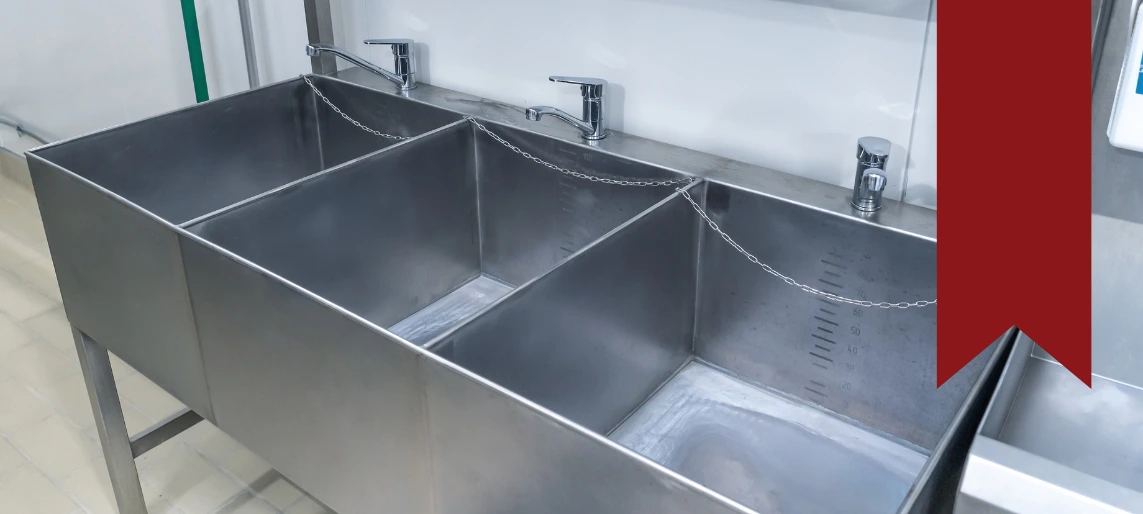
Even with a commercial dishwasher (dish machine), most health departments still require a three-compartment sink as part of the complete warewashing system. The sink and the dish machine work together, not as substitutes.
Think of it this way:
The three-compartment sink is your backup, pre-wash station, and compliance safety net. The dishwasher is your high-speed sanitizer.
What Each Part Is Responsible For
The Three-Compartment Sink Handles:
- Manual warewashing when the dish machine is down
- Pre-soaking heavily soiled items
- Washing oversized items the dish machine can’t fit
- Meeting minimum manual sanitation requirements
- Emergency compliance during repairs or power outages
The Dishwasher Handles:
- High-volume production washing
- Heat or chemical sanitizing
- Fast turnover during peak service
- Consistent sanitation verification
- Labor efficiency and workflow speed
The Correct Three-Sink Washing Process (By Code)
Inspectors expect staff to follow this exact sequence:
Sink 1: WASH
- Hot water + detergent
- Minimum 110°F
- Removes grease and food debris
Sink 2: RINSE
- Clean water only
- Removes detergent residue
Sink 3: SANITIZE
- Must meet one of these:
After sanitizing, items must air dry only—never towel dry.
How the Sink and Dishwasher Work Together in Real Kitchens
Normal Daily Operation
- Staff scrape and pre-rinse
- Heavily soiled items go through Sink 1 first
- Items go directly into the dishwasher for final wash & sanitize
- Air-dry on clean racks
When the Dishwasher Is Down
- The three-compartment sink becomes the primary sanitation system
- Operations may be slowed, but the kitchen can remain compliant if all three sinks are used correctly
When a Three-Compartment Sink Is Still REQUIRED Even With a Dishwasher
Health departments typically still require it when:
- The dishwasher cannot handle:
- Large stockpots
- Sheet pans
- Oversized equipment
- The facility handles:
- Raw proteins
- Heavy grease
- Volume prep work
- The jurisdiction requires a manual warewashing backup by code
Some jurisdictions allow two-compartment sinks only if a commercial dishwasher is installed—but this is the exception, not the rule.
Common Inspection Failures Related to Sink + Dishwasher Systems
- Three sinks present but:
- Used for storage
- Missing chemical sanitizer
- Incorrect sanitizer concentration
- Staff skipping the sanitize step
- No test strips at sink station
- Using the dishwasher as the only allowed sanitation method when code requires manual backup
Layout & Plumbing Coordination Between Sink & Dishwasher
Both systems must also share proper infrastructure:
- Indirect drains with air gaps
- Floor sinks properly sized
- Grease interceptor coordination
- Backflow prevention
- Adequate hot water recovery for both systems
Poor coordination here causes:
- Drain backups
- Flooding under machines
- Emergency shutdowns
- Failed plumbing inspections
Aldevra Best Practice
A dishwasher alone does not make a kitchen code-compliant. The three-compartment sink completes the sanitation system, provides redundancy, and protects you during equipment downtime.