Summary
A booster heater is the component that allows a high-temp (heat) dishwasher to legally sanitize at 180°F. When a booster heater is undersized, improperly installed, scaled, or poorly coordinated with utilities, it becomes the #1 cause of failed heat sanitizing inspections, shutdowns, and premature equipment failure.
This guide explains:
- What a booster heater actually does
- Why they fail
- How to size them correctly
- How they interact with water quality
- What inspectors look for
- How to avoid the most expensive mistakes
WHAT IS A BOOSTER HEATER?
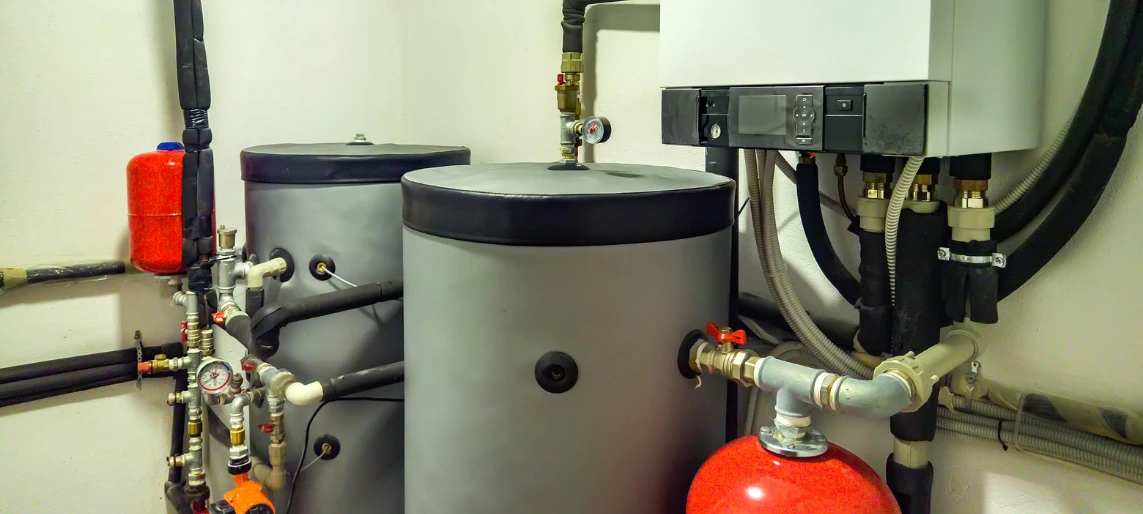
A booster heater is a dedicated water heater that raises the final rinse water temperature to 180°F at the dish surface, which is required for heat sanitizing under the FDA Food Code.
It does not replace your building’s water heater. Instead, it:
- Takes incoming hot water (typically 120–140°F)
- Boosts it to sanitizing temperature
- Supplies the dishwasher’s final rinse
Without a properly functioning booster heater, a heat-sanitizing dishwasher cannot pass inspection.
WHEN A BOOSTER HEATER IS REQUIRED
A booster heater is required for:
- All high-temp (heat) undercounter dishwashers
- All heat door-type (hood) dishwashers
- Most heat conveyor systems
- All heat flight-type systems
- Any system that must deliver 180°F final rinse
It is not required for:
- Chemical (low-temp) systems
TYPES OF BOOSTER HEATERS
Electric Booster Heaters
- Most common
- Easier to install
- Faster recovery
- Requires proper electrical infrastructure
Gas Booster Heaters
Used when:
- Electrical capacity is limited
- Large systems require massive BTU input
Requires:
- Gas piping
- Venting
- Combustion air
Steam Booster Heaters (Institutional)
Used in:
- Hospitals
- Military facilities
- Large universities
Tied to central boiler plants.
SIZING A BOOSTER HEATER CORRECTLY (CRITICAL)
Booster heaters must be sized based on:
- Dishwasher type
- Racks per hour
- Final rinse flow rate (GPM)
- Incoming water temperature
- Required temperature rise
Undersizing Causes:
- Final rinse below 180°F
- Failed inspections
- Rewashing
- Heater burnout
- Excessive scale buildup
- Tripped electrical breakers
Oversizing Causes:
- Unnecessary electrical upgrades
- Higher install cost
- Reduced efficiency
Correct sizing is an engineered calculation—not a guess.
HOW BOOSTER HEATERS FAIL IN REAL LIFE
The most common failure modes:
- Scale buildup due to untreated hard water
- Electrical under-sizing
- Incorrect voltage or phase
- Insufficient water recovery
- Clogged strainers
- Improper pressure regulation
- Poor startup commissioning
- Lack of preventive maintenance
Most “bad booster heaters” are actually bad water or bad coordination problems.
WATER QUALITY IS A BOOSTER HEATER KILLER
Hard water is the #1 cause of booster heater failure nationwide.
Without treatment:
- Scale coats heating elements
- Heat transfer collapses
- Elements overheat and fail
- Final rinse temps drift below 180°F
- Energy consumption spikes
Water softeners should be considered mandatory for heat systems.
WHAT INSPECTORS CHECK ON BOOSTER HEATERS
Inspectors verify:
- Final rinse temperature at dish surface
- Operational temperature gauges
- Temperature logs
- No visible leaks
- No scale buildup causing failures
- Pressure regulation
- Proper indirect drainage
If the final rinse is below 180°F—even briefly—the system fails inspection regardless of how clean dishes look.
BOOSTER HEATER REQUIREMENTS BY DISHWASHER TYPE
ELECTRICAL & MECHANICAL COORDINATION FAILURES
Common coordination failures that destroy booster heaters:
- Electrician undersizes circuit
- Breakers trip under peak load
- Plumber sizes piping for building heater—not booster
- Pressure regulator omitted
- Hood contractor traps heat over unit
- No service clearance left for maintenance
- No drain pan under heater in sensitive facilities
This is why booster heaters must be explicitly listed in GC coordination documents—not treated as “part of the dishwasher.”
OPERATING COST REALITY
Booster heater operating costs are driven by:
- Water volume
- Temperature rise
- Incoming water temp
- Scale efficiency loss
- Utility rate structure
High-Temp vs Chemical Cost Reality
Heat systems:
- Higher electric or gas usage
- Lower chemical expense
- More stable long-term costs
Chemical systems:
- No booster cost
- Continuous sanitizer expense
- Higher glass replacement rates
- Higher inspection risk cost
MAINTENANCE REQUIREMENTS FOR BOOSTER HEATERS
To maintain code compliance and operational stability:
Daily:
- Monitor final rinse temp
Weekly:
- Visual inspection for leaks & scale
Monthly:
- Strainer inspection
Quarterly:
- Deliming (if required)
Annually:
- Electrical inspection
- Heating element inspection
- Pressure control verification
Skipping maintenance almost guarantees:
- Heater burnout
- Inspection failure
- Emergency shutdown
WHEN BOOSTER HEATERS FAIL DURING SERVICE
If a booster heater fails mid-service:
- Heat sanitizing stops immediately
- Dishwasher may continue to wash but not sanitize
- All dishes washed during failure are not legally sanitized
- Manual warewashing procedures must activate
- Service must be called immediately
This is why emergency manual warewashing SOPs must always exist in heat-based operations.
WHO IS RESPONSIBLE FOR BOOSTER HEATERS?
Responsibility is typically shared across:
- Equipment dealer
- Plumber
- Electrician
- General contractor
- Owner/operator
- Facilities engineering team
If responsibility is not clearly assigned in the vendor responsibility matrix, booster failures become litigation-level disputes.
WHEN BOOSTER HEATERS MUST BE ENGINEERED (NOT FIELD-FITTED)
Booster heaters must be formally engineered when:
- Conveyor or flight machines are specified
- Federal, VA, or hospital facilities are involved
- Central boiler plants are used
- Electrical service exceeds 208V
- Redundant sanitizing capability is required
Field-fitting a booster heater on institutional systems is one of the highest-risk design shortcuts in foodservice construction.
DON’T LET A $3,000–$15,000 COMPONENT SHUT DOWN A $5M KITCHEN
Not Sure If Your Booster Heater Is Sized, Protected, and Inspected Correctly?
- Run the Booster Heater Risk Check
- Request a Heat System Engineering Review
- Download the Booster Heater Buyer Checklist
Built by Aldevra, a Service-Disabled Veteran-Owned Small Business supporting federal agencies, healthcare systems, schools, bars, breweries, and commercial kitchens nationwide with inspection-ready, high-performance heat sanitizing systems.