Summary
A complete guide to commercial kitchen drainage requirements, drain types, air gaps, floor slopes, cleaning best practices, troubleshooting, inspection checklists, and equipment-specific drainage guidance for restaurants, schools, hospitals, and federal facilities. Learn how to design, maintain, and fix kitchen drainage issues.
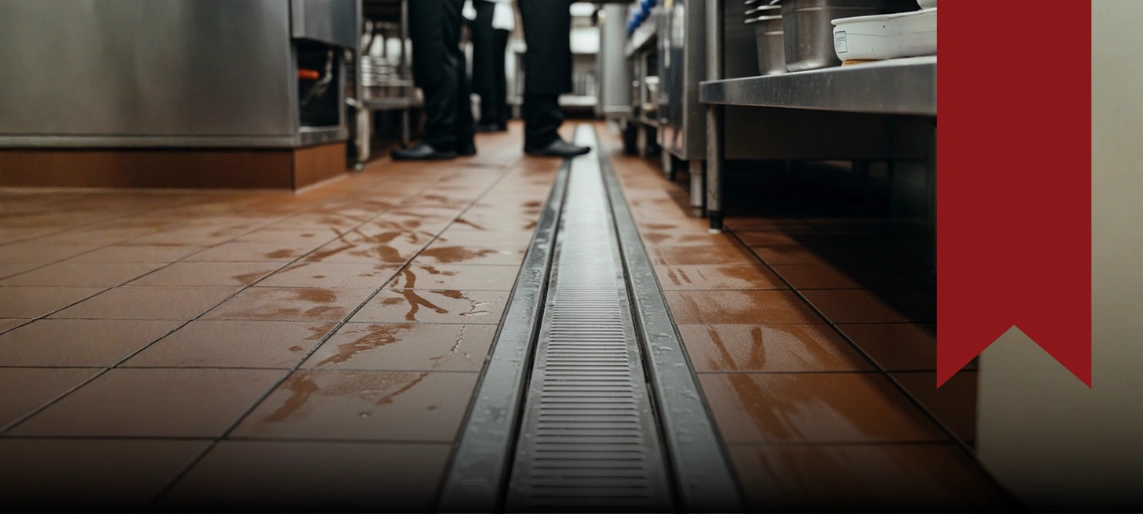
Why Commercial Kitchen Drainage Matters
Commercial kitchen drainage is central to food safety, sanitation, equipment performance, and regulatory compliance. Poor drainage causes slip hazards, pest problems, mold, failed inspections, and costly emergency repairs.
A properly designed system ensures:
- Safe, dry walking surfaces
- Efficient workflow
- Reduced maintenance costs
- Compliance with major codes and standards
- Longer equipment life
Drainage issues are among the most expensive and disruptive kitchen problems — especially when discovered after equipment installation.
Aldevra supports federal agencies, hospitals, schools, and commercial operators nationwide, and improper drainage is one of the most common issues we see during equipment installation, inspections, and kitchen renovations. Understanding where drains belong—and how to maintain them—prevents delays, citations, and costly rework.
Commercial Kitchen Drainage Requirements (Codes You Must Know)
Most jurisdictions reference or require:
- Floor drains in dish, prep, and wash-down areas
- Floor sinks for equipment discharge
- Air gaps for indirect waste
- Proper floor slope
- Grease interceptors
- Accessible, maintainable drains
- Drain sizing based on equipment volume
Codes and regulatory bodies involved:
- International Plumbing Code (IPC)
- Uniform Plumbing Code (UPC)
- Food and Drug Administration (FDA) Model Food Code
- Occupational Safety and Health Administration (OSHA)
- National Sanitation Foundation / American National Standards Institute (NSF/ANSI) equipment standards
- Local Authorities Having Jurisdiction (AHJs) including health departments and plumbing inspectors
Different AHJs interpret requirements differently, so early coordination is critical.
Where Commercial Kitchens Need Drains
Correct drain placement prevents backups, odors, downtime, and inspection failures.
1. Dishwashing Areas
- Dish machines
- Pre-rinse stations
- Three-compartment sinks
- Pot-wash areas
High discharge volume typically requires trough drains or trench drains.
2. Water-Based Cooking Equipment
Equipment that generates condensate or wash-down water, including:
- Steamers
- Combi ovens
- Steam kettles
- Tilt skillets
- Braising pans
These must discharge into a floor sink with an air gap.
3. Refrigeration & Ice Equipment
Drainage is required for:
- Ice machines (meltwater + bin drainage)
- Walk-in cooler evaporators
- Refrigerators with automatic defrost
These must use indirect waste to prevent contamination.
4. Prep, Hand, and Mop Sinks
These fixtures may connect to grease interceptors depending on waste type.
5. High-Spill or High-Traffic Areas
- Hot lines
- Receiving areas
- Walk-in cooler entrances
- Beverage stations
Proper drainage reduces slip hazards and protects flooring.
What Equipment Requires Drainage (Operator Installation Guide)
Must connect to an air-gapped floor sink:
- Ice machines
- Steamers
- Combi ovens
- Steam kettles
- Tilt skillets
- Beverage fountains
- Soda systems
Must drain into floor drains or trough drains:
- Dish machines
- Pre-rinse sinks
- Pot sinks
- Wash-down areas
Must connect to condensate drain lines:
- Walk-in coolers and freezers
- Undercounter refrigeration with defrost cycles
Dry-running or improperly draining equipment leads to failures and failed inspections.
Equipment-Specific Drainage Tips
Different pieces of commercial kitchen equipment discharge water in different ways—and that’s exactly where most drainage failures happen. Operators often troubleshoot the wrong component because each type of equipment has unique drainage behavior, discharge volumes, height requirements, and code obligations.
This section gives operators actionable, equipment-specific guidance.
1. Ice Machines: Drainage Requirements & Common Problems
Ice machines generate constant meltwater and require proper drainage to avoid overflow, odor, and contamination.
Why Ice Machines Require Indirect Waste
Ice machines always need to discharge into a floor sink with an air gap, not a floor drain.
Why?
- Prevents sewage or dirty water from backing into the ice bin
- Required by most codes (IPC/UPC + NSF/ANSI standards)
- Ensures meltwater fully drains instead of sitting in the bin
- Protects the potable ice supply from contamination
Importance of Keeping the Air Gap Clear
A blocked air gap = ice machine disaster.
If the air gap becomes blocked by:
- Plastic wrap
- Straws
- Food debris
- Scale buildup
…water will back up and overflow around the bin.
Impact of Warm Ambient Conditions on Drainage
Warm kitchens = more ice melt = more drain load.
This leads to:
- Overflows
- Condensation at the bin
- Frequent floor sink backups
Operators in hot climates or busy dish rooms should choose:
- Larger floor sinks (2")
- Higher-volume indirect waste lines
- More frequent drain cleaning
Pro Tip:
If your ice machine shares a floor sink with soda equipment, separate them to prevent syrup buildup from choking the drain line.
2. Steamers: Drainage and Steam Management
Steamers release hot condensate water all day long, and drainage issues quickly turn into safety hazards.
Why Steamers Need Proper Indirect Waste
Steamers produce:
- Boiler blow-off water
- Condensate
- Cooking water
- Cleaning cycle discharge
Directly connecting this to a floor drain creates:
- Cross-contamination risks
- Pressure buildup
- Steam backflow into the kitchen
- Failed inspections
Drain Height Requirements (Critical for Installation)
Steamers discharge water at specific manufacturer-defined heights.
If the drain is:
- Too high → water flows back into the steamer
- Too low → water rushes out too quickly, causing splashing and odors
- Too far → water pools under the unit
Most steamers specify a discharge height between 6–12 inches above the floor sink, but ALWAYS check the spec sheet.
Cleaning Cycle Water Volume Planning
Operators forget that steamer cleaning cycles release a large surge of water.
If the floor sink isn’t sized properly:
- Water floods
- Air gap gets submerged (a health code violation)
- Steam escapes into the kitchen
Choose a large floor sink (2–3 inches) for steamers.
3. Combi Ovens: Drainage for High-Performance Cooking
Combi ovens use water for:
- Steam generation
- Rinse cycles
- Descaling
- Auto-cleaning cycles
Improper drainage is one of the top causes of combi oven service calls.
Why Proper Drainage Prevents Steam Blowback
If the drain:
- Is too small
- Has no air gap
- Is not directly below the discharge
Steam and hot water will “burp” back up toward the oven door—creating a burn hazard.
Drain Height Requirements
Combi ovens have very strict drain height specs.
If the drain is not aligned:
- Water will pool during steam injection
- Cleaning cycles will flood the floor
- The oven may shut down due to sensor faults
Operators should verify drain height at:
- Installation
- After any equipment rearrangement
Cleaning Cycle Water Surges
Combi ovens can dump 5–10 gallons of water quickly during cleaning cycles.
The receiving drain must:
- Be large
- Be close
- Have an unobstructed air gap
Never share a small floor sink with another high-volume appliance.
4. Dish Machines: High-Volume Drainage Challenges
Dish machines discharge hundreds of gallons daily—more than any other kitchen appliance.
How Deliming Affects Drainage
During deliming:
- Scale breaks off internal parts
- Chunks travel through the discharge hose
- Debris lands in the floor sink or trough
- Drainage slows or backs up
A common operator issue is thinking the machine is broken when it’s really a drain blockage caused by delime debris.
Why Trough Drain Placement Is Critical
Dish machine placement must match trough drain layout.
If not:
- Water overshoots the trough
- The machine floods the dish room
- Staff mop constantly
- Mold builds under the machine
The trough must be:
- Directly under the discharge point
- Level
- Accessible
- Able to handle rapid water dumps
Temperature & Detergent Impact
Hot discharge water (160–180°F for high-temp machines) accelerates grease liquefaction.
When the water cools downstream, that grease solidifies and clogs the line.
Regular hot water flushes and enzyme treatments prevent this issue.
5. Walk-In Coolers: Condensate Drain Behavior
Walk-ins discharge water from:
- Defrost cycles
- Evaporator pans
- Condensation
Why Condensate Lines Freeze
- Poor insulation
- Improper slope
- Cold airflow blowing directly on the line
A frozen line = water dripping inside the walk-in.
Key Drainage Requirements
- Must route to an approved drain (no bucket collection)
- Slope must be consistent
- No kinks or dips
- Should avoid high-traffic areas
Warning Signs
- Water dripping from ceiling
- Ice buildup on evaporator
- Wet boxes
- Mold smell
6. Tilt Skillets & Kettles: Heavy Discharge Volume
These units dump large volumes of water quickly.
Drainage Requirements
- Must drain directly into a floor drain
- Drain must be large (2–3 inches)
- Should be located directly under the pouring lip
Common Issues
- Hot water splashes due to misalignment
- Drain too far away
- Drain undersized
7. Beverage & Soda Dispensers: Syrup Management
These systems often overwhelm drains with sticky syrup residue.
Drainage Problems
- Straws, fruit seeds, garnishes clog the basket
- Syrup hardens inside the line
- Floor sink becomes a pest attractor
Recommended Best Practices
- Flush with VERY hot water
- Use enzyme cleaner daily
- Keep basket clean
- Size floor sink for multiple lines
Do NOT run soda systems into the same small floor sink as an ice machine.
8. Undercounter Refrigeration: Hidden Drain Lines
Smaller undercounter refrigerators often have:
- Condensate pans
- Gravity-fed drain lines
- Evaporator drains
Common Failure Points
- Lines kinked during cleaning
- Condensate pans overflowing
- Floor sinks too far away
Operator Quick Fix
- Straighten drain tubes
- Empty and clean condensate pan
- Ensure airflow around the pan
9. Ovens With Steam Injection: Unexpected Drain Load
Steam injection ovens release:
- Condensate
- Small bursts of water
- Cleaning cycle surges
Ensure:
- Floor sink is adjacent
- Drain line isn’t submerged
- Floor sink grate is clear
10. Prep Sinks & Three-Compartment Sinks: Grease Load
These sinks produce heavy grease discharge.
Why It Matters
Grease + cold water = pipe blockage
Recommendations
- Always use strainers
- Scrape plates before washing
- Use enzyme cleaner nightly
- Check grease interceptor weekly
Types of Commercial Kitchen Drains
Floor Drains
- Basic round or square drain
- Use for cleaning, mopping, general runoff
- Low cost but limited capacity
Floor Sinks
- Deep, recessed bowl with a grate
- Allows required air gap
- Best for equipment discharge (ice, steamers, soda)
Trough Drains
- Long rectangular channel
- Ideal for dish rooms and prep areas
- Handles large volumes of water
Trench Drains
- Wider, deeper version of trough drain
- Designed for commissaries, prisons, and institutional kitchens
- Highest capacity
Indirect Waste/Air Gaps
- Required separation between equipment discharge and the drain
- Prevents contaminated water from entering equipment
- Mandatory in most codes
Floor Sink vs. Floor Drain: Operator Comparison
Using the wrong drain type is a common cause of failed inspections.
Drain Size Recommendations for Common Equipment
Oversizing drains prevents overflowing during peak use.
Floor Slope Requirements for Commercial Kitchens
Most codes require floors to slope:
1/8 inch to 1/4 inch per foot
This ensures water flows toward drains instead of pooling.
Incorrect slope causes:
- Slip hazards
- Odors and bacterial growth
- Water damage under equipment
- Inspector citations
Slope issues are expensive to correct after construction — plan early.
How to Clean and Maintain Commercial Kitchen Drains
Daily
- Remove strainers; scrub; flush with hot water
- Empty floor sink baskets
- Clear trough/trench grates
- Sanitize indirect waste areas
Weekly
- Add enzyme cleaner
- Deep clean strainers and grates
- Inspect for slow drainage or odors
Monthly
- Deep clean trough/trench drains
- Inspect grease interceptors
- Update maintenance logs
A documented system helps during inspections and prevents emergencies.
Top 5 Commercial Kitchen Drainage Mistakes
- No air gap on required equipment
- Direct waste connections instead of indirect waste
- Drains installed under heavy or fixed equipment
- Undersized floor sinks for high-discharge appliances
- Floors not sloped toward drains
Each one commonly results in rework or inspection failure.
Troubleshooting Common Drainage Problems (Operator Quick-Fix Guide)
Even the best kitchen drainage systems can develop issues over time. Here’s a comprehensive guide operators can use before calling a plumber or delaying service.
1. Floor Sink Backing Up When the Dish Machine Runs
Symptoms:
- Water floods out of the floor sink
- Water rises in the drain when dish machine cycles
- Slow drainage in nearby sinks
Likely Causes:
- Undersized drain line
- Grease buildup or food debris
- Drain basket missing or clogged
- No air gap causing pressure issues
- Trough drain partially blocked
Quick Fixes:
- Remove and clean basket thoroughly
- Flush drain with hot water
- Add enzyme cleaner at end of shift
- Remove grate and scrub debris from trough
- Check if dish machine discharge hose is kinked
Call a Pro If:
- Backup occurs even after cleaning
- Dish machine cycle causes severe overflow
- Drain line may need hydrojetting or resizing
2. Floor Drain or Floor Sink Smells
Symptoms:
- Rotten egg or sewer smell
- Smell noticeable near the drain or spreading through prep areas
Likely Causes:
- Dry trap (water evaporated)
- Organic buildup (juice, soda, milk, proteins)
- Mold or bacterial growth
- Failed trap primer
- Grease buildup
Quick Fixes:
- Pour 1–2 gallons of hot water into drain
- Add enzyme cleaner overnight
- Clean basket, grate, and strainer
- Sanitize surrounding floor area
Call a Pro If:
- Smell returns within 24 hours
- You suspect a failed trap primer or broken seal
- You see flies emerging from the drain
3. Ice Machine Leaking, Overflowing, or Draining Slowly
Symptoms:
- Water pooling around ice bin
- Meltwater splashing from floor sink
- Slow drainage or overflow during harvest cycles
Likely Causes:
- Air gap blocked or too close to drain
- Discharge tube kinked
- Floor sink undersized for meltwater volume
- Condenser line not sloped correctly
- Lime scale inside bin drain
Quick Fixes:
- Clear debris from air gap
- Straighten or reposition discharge tubing
- Clean floor sink basket
- Flush bin drain with warm water
- Use food-safe descaler if scale is visible
Call a Pro If:
- Water overflows during peak ice production
- Air gap cannot be maintained
- Bin drain requires disassembly
4. Combi Oven Leaking Water Onto the Floor
Symptoms:
- Water pooling under oven
- Steam condensing and dripping around stand
- Drain pan overflowing during rinse or cleaning cycle
Likely Causes:
- Drain connection too high
- Drain line not sloped to floor sink
- Floor sink too far away
- Blocked indirect waste drain
- Scale buildup in oven drain
Quick Fixes:
- Check manufacturer drain height requirements
- Clear food scraps from drain screen
- Flush with hot water to dissolve grease/scale
- Ensure indirect drain is not touching wastewater
Call a Pro If:
- Oven leaks during every cleaning cycle
- Drain line must be replumbed
- Floor sink is not adequately sized
5. Water Pooling on the Floor Near Prep or Cook Lines
Symptoms:
- Standing water during peak service
- Staff mopping frequently
- Slippery surfaces
Likely Causes:
- Inadequate floor slope
- Improper drain placement
- Grease buildup in floor drain
- Condensation from refrigeration equipment
Quick Fixes:
- Flush floor drain with hot water
- Clean strainers and grates
- Add enzyme cleaner
- Check walk-in evaporator drain lines
- Review cleaning schedule for cookline floors
Call a Pro If:
- Pooling continues despite cleaning
- Slope issues are suspected
- Drains are consistently overwhelmed
6. Slow Draining in Dish Room or Pot Sink Area
Symptoms:
- Water backs up into sinks
- Floor sinks drain slowly
- Water stands in trough drain
Likely Causes:
- Trough drain blocked by debris
- Grease interceptor nearing capacity
- Long, low-slope drain runs
- Pre-rinse food particles clogging line
Quick Fixes:
- Remove grate and scrub trough channel
- Flush drain with boiling water
- Empty floor sink basket
- Add enzyme cleaner nightly
Call a Pro If:
- Grease trap needs pumping
- Drain run requires hydrojetting
- Pipe may be partially collapsed
7. Soda System or Beverage Station Overflowing
Symptoms:
- Syrupy smell
- Sticky floor around floor sink
- Small floods during cleaning cycles
Likely Causes:
- Floor sink strainer full of straws, garnishes, lemon seeds
- Syrup buildup narrowing the pipe
- Drain undersized for multiple beverage lines
Quick Fixes:
- Remove and clean floor sink basket
- Pour boiling water to dissolve syrup
- Sanitize with approved cleaner
Call a Pro If:
- Syrup buildup is deep in drain line
- Floor sink repeatedly overflow despite cleaning
8. Walk-In Cooler Leaking Water or “Sweating”
Symptoms:
- Water on top of walk-in threshold
- Dripping from inside or outside
- Pooling around evaporator unit
Likely Causes:
- Condensation line clogged
- Drain line frozen
- Evaporator pan overflow
- Improper drain slope
Quick Fixes:
- Clear condensate drain
- Flush line with warm (not hot) water
- Verify door gaskets seal properly
Call a Pro If:
- Drain repeatedly freezes
- Water leaks from ceiling panels
- Evaporator requires service
9. Steamer Drain Smells or Overflows
Symptoms:
- Odor when steam door opens
- Steam blowing back into kitchen
- Drain pan fills too fast
Likely Causes:
- Scale buildup in drain
- Drain line too small
- Indirect waste line partially blocked
Quick Fixes:
- Run cleaning cycle
- Flush drain line
- Ensure food debris isn’t entering discharge
Call a Pro If:
- Cleaning cycles do not resolve the issue
- Drain system requires resizing
10. Trough or Trench Drain Overflowing
Symptoms:
- Water spills during dish rush
- Standing water along drain edge
Likely Causes:
- Debris in channel
- No daily cleaning schedule
- Grease buildup
- Grate installed incorrectly
Quick Fixes:
- Remove grate and scrub thoroughly
- Flush with hot water
- Add enzyme cleaner overnight
Call a Pro If:
- Overflow occurs daily
- Drain cannot handle dish machine volume
Drainage Map for Operators (What Should Drain Where?)
- Ice Machine → Air-gapped floor sink
- Combi Oven → Air-gapped floor sink
- Steamer → Air-gapped floor sink
- Walk-In Cooler → Condensate line → floor drain
- Dish Machine → Trough or trench drain
- Kettle/Tilt Skillet → Floor drain
- Beverage/Soda System → Floor sink
This helps operators quickly spot incorrect installations.
What To Do Before Calling a Plumber
- Verify the drain basket is clear
- Flush with hot water
- Check for blocked air gaps
- Inspect trough/trench drains
- Ensure traps aren’t dry
- Confirm grease interceptor isn’t full
These steps prevent unnecessary service calls and downtime.
Drainage Planning Tips for New Builds & Remodels
- Never place drains under immovable equipment
- Oversize floor sinks for future menu expansion
- Position water-heavy appliances near drains
- Verify equipment discharge height requirements
- Coordinate early with the AHJ, architect, plumber, and equipment dealer
- Confirm grease interceptor sizing for current and future needs
- Include drainage considerations in every design milestone
Good drainage planning avoids costly change orders later.
Seasonal Drainage Tips for Operators
Winter
- Insulate condensate lines
- Check for frozen drains
- Increase enzyme treatments
- Prevent walk-in evaporator frost buildup
Summer
- Expect higher condensate volumes
- Clean floor sinks more often
- Monitor ice machine overflow risk
- Flush drains daily
Seasonal awareness improves reliability.
The Cost of Poor Drainage
Poor drainage leads to:
- Slip-and-fall injuries
- Flood cleanup and water damage
- Mold remediation
- Emergency plumbing fees
- Equipment failures
- Health inspection violations
- Operational downtime
Simple preventative measures save thousands.
Pre-Inspection Drainage Checklist (AHJ-Ready)
- ☐ Air gaps unobstructed
- ☐ Floor sinks cleaned and baskets emptied
- ☐ Floor drains flushed and odor-free
- ☐ Floors slope correctly
- ☐ Grease interceptor serviced
- ☐ Drains accessible
- ☐ Cleaning logs updated
- ☐ No standing water
- ☐ Equipment discharge follows code
Suggested Kitchen Drainage Cleaning Log Template
Aldevra’s Perspective
Aldevra supports federal, healthcare, education, and commercial kitchens across the United States. Drainage is one of the most common causes of installation delays — especially for steamers, combi ovens, dish machines, ice machines, and walk-in coolers.
By integrating drainage planning early, pairing equipment with the correct drain type, and ensuring compliance with IPC/UPC and local AHJ requirements, Aldevra helps kitchens avoid rework, reduce downtime, and pass inspection the first time.
FAQs
What are the drainage requirements for a commercial kitchen?
Most kitchens must have floor drains, floor sinks, air gaps, sloped floors, and grease interceptors.
Do ice machines need a floor drain or floor sink?
They require a floor sink with an air gap.
What slope is required for commercial kitchen floors?
1/8 inch to 1/4 inch per foot.
Do steamers and combi ovens require drainage?
Yes — they must discharge into an air-gapped indirect waste line.
Why does my kitchen drain smell?
Causes include dry traps or organic buildup.
Can drainage be added to an existing kitchen?
Yes, but often requires cutting concrete and retrofitting plumbing.
Bottom Line
Commercial kitchen drainage is essential for safety, compliance, workflow, and equipment reliability.
Design it correctly. Maintain it consistently.
Your staff, inspectors, and equipment will thank you.
.png)
.png)