Summary
New USDA SNAP stocking requirements may mean changes for convenience stores and small grocery retailers. With a 90-day extension until February 11, 2027, learn what equipment may help and how Aldevra can assist.
Updated November 15, 2026
Convenience stores, neighborhood grocery stores, bodegas, and other retailers participating in the Supplemental Nutrition Assistance Program (SNAP) face new federal food stocking requirements. For some businesses, meeting the standards may mean expanding refrigerated food selections, adding fresh produce, or reorganizing storage and display space.
The U.S. Department of Agriculture (USDA) has granted a 90-day compliance extension, giving affected SNAP-authorized retailers until February 11, 2027, to meet the updated standards. That additional time gives businesses an opportunity to review current inventory, identify potential equipment needs, and plan improvements before the deadline.
What Are the New USDA SNAP Stocking Requirements?
On May 8, 2026, USDA published its final rule, Updated Staple Food Stocking Standards for Retailers in the Supplemental Nutrition Assistance Program. The rule expands the variety of staple foods that most SNAP-authorized retailers must offer.
Under the updated requirements, retailers qualifying through the staple food inventory pathway, known as Criterion A, must continuously maintain:
- Seven distinct food varieties in each of four categories: dairy, grains, protein, and vegetables or fruits, for at least 28 varieties overall.
- Three stocking units of each variety: a minimum of 84 stocking units in total.
- At least one perishable variety in three of the four food categories.
Qualifying products must be available for sale and displayed in a public area during store operations. The USDA defines which foods count as distinct varieties; different brands, flavors, or package sizes do not necessarily qualify as additional varieties.
The changes also reclassify certain products, including butter, jerky, snack bars, cheese dips, and fruit spreads, as accessory foods that no longer count toward the staple food inventory requirement.
These are stocking requirements for retailers, not a general change to the foods customers may purchase with SNAP benefits. Separate state-specific SNAP food restrictions may apply. Consult the official USDA SNAP stocking standards overview for detailed guidance.
USDA Announces a 90-Day Reprieve: New Deadline February 11, 2027
The original implementation deadline was November 4, 2026. On November 13, USDA announced a 90-day compliance extension, making February 11, 2027, the new deadline. The extension gives retailers additional time; it does not eliminate the requirements.
For businesses that currently depend on a limited assortment of packaged foods, meeting the standards may require changes to inventory, storage capacity, and merchandising. The USDA announcement of the 90-day extension and its online guidance can help retailers determine their next steps.
What Commercial Foodservice Equipment Might Retailers Need?
USDA does not require retailers to purchase specific equipment. However, expanding food offerings can create additional storage and merchandising needs. Before buying anything, assess what the store already has, which qualifying foods it will stock, and what capacity it needs. Aldevra offers commercial foodservice equipment solutions that can support a range of store layouts and budgets.
1. Glass-Door Refrigerators and Refrigerated Merchandisers
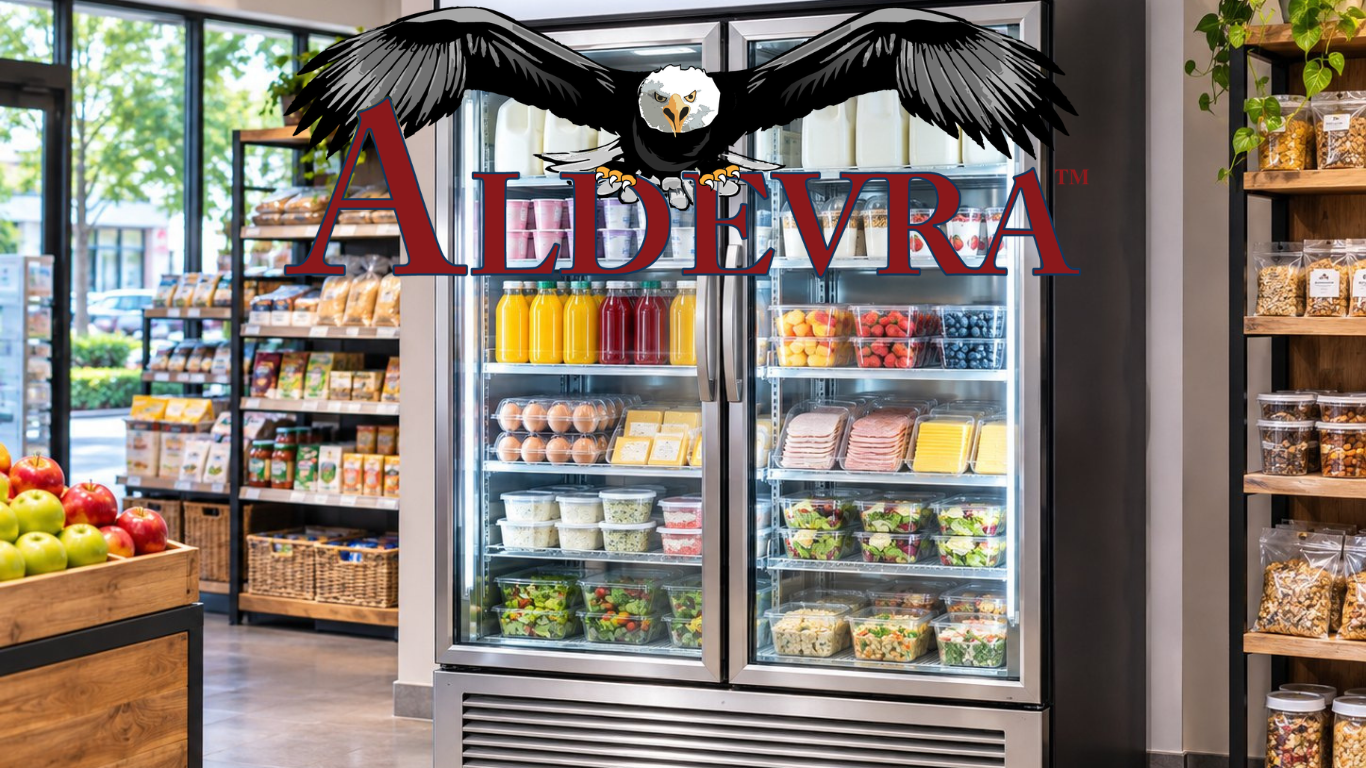
For smaller retailers, adding refrigerated display capacity may be one of the most practical improvements. Commercial glass-door refrigerators can provide visible, convenient storage for milk, yogurt, cheese, eggs, and other qualifying chilled foods.
Equipment example: a glass-door refrigerated merchandiser that can display dairy and other refrigerated staple foods.
Compact single-door units may suit limited floor space, while two- or three-door models can accommodate broader selections. Manufacturers such as True, Beverage-Air, and Atosa offer various commercial refrigeration configurations. The right equipment depends on product holding temperatures, access, electrical service, space, and sales volume.
Retailers can explore refrigerator options at Aldevra Shop, or contact Aldevra for assistance identifying a suitable merchandiser.
2. Commercial Freezers and Frozen Food Storage
Frozen products can expand a store's protein and vegetable assortment and may offer longer storage life than comparable fresh products. Depending on the inventory strategy, qualifying products may include frozen fish, poultry, and vegetables.
Equipment example: a multi-door commercial freezer merchandiser for packaged frozen foods.
Commercial reach-in freezers, glass-door freezer merchandisers, and chest freezers provide different combinations of customer access and storage capacity. Larger stores may also benefit from walk-in freezer systems. A freezer is not automatically required for SNAP authorization; equipment should follow the planned product assortment.
Aldevra can help retailers compare commercial refrigeration and freezer equipment based on space, capacity, power requirements, and budget.
3. Produce Displays and Commercial Shelving
Fresh produce can offer additional staple food varieties without requiring refrigerated display space for every item. Bananas, potatoes, onions, and some other produce may be displayed without refrigeration under appropriate conditions. Leafy greens and certain fresh-cut products typically need refrigerated holding.
Equipment example: produce display fixtures and shelving for a wider assortment of fruits and vegetables.
Produce racks, display fixtures, adjustable commercial shelving, and storage bins help operators merchandise expanded inventory and manage restocking. Metro and other manufacturers offer shelving suitable for commercial storage applications.
Browse racks, rails, and shelves at Aldevra Shop, or ask about display and storage options appropriate for the location.
4. Walk-In Coolers and Additional Refrigerated Storage
Stores planning a substantial increase in perishable inventory may need additional back-of-house refrigeration. Walk-in coolers can hold larger amounts of dairy, produce, and other temperature-sensitive foods and help support regular replenishment of display cases.
Equipment example: a commercial walk-in cooler equipped with organized storage shelving.
Importantly, stock kept exclusively in a back room does not substitute for the required public display of qualifying inventory. The display and restocking plan must work together. Aldevra provides kitchen equipment and refrigeration solutions and can discuss whether a walk-in system is appropriate for the store.
5. Temperature Monitoring and Inventory Management
Expanded perishable inventory also creates operational needs involving holding temperatures, stock rotation, equipment reliability, and food waste. Commercial thermometers, monitoring devices, and well-organized storage systems can support good food handling practices.
Retailers can browse thermometers at Aldevra Shop and review Aldevra's guidance on refrigerant changes before purchasing commercial refrigeration. These tools are operational considerations, not equipment specifically mandated by the SNAP stocking rule.
Does Every SNAP Retailer Need to Buy New Equipment?
No. A business with sufficient refrigeration, shelving, and storage may be able to comply by adjusting its assortment and inventory practices. Others may need only one compact refrigerated merchandiser or additional display shelving.
Specialty stores, farmers markets, and direct-marketing farmers may qualify under a different SNAP authorization pathway, known as Criterion B, when staple food sales account for more than 50% of total gross retail sales. Retailers should confirm which authorization pathway applies before investing.
It is also important to distinguish qualifying staples from prepared foods. Hot foods and certain ready-to-eat cold foods prepared onsite do not count toward the staple food stocking standard.
How Aldevra Can Help Retailers Prepare
As a commercial foodservice equipment dealer, Aldevra helps businesses and government customers select solutions suited to their facilities, operating requirements, and budgets. For retailers preparing for the updated SNAP stocking requirements, we can help with:
- Equipment selection: identifying refrigerators, freezers, refrigerated merchandisers, shelving, and food storage equipment based on planned inventory.
- Manufacturer comparisons and pricing: assessing options from established manufacturers and available configurations.
- Space and installation planning: reviewing dimensions, access routes, electrical requirements, and other site conditions.
- Procurement and delivery coordination: planning purchases, lead times, and delivery logistics.
- Installation and ongoing support: coordinating available installation and maintenance services for long-term equipment reliability.
Learn more about Aldevra's equipment installation and maintenance services. Whether a store needs one refrigerated merchandiser or a broader storage upgrade, our team can help identify options suited to the project.
Don't Wait Until February to Evaluate Your Store
The 90-day extension creates additional time, but equipment procurement and installation still require planning. Retailers should first review their inventory using the USDA SNAP Stocking Standards Calculator. Once gaps are identified, they can determine whether their existing equipment is adequate or additional capacity is warranted.
Making these decisions early can help avoid unnecessary purchases, rushed installations, and disruptions to normal store operations.
Preparing for the New SNAP Requirements? Contact Aldevra.
The updated USDA requirements may create inventory and equipment challenges for convenience stores, neighborhood markets, and other SNAP-authorized retailers. Aldevra can help evaluate refrigeration, frozen storage, shelving, and display equipment options before the February 11, 2027, compliance deadline.
Contact Aldevra to discuss your equipment needs or request a quote. You can also visit Aldevra Shop to explore equipment and supplies.
Aldevra LLC
Phone: (269) 350-1337
Email: sales@aldevra.com
Website: www.aldevra.com
Official USDA Resources
- USDA SNAP Stocking Standards Final Rule
- USDA November 13, 2026, 90-Day Compliance Extension
- USDA SNAP Stocking Standards Calculator
Information current as of November 15, 2026. SNAP authorization and stocking compliance determinations are made by USDA. Retailers should consult official USDA guidance and applicable state or local requirements. Equipment photos are illustrative and do not represent specific manufacturer models or inventory availability.