Summary
Mandatory Pre-Wash & Sorting Procedures for Commercial Kitchens
A commercial dishwasher (dish machine) is designed to wash and sanitize, not to remove heavy food waste, grease, or debris. Inspectors expect staff to follow pre-cleaning procedures before loading the machine.
Failing to do this causes:
- Failed inspections
- Clogged drains
- Recontamination
- Poor wash results
- Equipment damage
- Voided warranties
Step 1: Scrape All Food Waste Into Trash or Compost
This step is mandatory—no exceptions.
Staff must:
Scrape plates, trays, and cookware into:
- Trash
- Compost
- Solid waste collection
Remove:
- Bones
- Shells
- Seeds
- Paper liners
- Stickers
- Foil
Never rely on the dishwasher to remove solid food.
Inspector focus: Food debris inside machines = immediate sanitation violation.
Step 2: Pre-Rinse Heavy Residue (As Required by Code & SOP)
Items that must be pre-rinsed:
- Burned-on sauces
- Thick grease
- Cheese
- Starches
- Dried batter
- Syrups
- Egg residue
Use:
- Pre-rinse spray valve
- Manual sink spray
Pre-rinsing prevents:
- Grease recirculation
- Spray arm blockages
- Chemical dilution
- Biofilm buildup
Step 3: Sort Items by Type (Never Mix Improper Items)
Staff must separate items into approved categories:
Approved for Dish Machine:
- Plates
- Bowls
- Cups
- Utensils
- Stainless cookware
- Trays
- NSF plastic food pans
Never Allowed in Dish Machine:
- Wood
- Cast iron
- Carbon steel knives
- Hood filters
- Floor mats
- Mop heads
- Electrical parts
- Rubber floor tools
Sorting prevents:
- Cross-contamination
- Chemical transfer
- Machine damage
- Food-contact violations
Step 4: Properly Rack Items (Spacing Matters)
Racking rules inspectors verify:
Do not stack items inside a single rack cell
Glasses must be:
- Upside down
- Evenly spaced
Plates angled for water flow
Bowls nested correctly
Utensils:
- Mixed handles up & down
- Not packed tightly
Sheet pans:
- Vertical when possible
- Not blocking spray arms
Overloading racks blocks:
- Wash pressure
- Chemical reach
- Heat transfer
Step 5: Verify the Machine Is Ready Before Loading
Before loading:
☐ Correct wash temperature confirmed
☐ Sanitizer verified (chemical or heat)
☐ Scrap screens in place
☐ Wash arms spinning freely
☐ Drain clear
This prevents:
- Washing in cold water
- Chemical-free cycles
- “Looks clean but isn’t” contamination
Step 6: Load, Run Full Cycle, and Do NOT Interrupt
Staff must:
- Run complete cycle only
Never:
- Open mid-cycle
- Short-circuit rinse
- Skip final sanitize step
Interrupting cycles = automatically unsanitized ware under FDA Food Code.
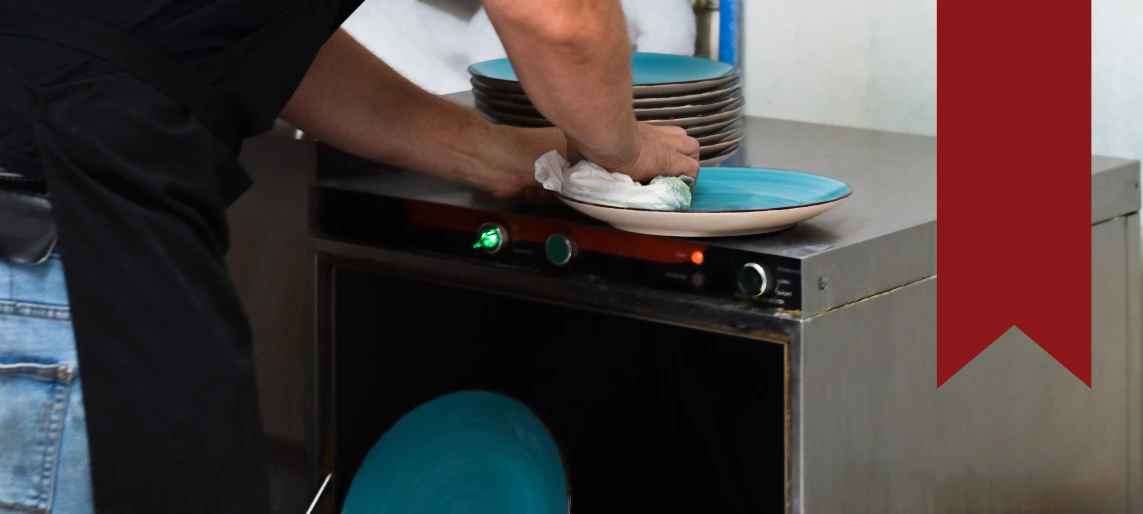
Step 7: Allow Air Drying Only (No Towels—Ever)
After washing:
- Air dry on clean racks
No towel drying
No wiping
No stacking while wet
Why this matters:
- Towels reintroduce bacteria
- Wet stacking traps moisture
- Inspectors cite this immediately
Top Staff Errors That Cause Inspection Failures
- Skipping scraping
- No pre-rinse on greasy items
- Overloading racks
- Mixing prohibited items
- Opening machine mid-cycle
- Towel drying
- Bypassing sanitizer testing
- Using machine when temp is low
Aldevra Staff Training Rule
If food debris goes into the dish machine, contamination comes out of the dish machine.