Summary
Learn how to measure ground beef fat content, understand USDA requirements, and choose the right testing equipment.
When a supermarket labels ground beef as 80/20 or a butcher shop sells a 90/10 blend, how do they know the fat percentage is accurate?
The answer is ground beef fat-content testing.
For supermarkets, butcher shops, meat processors, and commercial foodservice operations, measuring ground beef fat content helps maintain product consistency, support accurate labeling, and control production costs.
But is a ground beef fat analyzer required by the USDA? How do businesses measure fat content? And what equipment is available?
This guide explains how ground beef fat testing works, who benefits from it, what federal regulations require, and how the Univex FA-73 Ground Beef Fat Analyzer, available through Aldevra, can support your operation.
What Is a Ground Beef Fat Analyzer?
A ground beef fat analyzer, sometimes called a meat fat analyzer or ground beef fat tester, is a specialized piece of equipment used to determine the fat content of ground beef.
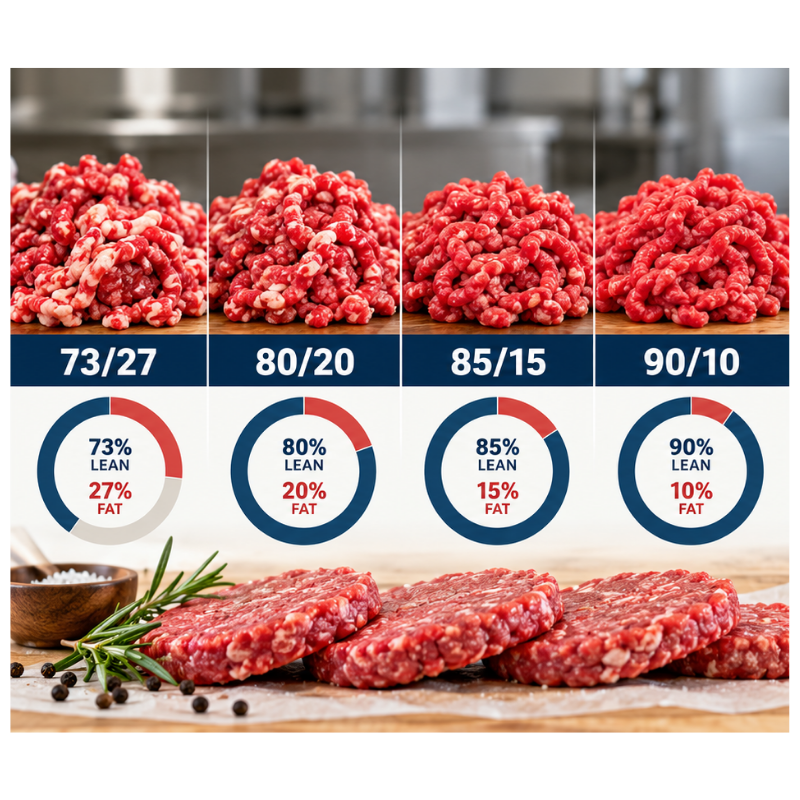
Ground beef is commonly sold according to its lean-to-fat ratio.
These percentages affect product pricing, cooking characteristics, shrinkage, and customer expectations.
For example, 80/20 ground beef generally contains more fat than 90/10 ground beef, affecting how the meat cooks and how much fat renders during cooking.
For businesses preparing ground beef commercially, consistently achieving the intended ratio is important.
A fat analyzer provides an objective way to check the product’s composition rather than relying solely on visual estimates.
How Do You Test the Fat Content of Ground Beef?
There are several methods for measuring fat content in ground beef, including laboratory analysis and specialized meat-testing equipment.
For businesses that need results during production, a portable ground beef fat analyzer provides a practical testing option.
The Univex FA-73 Fat Analyzer uses a small sample of ground beef to measure fat content through a process that separates fat from the meat.
How the Univex FA-73 Testing Process Works
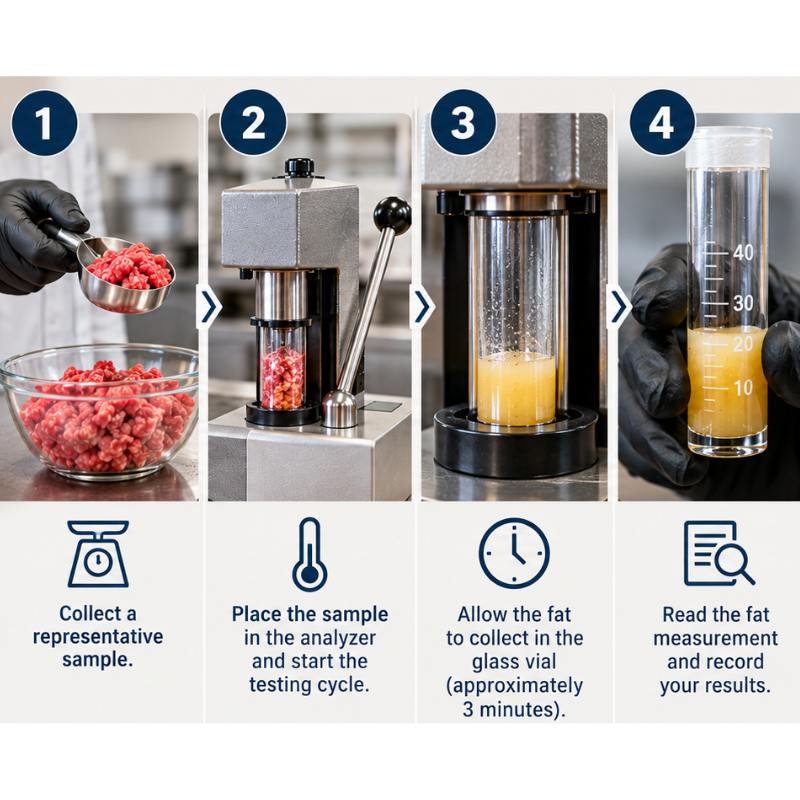
Step 1: Collect a representative sample.
Using the supplied measuring device, the operator collects ground beef from several areas of the batch being tested. Representative sampling is important because fat may not be distributed evenly throughout the batch.
Step 2: Place the sample in the analyzer.
The measured sample is positioned between the analyzer’s electrode plates, and a collection vial is placed below the testing assembly.
Step 3: Run the testing cycle.
The machine separates fat from the sample, allowing it to collect in the glass vial. The process generally takes approximately three minutes.
Step 4: Read and record the results.
The operator uses the analyzer’s measurement system to determine the fat percentage. Univex recommends performing three tests and averaging the readings for the best results.
This procedure allows meat department personnel to check ground beef composition without sending every sample to an outside laboratory.
For complete operating and cleaning instructions, see the Univex FA-73 Operator’s Manual.
Does the USDA Require Ground Beef Fat Testing?
The USDA regulates the composition and labeling of ground beef. However, there is no universal federal requirement for every supermarket, butcher shop, restaurant, or meat processor to own a fat analyzer.
Under 9 CFR § 319.15, products labeled as ground beef or hamburger cannot contain more than 30% fat.
This means ground beef must be at least 70% lean.
The regulation also establishes additional standards for products labeled ground beef or hamburger.
For example:
- Ground beef cannot contain more than 30% fat.
- Ground beef cannot contain added water, phosphates, binders, or extenders.
- Ground beef cannot contain separately added beef fat.
- Hamburger may contain added beef fat but is still subject to the 30% maximum fat limit.
Businesses are also responsible for ensuring that product labeling is truthful and not misleading.
If a supermarket advertises ground beef as 90% lean, that representation must be accurate.
A fat analyzer can help support accurate labeling and compliance with applicable product standards.
However, businesses may also use laboratory analysis or other appropriate testing methods, depending on their operations and applicable requirements.
The key distinction is that USDA regulations establish product and labeling standards, but do not universally require businesses to purchase a particular testing machine.
Who Needs a Ground Beef Fat Analyzer?
Several types of businesses can benefit from ground beef fat-content testing.
1. Supermarkets and Grocery Store Meat Departments
Supermarket meat departments are among the primary users of ground beef fat analyzers.
Grocery stores that grind and package their own beef frequently produce different blends, including 73/27, 80/20, 85/15, and 90/10.
Because the fat content of beef trimmings can vary, maintaining consistent ratios can be challenging.
A ground beef fat tester helps supermarkets:
- Verify fat percentages before labeling.
- Maintain consistency between production batches.
- Reduce the risk of inaccurate product descriptions.
- Support internal quality control procedures.
- Standardize testing across multiple store locations.
For supermarket chains with several meat departments, portable analyzers can make it easier to conduct routine testing where ground beef is prepared.
2. Independent Butcher Shops and Meat Markets
Independent butcher shops often prepare custom ground beef blends using different cuts of meat and trimmings.
While experienced butchers may estimate fat content based on appearance and experience, those estimates do not always reflect the finished product’s actual composition.
A fat analyzer provides a more objective measurement.
For butcher shops selling premium lean ground beef or multiple custom blends, testing can help maintain quality and customer confidence.
3. Commercial Meat Processing Facilities
Commercial meat processors may produce large quantities of ground beef for grocery stores, restaurants, distributors, and institutional customers.
These operations often work with specific product formulations and purchasing requirements.
Fat-content testing can help processors:
- Verify finished product specifications.
- Monitor batch consistency.
- Identify products that need adjustment.
- Support quality assurance records.
- Reduce the likelihood of rejected products.
Larger processing facilities may rely on automated systems or laboratory-based analysis, while portable fat analyzers can provide supplemental checks.
4. Restaurants and Commercial Kitchens
Restaurants that grind their own beef or create custom hamburger blends may also benefit from fat-content testing.
Fat percentage can affect burger texture, moisture, cooking yield, and finished-product consistency.
Although most restaurants are not required to own a fat analyzer, it may be useful for high-volume kitchens, restaurant groups, and operations preparing standardized blends.
For additional equipment options, explore Aldevra’s commercial kitchen equipment solutions.
5. Government and Institutional Foodservice Suppliers
Ground beef is purchased for many institutional foodservice operations, including military dining facilities, correctional institutions, schools, hospitals, and other government facilities.
These customers may establish specific fat-content or product-quality requirements.
For example, a contract might specify a maximum fat percentage or require documentation demonstrating compliance with a purchasing specification.
Suppliers can use fat-content testing to help verify that their products meet customer requirements before delivery.
However, a portable fat analyzer is not automatically an acceptable substitute when a contract requires a particular laboratory method or other prescribed verification procedure.
Government facilities that grind their own beef may also find fat analyzers useful for internal quality control.
Aldevra supports federal foodservice customers through its government contract vehicles, including its GSA Multiple Award Schedule.
Availability of a specific item through a particular contract should be confirmed before ordering.
When Should Ground Beef Fat Content Be Tested?
The appropriate testing frequency depends on the business, production volume, customer specifications, and internal quality control procedures.
Testing may be particularly beneficial:
- When preparing a new ground beef blend.
- When changing suppliers or incoming meat materials.
- When using trimmings with variable fat content.
- Before packaging ground beef with a specific lean-to-fat claim.
- During routine quality control checks.
- When investigating product inconsistencies.
- When verifying customer or contractual specifications.
For example, a butcher shop producing several different blends throughout the day may decide to check samples when changing formulations.
A larger meat processing operation may establish a documented sampling schedule based on production volume and customer requirements.
Businesses should determine appropriate testing procedures and documentation practices for their specific operations.
Where Are Ground Beef Fat Analyzers Used?
Ground beef fat analyzers are commonly used in:
- Supermarket meat departments
- Independent butcher shops
- Commercial meat processing facilities
- Central commissaries
- Restaurant meat preparation areas
- Institutional food production facilities
Portable analyzers can be especially useful for operations that want to conduct testing close to the production area.
Like other food processing equipment, fat analyzers should be operated and maintained according to the manufacturer’s instructions and the facility’s food safety procedures.
For more information about measurement practices in foodservice operations, read Aldevra’s article, Why the Right Measurement Tools Matter in Commercial Kitchens.
Univex FA-73 Ground Beef Fat Analyzer: A Practical Testing Solution
For businesses seeking a straightforward solution for measuring ground beef fat content, Aldevra offers the Univex FA-73 Fat Analyzer.
The FA-73 is designed for commercial ground beef applications and is marketed by Univex for use in supermarkets, butcher shops, restaurant operations, and other meat preparation environments.
Its portable design and simple operation make it a practical option for businesses that want to incorporate routine testing into their production process.
Univex FA-73 Features and Specifications